
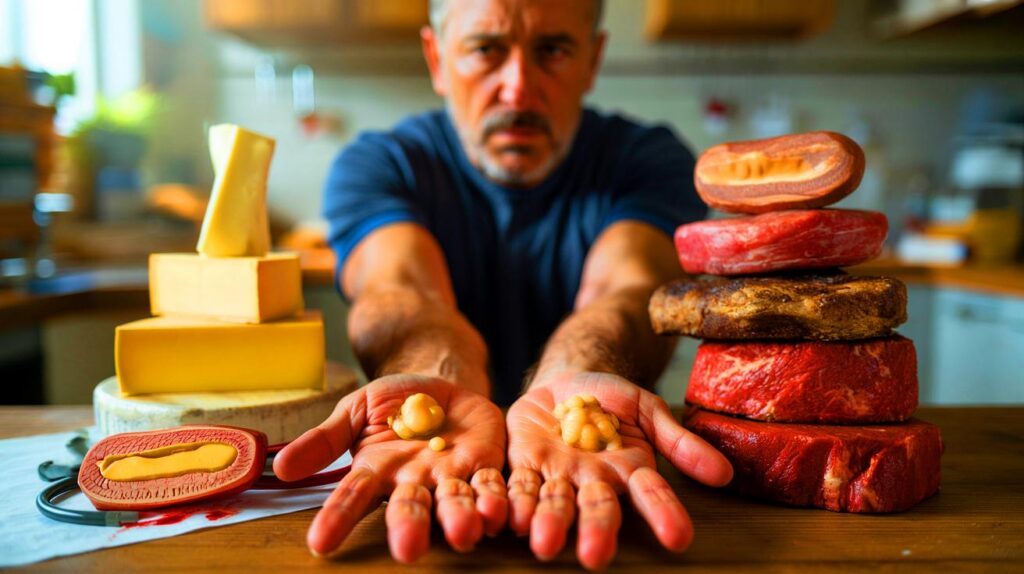
An all-animal plate can look simple, even tidy. But the human body keeps score, and sometimes it shouts very loudly.
Doctors in Florida recently treated a man in his forties after a months-long experiment with meat, butter and cheese backfired. His story raises blunt questions for anyone tempted by ultra-restrictive diets that promise quick wins.
What happens when meat and dairy dominate
The patient, a middle-aged Floridian, embraced a carnivore-style regimen for nearly eight months. He cut most plant foods. He centred his meals on beef, butter and cheese. Over three weeks, he noticed yellow nodules spreading across his palms, elbows and the soles of his feet. He went to hospital.
Cardiology teams in Florida and Texas linked his skin changes and blood tests to his food choices. The man reported weekly cheese intakes between 2.7 and 4 kg. He ate whole sticks of butter. He added extra animal fat to his daily burgers. Other food groups barely featured.
His total cholesterol measured around 1,000 mg/dL — roughly five times typical levels. Doctors diagnosed lipid deposits known as xanthomas/xanthelasma.
In many patients, these waxy, yellowish plaques cluster near the eyelids. In his case they appeared on hands and feet as well, which signalled a severe disturbance in lipid handling. He said he felt leaner, more energetic and mentally sharper since changing diet, yet the lab numbers told a different story.
The diet in numbers
- Duration: about eight months of an animal-only pattern.
- Cheese: 2.7–4 kg per week, enough to fill a small supermarket basket.
- Butter: entire sticks eaten as food, not just as cooking fat.
- Burgers: daily, with extra fat added.
- Visible signs: yellowish nodules on palms, elbows and soles within three weeks.
- Bloods: total cholesterol near 1,000 mg/dL (≈25.9 mmol/L), far above UK guidance for healthy adults.
Why such eating patterns drive risk
Animal fats rich in saturated fatty acids push LDL cholesterol higher in many people. LDL particles carry cholesterol into artery walls. Over time, they feed plaques that harden and narrow vessels, a process called atherosclerosis. The higher the exposure and the longer it lasts, the higher the risk.
LDL cholesterol and ApoB-containing lipoproteins are causal in heart disease. Lower levels across time reduce risk; higher levels raise it.
Extremely high cholesterol can also spill into tissues. That produces deposits in skin and tendons. Doctors call these xanthomas. They are red flags for the heart and pancreas. While some individuals have genetic conditions that shoot cholesterol skyward, dramatic dietary shifts can also push lipids into dangerous territory, especially when fibre is absent.
Fibre binds bile acids and cholesterol in the gut and helps excrete them. An all-animal diet deletes this brake. It also removes plant-derived micronutrients and polyphenols that support gut health and vascular function. The resulting pattern amplifies LDL, can lift triglycerides, and may raise blood pressure when combined with heavy salt use.
Short-term gains, long-term toll
The Florida patient reported weight loss, more energy and quicker thinking. Low-carbohydrate regimes often trim water and glycogen fast, which lightens the scale. Cutting refined starch and ultra-processed snacks can improve energy in the short run. None of that makes an all-butter-and-beef menu safe.
| Reported habit | Plausible impact |
|---|---|
| 4 kg cheese per week | Very high saturated fat and sodium; strong LDL rise; blood pressure strain |
| Eating sticks of butter | Large saturated fat boluses; potential for eruptive lipid disorders |
| No fibre sources | Constipation, altered microbiome, reduced cholesterol excretion |
| Red meat daily | Higher LDL, possible rise in TMAO; fewer protective plant compounds |
How extreme was 1,000 mg/dL?
In the UK, a desirable total cholesterol is usually under 5.0 mmol/L (about 193 mg/dL). The case above reached roughly 25.9 mmol/L. That gulf illustrates the danger zone. Skin deposits often appear when lipids surge, and they act as a visible tip of a larger metabolic iceberg.
If you overhaul your diet, schedule a lipid panel within 4–12 weeks. New symptoms on skin or vision deserve prompt assessment.
What doctors advise instead
Health authorities, including US and European agencies, do not recommend a meat-only diet. They back varied patterns rich in vegetables, fruits, pulses, whole grains, nuts, olive oil and modest portions of fish, eggs and dairy. Those patterns deliver fibre, micronutrients and unsaturated fats that protect vessels.
If you want fewer carbohydrates without courting risk, you can build a safer low-carb plate:
- Prioritise unsaturated fats from olive oil, rapeseed oil, nuts and seeds.
- Keep saturated fat below UK limits (≤20 g/day for women, ≤30 g/day for men).
- Eat oily fish twice a week for omega‑3s.
- Stack your plate with non-starchy veg for 25–30 g fibre per day.
- Choose lean meats and poultry; rotate with legumes and tofu.
- Limit processed meats and heavy cheeses to occasional use.
- Check cholesterol (including LDL or ApoB if available) after changes, then yearly.
Could this happen to you?
Consider the cheese load alone. A hard cheese often carries around 20 g of saturated fat per 100 g. At 4,000 g per week, that is roughly 800 g of saturated fat weekly — about 114 g per day. UK guidance caps saturated fat at 20–30 g per day. Add butter on top and the gap widens further. For many people, that intake will push LDL sharply higher within weeks.
Red flags to watch for
- Yellowish, raised skin patches near eyes, elbows, knees, palms or soles.
- New chest discomfort, breathlessness on exertion, or unexplained fatigue.
- Sudden vision changes or headaches alongside sky-high lipid results.
- Persistent constipation and cramps after removing plant foods.
Seek medical care if any of these appear, especially after drastic diet changes. If high cholesterol runs in your family, ask about familial hypercholesterolaemia testing before attempting strict low-carb or carnivore plans.
Key terms and useful context
Xanthoma and xanthelasma describe fatty deposits in skin linked to lipid disorders. They are not just cosmetic. They point to a systemic problem in how the body ferries fats through the bloodstream. Removal without correcting lipids invites recurrence.
For a lower-risk experiment, try a Mediterranean-style low-carb approach for eight weeks. Track waist size, energy, and a full lipid panel, including LDL or ApoB. Add resistance training twice a week. Compare the results with a diary. The data you gather will tell you far more than a social media promise ever will.



1,000 mg/dL? Yikes.