
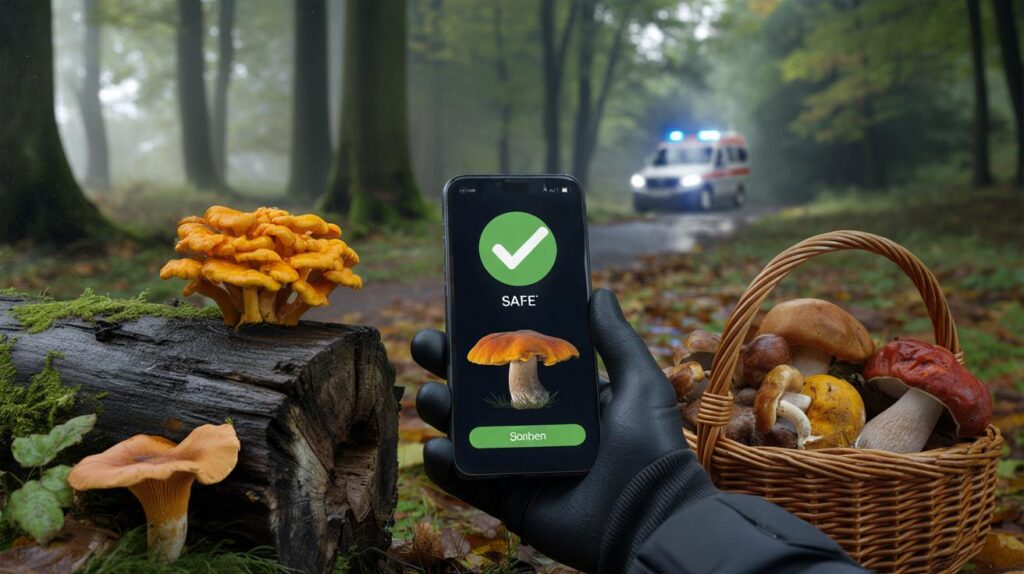
Mushroom season looks cosy and harmless, yet a small misstep is turning weekend walks into bleak hospital visits.
A growing tide of foragers is heading into the woods as rain and mild temperatures coax fungi from the leaf litter. Poison centres warn that emergency calls jump in late October and early November, with many patients arriving from family outings. The recurring pattern points to a modern culprit: blind trust in phone recognition apps that promise certainty where nature does not.
Autumn’s lure and the surge in baskets
Across Europe, and especially in France, the first proper rains flip a switch. Car parks by beech and oak woods fill up, baskets hit the paths and grandparents teach grandchildren how to scan the moss. Tradition, thrift and flavour drive the ritual. With thousands of macrofungi species in the region, a lucky hour can mean risotto with ceps or a buttery pan of chanterelles. The appeal cuts across generations and budgets. Social feeds bristle with proud hauls and recipes, nudging more people to try their luck.
Why the old joy hides new risk
Experience matters, and so do small details: habitat type, smell, the way flesh stains, the feel of a cap. Many newcomers lean on a tool built for convenience rather than food safety. A single photo on a damp path cannot capture enough evidence to settle a tricky identification. The result can be toxic lookalikes on the dinner table, and a long night under fluorescent lights.
Poison centres across France report an annual spike in calls around All Saints’ Day, driven by mix-ups in the basket and at the hob.
The costly mistake creeps in with the camera
Image-recognition apps sell speed and confidence. In the forest, both can mislead. Algorithms struggle when light is low, colours shift at dusk, caps are mud-smeared, or specimens are very young or very old. Some species vary widely across regions. Others are near-doubles, sharing contours and colours while diverging sharply in chemistry. Data sets often prioritise pretty, centred portraits. Real mushrooms present at odd angles under a tangle of needles.
Public health advisers say the pattern is now clear: this season, roughly 80% of serious poisonings they tracked involved an app-based misidentification or a decision made without expert confirmation. A&E teams describe classic scenarios — a family meal built on “a match” in an app, followed by nausea, cramps and dehydration hours later.
Never treat a phone photo as a green light to eat a wild mushroom.
Why algorithms stumble in the woods
Field identification blends context and senses. Experts weigh substrate, tree partners, altitude, weather and microfeatures such as spore colour. They sniff, tap, slice, and watch for colour changes in the cut flesh. They consider what grows nearby and what typically fruits at that time. A single image flattens that stack of clues into pixels. In safety-critical decisions, the system’s narrow view creates false assurance.
How to bring risk down to near-zero
A few habits slash hazard without spoiling the fun. Aim for breathable containers — wicker baskets or rigid cardboard — rather than bags that sweat and mash delicate caps. Keep each species apart so an error cannot taint the rest. Stick to clean ground: avoid verges, industrial edges and grazed pastures where fungi can take up heavy metals and other contaminants. Most of all, get a trained human to check your haul before you cook. In France, many pharmacists offer free identification, and local mycology clubs run regular sessions.
- Use a ventilated basket or box; never pick into plastic bags.
- Keep species separate to prevent cross-contamination.
- Forage away from roads, car parks and industrial zones.
- Ask a trained pharmacist or mycologist to verify every species.
- Photograph your haul before cooking and keep a small raw sample chilled.
- Cook each species thoroughly; avoid raw servings.
- Limit adult portions to 150–200 g per week; skip wild fungi for children, pregnant people and those with weakened immunity.
Kitchen and storage rules that save headaches
Back home, wash hands before handling the haul. Refrigerate mushrooms in a dedicated container and eat them within 48 hours. Cook species separately the first time you try them. Pan-cook for 20 to 30 minutes, or boil for at least 15 minutes, to knock back heat-sensitive toxins and microbes. Label boxes with the date and species. Avoid mixing alcohol with species known for disulfiram-like reactions. If a bitter taste persists after cooking, do not serve.
If symptoms such as nausea, vomiting, abdominal pain, diarrhoea, sweating or confusion appear, seek medical help fast and bring photos of the mushrooms and the raw sample.
Lookalikes that fool the eye
Some pairs trip up even seasoned pickers. Treat the following as red flags rather than DIY guides; an expert’s verdict beats any checklist.
| Edible target | Toxic doppelgänger | Key differences in the field | Risk |
|---|---|---|---|
| Chanterelle (Cantharellus cibarius) | False chanterelle (Hygrophoropsis aurantiaca) or jack‑o’‑lantern (Omphalotus spp.) | True chanterelles have blunt ridges, not true gills; apricot scent; solid, pale flesh | Strong gastric upset; with Omphalotus, severe vomiting |
| Porcini/ceps (Boletus edulis) | Satan’s bolete (Rubroboletus satanas) | Porcini pores are white to olive; Satan’s bolete shows red pores and often a reddened stipe | Violent gastrointestinal symptoms; hospital observation |
| Parasol (Macrolepiota procera) | Deadly dapperling (Lepiota spp.) | Parasol has a moveable ring and a snakeskin pattern on the stipe; small Lepiota lack these traits | Possible amatoxin poisoning; life‑threatening |
What to do if you suspect poisoning
Onset can be rapid — within 30 minutes — or delayed for 6 to 24 hours depending on the toxin. Call your poison centre at once. Do not wait for symptoms to worsen. Keep any leftover mushrooms, both raw and cooked, and the photos of your haul. Do not induce vomiting. Sip water. Head to A&E if there is persistent vomiting, dehydration, confusion, severe abdominal pain, jaundice, or if vulnerable people are involved. Pets face similar risks and need urgent veterinary care if they nibble your finds.
Why experts still beat apps
A pharmacist or mycology club can examine specimens in person, check spore prints, and consider local species lists. They weigh context that no generalist app can access. Many run weekend identification tables during peak season. Five minutes of checking prevents a bad night and keeps traditions alive without nasty surprises.
A five‑minute expert check can spare you a night in A&E and protect your family’s dinner table.
Extra tips for safer foraging and better flavour
Trim muddy bases in the field to keep baskets clean and reduce grit. Brush rather than soak to avoid waterlogging and soggy textures. Freeze cooked portions in small batches and label them clearly; reheat only once. If you want to pickle, use vinegar with sufficient acidity and store chilled. Keep a simple foraging log with dates, sites and species, then bring it along when seeking an expert opinion. A short, local identification course builds confidence and teaches you when to leave a specimen standing.
Phone apps can still help as notebooks. Use them to geo‑tag spots, capture multiple angles and record nearby tree species. Treat any “match” as a prompt for questions rather than permission to eat. Combine those records with a pharmacist’s verdict and you can enjoy the woods, the flavours and a quiet evening — not a queue at A&E.



So the app says “99% match”, my stomach says “100% regret”. Noted. I’ll stick to ceps I actually know and let a pharmacist roast my mis‑ID, not me.
“80%” claim—can you link the poison centre data or methodolgy? How were app-related cases attributed (self-report, clinician notes)? Also curious whether age/lighting confounders were considered. Not defending apps, just wary of turning correlation into causation.