
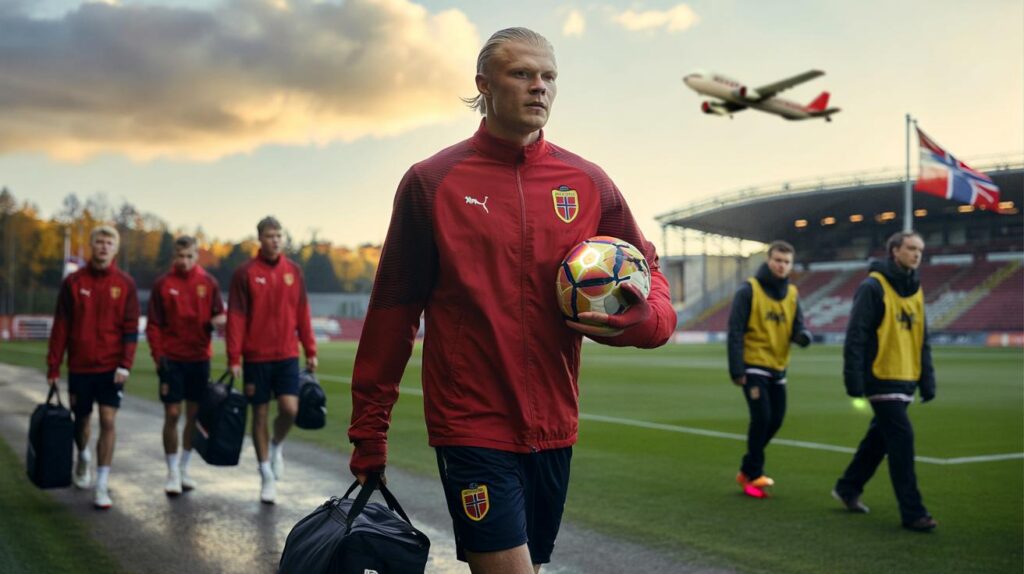
Norway’s dazzling week delivered goals, milestones and a surprise reshuffle, as club agendas tug at the busy autumn calendar.
Erling Haaland has left the Norway camp ahead of schedule, returning to Manchester City before a low‑stakes friendly against New Zealand. The decision follows a ruthless performance against Israel that mixed clinical finishing with rare drama and gives both Norway and City room to manage a packed run of fixtures.
Why Norway have trimmed their squad
The Norwegian FA confirmed that several players with heavy workloads have been allowed to go back to their clubs. Haaland is among those released, alongside Alexander Sorloth, Julian Ryerson and Fredrik Bjørkan. Felix Horn Myhre has departed due to an ankle issue. The message is simple: protect legs now, reap the benefits when competitive games return.
Norway have prioritised freshness and fitness, releasing players with tight match schedules before a low‑risk friendly.
With only a friendly left in this window, the coaching staff have opted for continuity where needed and rotation where sensible. The balance is pragmatic. Competitive rhythm matters. So does keeping leaders healthy for the fixtures that decide qualification.
A night of records, nerves and ruthless finishing
Haaland’s early exit comes straight after a head‑turning outing. He hit a hat‑trick in a 5-0 win over Israel and, remarkably, did so after missing two early penalties. The response underlined his mentality; the chances kept coming and the net kept bulging.
51 goals in 46 caps: Haaland has raced to a half‑century for his country faster than a generation of greats.
The striker is now the quickest to 50 international goals in Norway’s history, reaching the landmark in fewer games than Lionel Messi, Cristiano Ronaldo, Kylian Mbappé or Pelé managed for their nations. It is not just a record; it is a datapoint that frames how ferociously he scores when fit and focused.
What it means for Manchester City
For City supporters, the immediate question is obvious: is he hurt? There is no indication of an injury. The release is framed around workload and calendar management. City gain a brief window to rest, recover and fine‑tune a player who continues to carry a huge share of their goals.
For Pep Guardiola and his staff, these days are gold. They can reset preparation plans, tailor gym and conditioning work, and control minutes before domestic action returns. After a hat‑trick and a spike in intensity, a controlled step back reduces risk without dulling rhythm.
Club analysts prize these micro‑breaks: less travel, more individual work, and zero jeopardy from late‑window friendlies.
Who steps up against New Zealand
The friendly in Oslo still matters for selection, evolution and opportunity. Oscar Bobb is in line for minutes, while an 18‑year‑old with City ties has edged into the spotlight. Sverre Nypan, a £12.5 million summer signing from Rosenborg who is currently on loan at Middlesbrough, has earned his first senior call‑up. He captained Norway Under‑21s in a 4-1 friendly defeat to Spain on Friday and could now take his bow with the senior side against the All Whites.
- Players sent home for workload management: Erling Haaland, Alexander Sorloth, Julian Ryerson, Fredrik Bjørkan.
- Unavailable due to injury concern: Felix Horn Myhre (ankle).
- Likely beneficiaries versus New Zealand: Oscar Bobb, Sverre Nypan.
The qualification picture and what’s next
Norway’s 5-0 against Israel kept momentum intact. Six wins from six have them in a commanding position as the campaign moves towards its critical phase. The remaining group games land in November, with a home meeting against Estonia on the 13th and a pivotal trip to Italy three days later. Italy face Israel on Tuesday and need victory to trim the gap to three points, or they risk watching another major tournament from the outside.
| Date | Opponent | Venue | Why it matters |
|---|---|---|---|
| 13 November | Estonia | Oslo | Chance to bank points at home and keep control of top spot |
| 16 November | Italy | Away | Potential group decider against the nearest chasers |
Why national teams are adapting to the calendar
International managers increasingly treat friendlies as laboratories rather than battlegrounds. The science is straightforward. Players arrive on the back of congested club schedules, sometimes carrying knocks or fatigue. Competitive qualifiers demand peak output. Friendlies allow systems work, tactical tweaks and auditions without risking first‑choice starters who are logging heavy minutes.
That means early releases are becoming more common, especially for forwards who shoulder constant sprints and duels. The short‑term gain is a lighter load. The medium‑term gain is availability when the matches mean points. Clubs benefit, national teams reduce injury exposure, and supporters get a better chance of seeing stars in the fixtures that count.
Haaland’s week, in context
Two missed penalties would rattle most strikers. Haaland’s response was to score three and push his international total into territory usually reserved for veterans. The data suggests a player who compartmentalises errors and keeps shooting. That mindset has underpinned his rise in England and is the reason defenders cannot switch off after a setback.
Returning early also aligns with his typical management at City. After spikes in output, staff focus on recovery, neuromuscular freshness and short, sharp technical work. That approach preserves explosiveness while limiting fatigue. It suits a striker who thrives on repeat sprints, box movement and first‑time finishes.
What to watch for next
For Norway, Tuesday’s friendly offers a peek at future depth. Bobb’s creativity between lines and Nypan’s composure in midfield fit a modern, possession‑leaning approach. A coherent cameo from either would give Ståle Solbakken another trusted option for the November double‑header.
For City supporters, the headline is rest, not alarm. An early return removes a flight, a competitive outing and the small risks inherent in any international. It also gives the club’s performance unit time to recalibrate his week. Expect a controlled training load, targeted finishing drills and a rapid reintegration when the Premier League resumes.
Extra context for fans
Workload management is not just about minutes on the pitch. Travel time, time zones, training intensity and recovery windows all stack up. Strikers who press aggressively often hit fatigue thresholds sooner than centre‑backs. National teams now use that data to decide who plays friendlies and who sits out. In a season that can stretch to 60 club games for elite sides, shrewd decisions in October and November often pay off in April and May.
Norway’s stance signals trust in their pipeline. Giving Nypan and Bobb responsibility now could reduce pressure later in the cycle. For supporters, that means two things to track: Haaland’s sharpness after a controlled reset, and the readiness of the next wave asked to carry minutes when the margins grow thin.



No reason to panic for City—it’s load management, not an injury. After a hat‑trick coming right after two missed pens, a micro‑break sounds smart before the league restarts.
Sent home after 51 in 46? My Sunday League manager would send me home after 0 in 10… for everyone’s safety.