
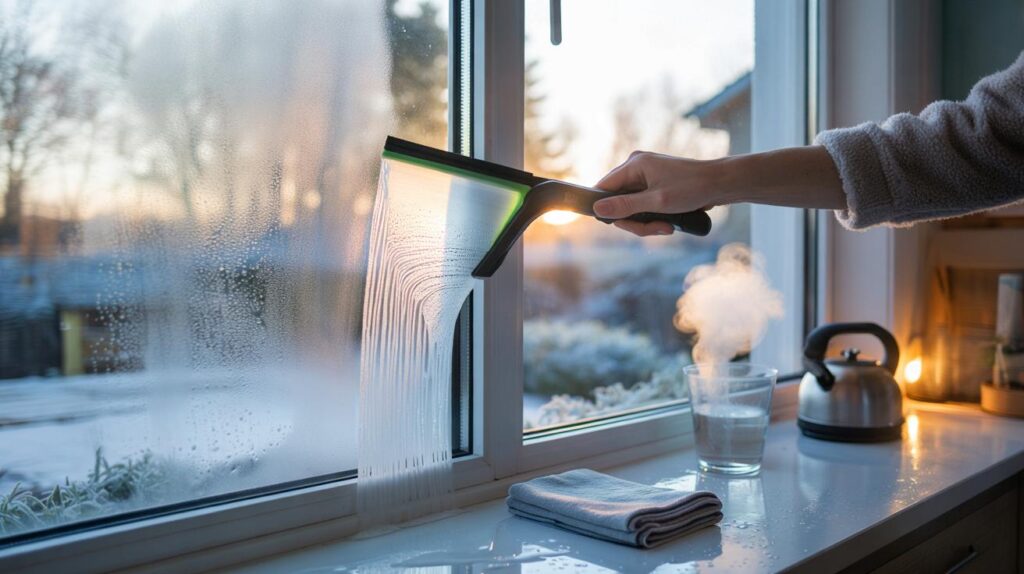
Winter sunlight is rare, brief, and revealing. It hits the glass at a low angle, exposes every smear, and turns condensation into a curtain of cold. The trick is simple on paper: clean windows that stay clear and dry. The reality, most mornings, is a streaky pane and mist that creeps back by lunchtime.
At 7.32am, the kettle clicks and the first slant of pale light lands on the kitchen window. Steam breathes from the spout; the glass breathes back, a thin film of fog that rolls into droplets along the bottom edge. I swipe with a tea towel, it smears, I stand back. The garden looks like a watercolour left in the rain. A neighbour walks past with a squeegee tucked under her arm like a violin case. She knows what’s coming. A clear view is a small winter luxury. And sometimes, an obsession. Something else is going on here.
Why winter windows look streaky — and why they keep “sweating”
Cold weather changes how cleaning behaves on glass and frames. Warm water evaporates faster on a chilly pane, leaving soap solids and hard-water minerals as ghostly tracks. Sun at a low angle exaggerates every line. If you start with dirty frames, dust and uPVC chalk rub onto the glass and draw pale streaks as soon as you wipe. That’s why a quick spritz-and-scrub fails in January. The surface is too cold, the mix is wrong, the order is off. You’re cleaning, but you’re also painting on a faint film you can’t quite see.
There’s a human layer to it too. You clean once, feel triumphant, then the room fills with shower steam or pasta pots and the glass fogs over again. We’ve all had that moment where you wipe a perfect circle with your cuff, only for the rest to blur out like breath on a mirror. In one London survey last winter, small flats saw indoor humidity spike to 70%+ between 6pm and 9pm. That’s dew-point territory on a cold pane. The glass isn’t misbehaving; the air is busy turning into water right in front of you.
Here’s the simple physics. Air holds water vapour until it cools to its dew point, then it dumps liquid on the coldest surfaces. Windows are thin, exposed and often the chilliest thing in the room. Heat them slightly, ventilate the excess moisture, and cut down the residues that invite streaks. Use water that doesn’t leave minerals, tools that move liquid cleanly, and a sequence that keeps dirt from migrating from frame to glass. It’s not magic. It’s small changes that beat winter’s rules. Let’s be honest: no one actually does that every day.
Pro tricks for streak-free frames and glass
Start with frames, always. Vacuum the tracks and weep holes with a soft brush, then wash uPVC with warm water, a pea of washing-up liquid, and a microfibre cloth. Rinse the cloth often. For timber, go barely damp with pH-neutral soap, then dry the wood immediately. Aluminium likes the same gentle approach. Finish frames with a dry buff so you don’t drag grey residue across the pane. Now the glass: mix a bucket with cool water and one tiny drop of washing-up liquid, then add a splash of distilled water. Use a squeegee in smooth S-strokes. Wipe the blade between passes. Edge-detail with a dry microfibre.
Biggest mistakes? Paper towels, direct sunlight, and over-soaping. Paper sheds lint that clings to winter static. Sun speeds evaporation and locks in streaks. Too much detergent creates a film that looks fine in shade, then blooms later under light. *If your water is hard, switch to deionised water for the final rinse — it’s the “invisible” trick behind a pro finish.* And don’t forget the blade. A nicked or old squeegee drags lines no matter how carefully you move. Replace the rubber or rotate it. Clean the rubber with a damp cloth post-job, then store it flat.
When glass is near freezing, add a capful of isopropyl alcohol to your mix so it doesn’t glaze before you can squeegee. A tiny drop of dishwasher rinse aid helps water sheet off the pane, which means fewer marks and faster drying. For persistent fingerprints or cooking film, spot-treat with a 50:50 white vinegar and distilled water spritz, then rinse with your main mix.
“Frame first, light soap, cool water, sharp rubber. Then detail the edges. That’s the whole game,” says Tom, a third-generation window cleaner from Leeds.
- Kit list: 35cm squeegee, 2 microfibres (one damp, one dry), small bucket, soft brush, deionised water, mild soap.
- Extras: isopropyl alcohol for freeze days, window vac for morning condensation, plastic scraper for paint flecks.
- Avoid: cream cleansers on glass, solvents on uPVC, newspapers with modern inks.
Stopping condensation in its tracks — and keeping it that way
Condensation is a lifestyle puzzle as much as a cleaning one. Small shifts work. Open trickle vents and give the room a five-minute burst of fresh air morning and night. Cook with lids on, run the extractor a little longer than feels necessary, and keep bathroom fans going until the mirror is clear. Dry laundry in one closed room with a dehumidifier if you can. Hold indoor humidity near 40–55% with a cheap hygrometer, and keep rooms at a steady, low heat so glass doesn’t swing wildly cold at night. A constant 18–19°C beats big peaks and dips for keeping panes dry. Thermal blinds and curtains help, but leave a small gap so air can circulate against the glass.
Glass can be prepped to resist fogging. Rub a pea-sized dot of washing-up liquid onto a damp cloth, buff it to “nothing” across the pane, then polish dry with a microfibre. The ultra-thin film slows misting, especially on bathroom glass. Shaving foam does the same trick on mirrors, though go sparingly near frames. Keep an eye on weep holes in the bottom of the frames; they drain away any mystery moisture that collects in the channels. And bring in desiccant packs for window sills where vapour loves to settle. It’s oddly satisfying to wake up, check the glass, and find nothing there.
What if the water still rolls down every morning? Mop it fast with a window vac or a dedicated microfibre, then tackle the cause, not just the symptom. Move large furniture a hand’s width off exterior walls to cut cold spots. Avoid draping curtains over radiators that sit under windows — you need that upward flow of warm air across the pane. If you’re in single glazing, a seasonal window film kit is a weekend job that lifts surface temperature by a surprising notch. And if black mould has started on the seals, treat it gently with a dilute bleach solution or specialist mould remover, rinse well, and dry thoroughly so it doesn’t reclaim the corners.
The clear-window mindset for winter
Windows don’t ask for perfection. They reward rhythm. Clean frames first, switch to cool, light soap on the glass, work with a sharp squeegee, then finish with a calm edge detail. Vent after the daily moisture spikes, keep a quiet, even warmth, and let the glass stay just warm enough to dodge the dew point. This is small, domestic engineering that feels like care. On a grey morning, a crisp view is energy. On a bright one, it’s a little stage for the light. Share what works in your street. Borrow a trick from a neighbour who swears by deionised water or carries a window vac like a secret weapon. Your panes will still get dirty. Moisture will still try its luck. The point is: you’ll have a practised, almost lazy way of bringing back the scene outside. And that changes how winter feels indoors.
| Key points | Details | Interest for reader |
|---|---|---|
| Frame-first cleaning | Vacuum tracks, wash uPVC gently, dry timber, prevent residue transfer to glass | Fewer streaks before you even touch the pane |
| Cool mix and sharp squeegee | Light soap, distilled water, S-strokes, wipe rubber between passes | That pro-level, streak-free finish at home |
| Condensation control | Short ventilation bursts, steady 18–19°C, extract, dehumidify laundry | Drier mornings, less mould, warmer-feeling rooms |
FAQ :
- What’s the best homemade window-cleaning solution for winter?Cool water, a single drop of washing-up liquid, and a splash of distilled water. On freezing days, add a capful of isopropyl alcohol.
- Can vinegar damage window frames?On glass it’s fine, but vinegar can dull uPVC and react with some stones on sills. Keep it on the pane only, and rinse if it touches frames.
- How often should I clean windows in winter?Glass every 4–6 weeks, frames every other time. Daily, do a 30-second edge wipe if condensation appears. That’s enough to stay ahead.
- Why do streaks show up later in the day?Warm indoor air and low sun reveal soap film and mineral residue. Use distilled water for the final passes and keep your squeegee rubber fresh.
- How do I stop overnight condensation on bedroom windows?Crack trickle vents, keep a steady low heat, and run a small dehumidifier while you sleep. A quick five-minute morning vent clears the rest.



Tried the cool water + tiny drop of soap + distilled splash—streaks finally gone. Frame-first was the missing step. Also, who knew a nicked squeege mattered this much? Cheeers!
Isnt adding isopropyl alcohol near timber frames risky? I worry about fumes and finishes—any safer alternative when the glass is near freezing?