
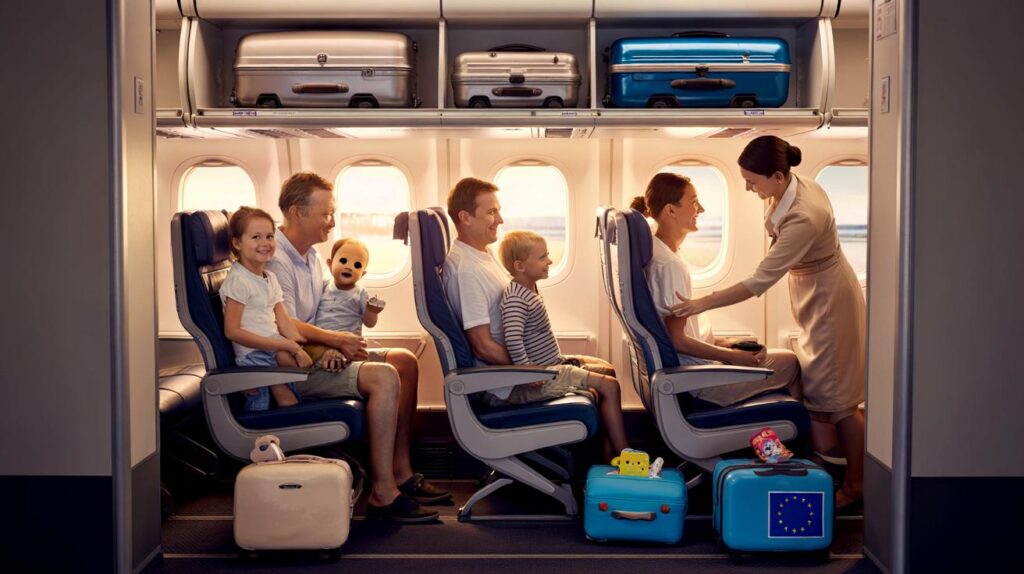
Parents juggling buggies, snacks and nappies know the cabin-bag squeeze all too well, as budget airlines tweak rules and Brussels stirs.
The next few months could bring a rare dose of relief for family travellers. EU lawmakers are weighing changes that would let passengers on low‑cost carriers take two cabin bags without extra charges and guarantee that children sit next to an adult in their group. If agreed, the shift would target surprise fees at the gate and the stress of seat shuffling onboard.
What is on the table
Draft measures under discussion in Brussels would standardise hand luggage rights across EU routes. The headline change: every passenger could bring a personal item and a cabin‑sized suitcase free of charge on flights within the EU and on flights to and from the bloc.
Two free cabin bags per passenger on EU routes would strike at the last‑minute fees that sting family budgets.
MEPs also want airlines to seat children aged 12 and under next to at least one accompanying adult without extra payment. That would put an end to the awkward scramble at the aircraft door when a parent finds their child assigned five rows away.
The package still needs political agreement. At least 55% of EU countries representing a large share of the bloc’s population must back the plan before it becomes law. If it clears that hurdle, regulators would give airlines time to adapt booking systems and boarding processes.
How Ryanair and easyJet operate today
Right now, a basic fare on most budget carriers covers only a small personal bag. Think handbag, compact rucksack or baby changing bag. Anything larger, like a wheelie case that fits the overhead locker, usually requires a paid add‑on.
Ryanair recently increased its free personal bag size to 40 x 30 x 20 cm, a little more forgiving for families who need wipes, toys and spare clothes within reach. easyJet already allows a larger personal bag than many rivals, and sells a separate “large cabin bag” option for the overhead bins.
Families often pay twice: once for an overhead‑sized bag, again for seats together. The new rules target both pain points.
| Airline | Current free allowance | Typical paid add‑on | Under the proposal |
|---|---|---|---|
| Ryanair | 1 personal bag up to 40 x 30 x 20 cm | Priority with 2 cabin bags or a paid cabin suitcase | 1 personal bag + 1 cabin‑sized suitcase free |
| easyJet | 1 personal bag (fits under seat) | Large cabin bag or Up Front/Extra Legroom seat bundles | 1 personal bag + 1 cabin‑sized suitcase free |
What this would mean for your family trip
Two free cabin bags change the packing game. A parent could keep snacks, medicine and tablets in a personal bag under the seat, while a cabin‑sized case holds clothes and shoes overhead. That reduces the need for a checked suitcase, and it trims time at the carousel.
The seating rule matters just as much. If it becomes law, airlines would need to place each child under 13 next to an adult from the same booking without extra fees. No more paying for seat selection “just in case”.
Both shifts would push airlines to rethink boarding. Expect tighter control of overhead space and clearer bin labelling. Some carriers could encourage earlier arrival at the gate to manage full cabins smoothly.
Money matters: a quick cost check
What could you save? Here is a simple, conservative snapshot for a family of four on a short‑haul return:
- Cabin bag fees currently run from low single digits to around £30 per person per sector, depending on date and demand.
- Seat selection can add roughly £3 to £20 per person per sector, with higher prices for front rows and extra‑legroom seats.
- At the gate, an oversized “personal bag” can trigger a steep charge that often exceeds £40.
Under the proposed model, two cabin bags per passenger would clear most of those add‑ons. A family avoiding four paid cabin bags on the outbound and four on the return could keep £40–£240 in their pocket, before counting seat selection savings. Prices vary by route and season, but the direction of travel is obvious.
For a family of four, removing cabin‑bag and seating add‑ons could shave a three‑figure sum off a school‑holiday trip.
Who gains and where limits may appear
Parents with babies and toddlers stand to gain most. Keeping formula, sterilised bottles and spare layers within arm’s reach eases the flight. Carriers already carry pushchairs and child seats in the hold at no extra cost on most tickets, and the extra cabin space would complement that policy.
Teenagers travelling with sports kit could also benefit, shifting a daypack into the free personal allowance and a compact cabin case overhead. Solo travellers might enjoy a simpler choice too, with fewer upsells cluttering the booking path.
There will be limits. Overhead bins do not grow. Airlines may enforce stricter size checks and cut weight tolerance creep. Expect firmer messages at the gate and more consistent measuring frames at check‑in.
Timing, scope and the UK question
The timeline depends on EU negotiations. Governments still need to settle details and implementation windows. If ministers reach agreement in the coming months, airlines would likely roll out changes in stages to avoid chaos during peak summer dates.
Scope matters as well. The rules would apply to journeys within the EU and to flights to and from EU destinations. UK‑only domestic flights sit outside that net. Even so, carriers often harmonise policies across their networks, and UK regulators support the principle of families sitting together. That raises the odds of a coherent approach across key routes linking Britain and the continent.
Practical steps to take now
- Measure your current under‑seat bag. If it is under 40 x 30 x 20 cm, you are already in the safe zone on stricter policies.
- Choose a soft‑sided cabin case around 55 x 40 x 20 cm. Soft shells flex into tight bins and weigh less.
- Use packing cubes and put liquids in a top pocket for security. That speeds you through the queue with kids in tow.
- Keep medicine and documents in the personal bag, never in the overhead case.
- Add a bright tag to children’s bags so they can spot them quickly at the gate.
Plan for two cabin bags now, but book as if you still need to pay. Until the rule changes land, existing fees apply.
Extra context you can use
Overhead space is finite, so boarding order still matters. If you sit near the back on a full flight, bins above your row may fill before you reach them. A simple tactic helps: place the cabin case wheels‑first with the handle facing out. That orientation makes better use of depth and helps crew close bins cleanly.
Think about weight. Even when size is within limits, some airlines cap cabin baggage at 10 kg to protect crew and hinges. A luggage scale at home costs little and prevents awkward repacking at the gate. Families can also split weight sensibly: heavier items in the overhead case, essentials and breakables under the seat.
If your itinerary mixes carriers, check the stricter policy and pack to that standard. A generous leg on the outbound and a tighter rule on the return is the quickest way to trigger a gate charge. Consistency beats last‑minute repacking with a tired child on your hip.



Huge news for parents! Two cabin bags + guaranteed seats together would cut our costs and stress. We paid £96 just for seat selection last trip—never again, please. If Brussels pulls this off by summer 2026, I’ll be the first to celebrate 🙂 Fingers crossed it doesn’t morph into sneaky weight caps. This would definately help.