
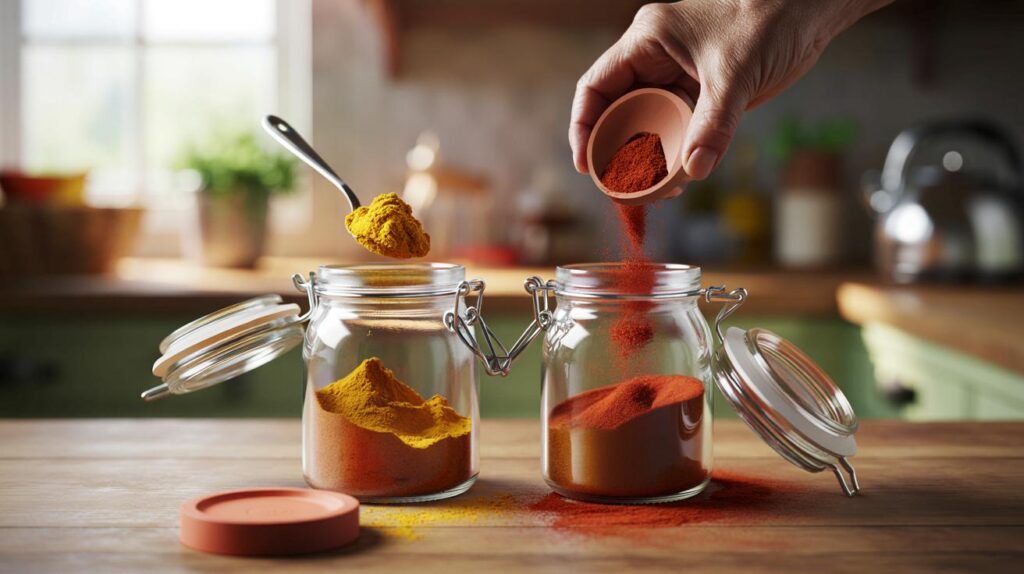
A forgotten kitchen fix is back in fashion as cooks hunt for cheaper, smarter ways to stop waste and keep flavour.
Across Britain, home cooks are slipping tiny clay discs into jars and reporting fewer clumps, brighter aromas and calmer cupboards.
Why a humble terracotta disc keeps spices lively
Unglazed terracotta breathes. Its microscopic pores trade moisture with the air inside your jar, nudging humidity towards a steady middle ground. That helps powders stay free-flowing and slows the fade of volatile oils that carry aroma.
One small terracotta disc can stabilise jar humidity, cutting clumps and slowing aroma loss by up to 85%.
Used in sealed containers, the disc acts like a controlled sponge. When the air runs wet, it absorbs vapour. When conditions turn parched, it releases a trace of moisture back. The trick works because jars are confined spaces with little air to manage.
The science of pores and vapour
Unglazed clay forms interlinked channels as it dries and bakes. Heat changes those pathways. A hotter, shorter bake tends to create wider pores that pull in more moisture quickly. A longer, gentler bake yields finer pores that buffer humidity more steadily.
- Wider pores: good for damp kitchens and clumpy powders.
- Finer pores: better for steady conditions and delicate herbs.
- Airtight lids: mandatory, or the disc can’t regulate the microclimate.
Airtight jars do the heavy lifting. The disc only manages the small atmosphere trapped inside.
How to make a food‑safe disc at home
You can shape a set in an evening and use them for years. Start with food‑safe, unglazed clay. Avoid painted or sealed pieces.
- Knead natural, unglazed clay for about 10 minutes until supple.
- Shape discs roughly 4 cm across and 1 cm thick for standard spice jars.
- Air‑dry for 48 hours away from direct sun, turning after 24 hours.
- Bake to set the structure. Choose a profile that suits your kitchen.
| Bake setting | Effect on pores | Best for |
|---|---|---|
| 150°C for 60 minutes | Finer pores, slower exchange | Steady humidity, delicate dried herbs |
| 180°C for 45 minutes | Balanced pores | Everyday spice jars and brown sugar |
| 200°C for 30 minutes | Wider pores, faster exchange | Damp kitchens, clump‑prone powders |
For ingredients that need a small moisture boost, soak a disc in warm water for 10–15 minutes, pat it dry, then slip it into the jar. To tame humidity, use the disc dry. Refresh a wet disc with a quick soak every 7–10 days, depending on your climate.
Rule of thumb: 4 cm wide, 1 cm thick, refresh weekly. Keep the lid tight and store away from heat or light.
Which spices benefit most
Powders with fine particles tend to cake as they absorb moisture. Others dry out and lose punch. Match the disc to the problem.
When to use a dry disc
- Curry powders, paprika, garlic powder, onion powder and custom blends that clump in steam‑heavy kitchens.
- Cocoa and drinking chocolate that set solid after a few weeks.
- Table salt in non‑iodised form when the air runs damp. Keep it food‑grade and watch for over‑drying.
When to use a soaked disc
- Brown sugar that turns brick‑hard between bakes.
- Dried herbs such as oregano or parsley that shatter too easily.
- Breadcrumbs and desiccated coconut that taste stale when parched.
Always pair the disc with an airtight jar. Keep containers off the hob, away from the kettle and out of sunlight. Heat strips volatile oils. Light bleaches colour and speeds oxidation.
Set‑up tips that save time
- Label each disc “dry” or “soaked” with a pencil mark on the edge.
- Use one disc per jar to avoid odour transfer between spices.
- Test performance by placing a disc near a fogged glass. It should attract visible condensation within a few hours.
- Rotate discs every few months and rebake for 20 minutes at 150°C to drive out absorbed moisture.
Hygiene, safety and when not to use one
Choose lead‑free, food‑safe terracotta. Skip glazed, painted or antique pieces. They can leach or shed. Wash new discs in hot water, then bake dry before first use. To clean, simmer for five minutes, cool, then dry in a low oven. Replace discs that crack, smell off or show mould.
Do not add essential oils to discs. Residues taint food. Avoid using discs in baking powder, bicarb or yeast, where moisture swings change performance. With salt, prefer a dry disc and check pourability weekly.
Food‑safe clay only. No glazed ornaments, no oils, no perfumes. When in doubt, don’t put it in the jar.
What the 85% claim really means
Kitchen trials and manufacturers of “sugar saver” ceramics report longer freshness windows when humidity stays steady. In practice, that 85% figure reflects slower aroma loss and fewer clumps rather than a strict lab shelf‑life extension. You still need good habits. Buy small quantities, keep jars sealed, and grind whole spices close to cooking for a clear lift in flavour.
If you’d rather buy than bake
Terracotta “brown sugar savers” and spice discs cost a few pounds and work on the same principle. Look for unglazed, food‑safe clay, around 4–5 cm across. Check the instructions for soaking times, then treat them like homemade versions. If you store big jars above 750 ml, consider two discs to balance the air volume.
Extra pointers to stretch flavour further
Pair moisture control with light and oxygen control
Opaque jars or tins slow light damage. A tight seal limits oxygen. Together with a clay disc, you reduce the three main drivers of flavour loss: moisture swings, light and air.
Run a quick home test
Fill two identical jars with 50 g of paprika. Add a dry disc to one. Store both in a cupboard for four weeks. Each week, shake and rate flow, then sniff with the lids off for five seconds. Most cooks report freer flow and a brighter odour in the jar with the disc by week two.
Know when to retire a spice
Whole seeds keep aromatic punch far longer than ground powders. Ground cumin and coriander can fade in three to six months. Whole versions often stay lively for a year or more. A disc helps with texture, but aroma comes back strongest when you grind fresh.



I’ve used a terracotta “sugar saver” for years and it works a treat—brown sugar stays soft. Definately curious if the 4cm×1cm disc size fits the little Schwartz jars, or should I sand it down a tad?
85% longer life sounds… optimistic. Any peer-reviewed data, or just brand claims and kitchen trials?