
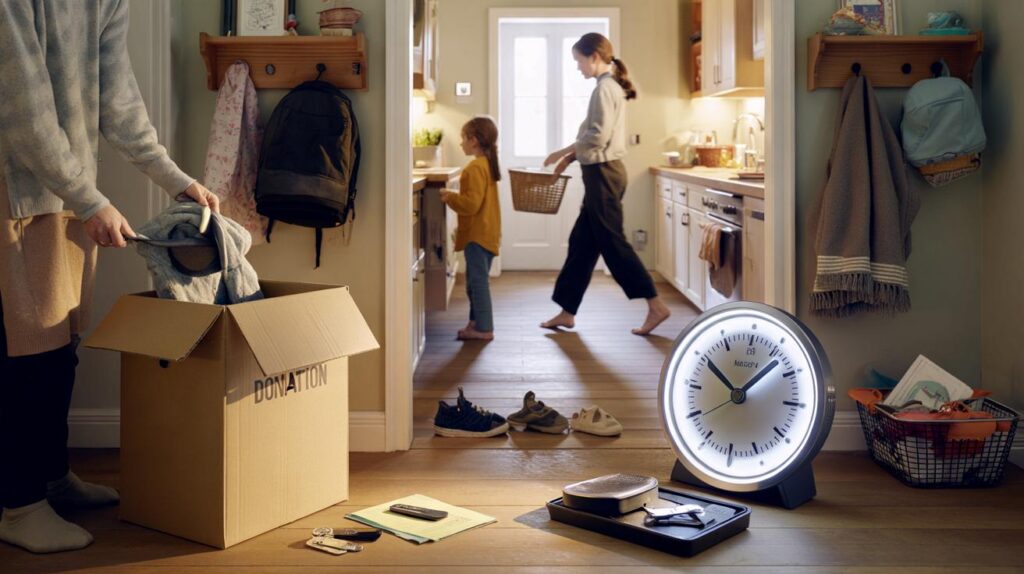
With school runs back and darker evenings looming, homes across Britain are filling fast; small, repeatable habits feel overdue.
Many households want calm without sacrificing their evenings. This piece sets out a fast, human way to keep rooms clear and minds lighter, using a simple swap rule and a short daily reset that fits around real life.
The habit behind the tidy-home trend
Autumn brings coats, kit bags and online orders. Surfaces vanish, drawers jam and tempers fray. Two linked habits are rising because they cut clutter at source and reduce cleaning time: a one-in, one-out swap for belongings, and a seven-minute sweep that resets high-traffic areas each day. You do not need fancy organisers or a spare weekend. You need a timer, a donation box and clear places for everyday items.
One thing in, one thing out. Seven minutes a day. Clear surfaces, calmer minds.
Why the one-in, one-out rule works
It caps volume without willpower
The rule is simple: when a new item enters, a similar item leaves. A new mug sends an old mug to the out box. A fresh hoodie replaces the least-worn hoodie. Volume stays steady even as life moves on. You avoid the slow creep that turns cupboards into hazards.
It nudges smarter spending
Before you buy, you choose what will make way. That pause acts like a budget check. It also stops “just-in-case” purchases and frees space for things you actually use.
- Clothes: replace like for like, season by season.
- Kitchenware: swap duplicate lids, chipped crockery and single-purpose gadgets.
- Toys and hobby gear: rotate weekly; release what has not been touched in a month.
- Paper and admin: file the current; shred or recycle the rest at the point of entry.
If it is not used or loved, it makes space for something that is.
The 7-minute sweep: a daily reset
Seven minutes feels manageable after work. It avoids the marathon tidy that nobody wants on a Friday night. Set a timer and move like a relay runner, not a perfectionist.
How to run it
- Pick a route: hallway, kitchen, living room, stairs, landing.
- Carry a small basket. Never leave a room empty-handed.
- Reset hotspots only: clear surfaces, return dishes, fold throws, corral remote controls.
- Drop stray clothes straight into the laundry or back in the wardrobe, not on a chair.
- Finish with a 30-second bin check and a quick kitchen sink rinse.
Focus on flow, not perfection: visible wins in minutes keep tomorrow easy.
Does it really save time? a realistic household estimate
Big clean-ups come from a week of small delays. The habits above remove those delays. Here is a conservative estimate for a family of four on a typical school week.
| Time drain | Before | After | Weekly time regained |
|---|---|---|---|
| Looking for keys, kit, homework | 10 mins per person daily = 280 mins | 2 mins per household daily = 14 mins | 266 mins |
| Rewashing dishes from piled sinks | 30 mins x 2 sessions = 60 mins | 7-min nightly rinse = 49 mins | 11 mins |
| Refolding chair clothes | 20 mins x 3 times = 60 mins | 5 mins x 3 times = 15 mins | 45 mins |
| Sorting post and school letters | 25 mins weekly | 5 mins across the week | 20 mins |
| Total reclaimed | 342 mins (~5 hours 42 mins) |
Your numbers may vary, but the pattern holds: small daily resets reduce both cleaning and searching.
Make it a team effort
One person cannot maintain a home used by four. Share the habits, keep them light, and make the wins visible.
Easy ways to involve everyone
- Give each person a labelled basket for the 7-minute sweep.
- Set kid-height hooks by the door for bags and coats.
- Run a weekly “treasure return” race: who returns the most strays in 90 seconds.
- Stick a simple chart on the fridge: keys in tray, shoes on rack, post in folder.
A tidy home is a shared habit, not a solo job.
Set your home up to keep the rules easy
Good systems remove friction. The aim is not more storage; it is fewer, clearer homes for things you keep.
- Place a permanent donation box near the front door.
- Use one visible tray for keys, wallets and passes.
- Keep a laundry basket on each floor to stop stair piles.
- Label shelves with plain words: mugs, bowls, lunchboxes, chargers.
- Store bulky items nearest their point of use to cut back-and-forth.
What to do with the out pile
Move items on within a week to avoid a new kind of clutter. Wipe data from electronics, bag textile recyclables, and check local rules for small appliances. Sell quality pieces, gift school uniform to swap groups, and keep a “maybe” box with a date on it: if untouched in 30 days, it goes.
Common pitfalls and how to dodge them
The perfection trap
Glossy feeds push curated minimalism. You need function, not showroom surfaces. Aim for “easy to reset” rather than austere.
Decision fatigue
Set simple thresholds: no duplicates unless actively used; no “just-in-case” items that have not helped in six months; one shelf per category.
Sentimental roadblocks
Keep small, representative items and photograph the rest. One memory box per person keeps meaning without filling cupboards.
Paper backlogs
Build an intake rule: post lands in one tray, then three piles only—action, file, recycle. Process during the 7-minute sweep twice a week.
If you want to go further
Try a capsule wardrobe for work and weekends to simplify laundry and mornings. Run a seasonal reset weekend: one black bag for rubbish, one for donations, one for recycling per room. Keep a running household list of “one-in, one-out” swaps to track real savings; it doubles as a budget check. You can also set a quarterly toy rotation and a monthly kitchen audit to prevent silent clutter from building behind doors.
For a quick test, pick the room that annoys you most. Apply the two rules for seven days. Note time spent looking for things and any impulse purchases avoided. Most families report lower stress, smoother exits in the morning and a house that feels larger—without buying a single box or sacrificing their evenings.



We started the 7‑minute sweep this week and I’m honestly shocked how much calmer the evenings feel. Setting a timer keeps me from over-doing it, and the “one-in, one-out” rule finally broke our junk-drawer curse. Kids even race to beat the clock. We reclaimed at least half an hour before school runs. Not perfect, but defnitely progress. Thanks for a method that doesn’t require buying twelve bins or a new personality 😊