
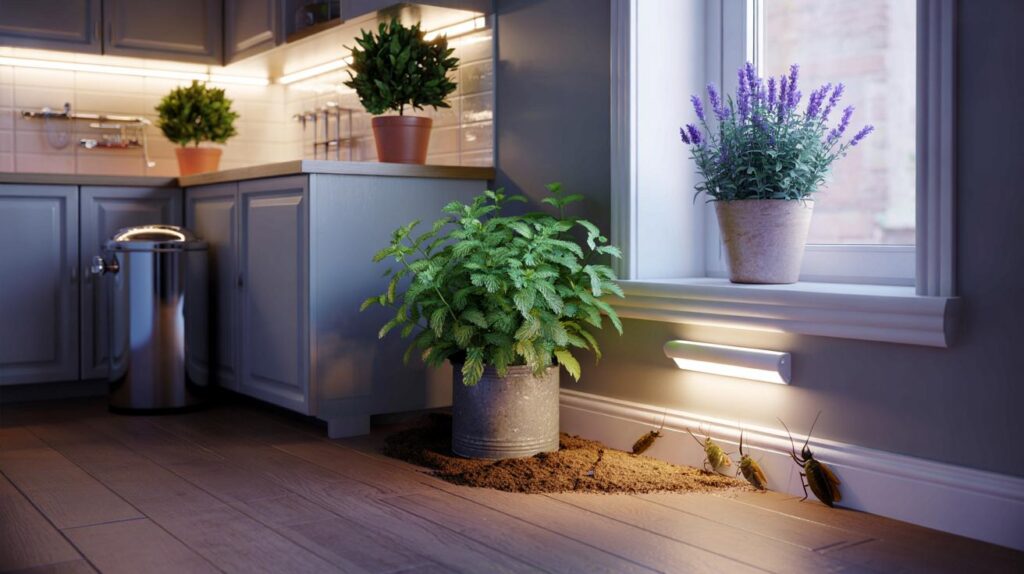
Autumn nudges pests indoors, kitchens grow busy, and cupboards feel crowded. Your window box, not a chemical can, may change the script.
As nights cool and heating clicks on, cockroaches exploit cracks, pipes and crumbs. They move silently, breed quickly and contaminate surfaces. A handful of hardy plants release sharp aromas that confuse their foraging. Place them well and you shift the odds without foggers or pricey gels.
Why cockroaches move in when the heating comes on
Cockroaches chase warmth, moisture and food residues. Radiators, steamy bathrooms and late-night snacks set the scene. Tiny gaps around skirting boards or pipework act as corridors. Once inside, they hide by day and feed at night. Even a tidy flat can offer enough crumbs to sustain a colony. Kitchens, laundries and boiler cupboards top the risk list.
Warm, damp rooms plus micro-cracks equal a fast-track for cockroaches. Block paths and cut scents to slow them.
What draws them and how to break the pattern
- Heat: gaps near fridges, dishwashers and boilers create cosy microclimates.
- Moisture: leaks, wet mops and dripping traps provide reliable water.
- Food odours: grease films, crumbs and pet bowls guide night-time foragers.
- Harbourage: cardboard stacks and clutter offer safe daytime shelter.
Plants that change the game inside small homes
Some aromatic plants release natural volatiles that roaches dislike. These scents disrupt their chemical trails and feeding cues. You do not need a greenhouse. Pots on a sill, a hanging bunch behind a door or a bowl of dried leaves can help. Aim the fragrance at entry points, not in the middle of the room.
Think of scent as a soft barrier. Use several small sources where cockroaches travel, rather than one big pot in the wrong spot.
The four to start with
Peppermint
Peppermint packs menthol, a strong, cooling odour. Grow it in a pot near the bin or under the sink. Pinch stems to release oils and keep the plant compact. Avoid letting roots run wild; it spreads fast in garden beds. A few crushed leaves in a saucer refresh the scent between prunings.
Bay laurel
True bay (Laurus nobilis) brings warm, resinous notes. Slip whole leaves into cupboards and behind appliances. Renew weekly for a steady aroma. A countertop bay tree tolerates cooler kitchens and light pruning. Do not confuse it with cherry laurel, which is ornamental and toxic if ingested.
Lavender
Lavender offers linalool-rich fragrance that lingers. A small pot on a bright sill suits flats with limited space. Dried sachets live happily in drawers, pantries and utility rooms. Trim spent flower stems to keep growth tidy. Low humidity helps it shine.
Eucalyptus
Eucalyptus delivers a camphor-cineole punch. A dried bunch hung on a hook scents a dark corner that roaches favour. Fresh stems in water last for weeks; top up regularly. Potted dwarf varieties need strong light and modest watering.
| Plant | Key aroma | Best spot | Upkeep tip | Pet caution |
|---|---|---|---|---|
| Peppermint | Menthol | Under sink, near bin | Pinch tips weekly | Essential oil can irritate cats |
| Bay laurel | Eucalyptol-like resin | Pantry, cupboard corners | Replace dried leaves often | Avoid cherry laurel leaves |
| Lavender | Linalool | Warm window, linen drawer | Keep soil on the dry side | Oils may bother small pets |
| Eucalyptus | Cineole | Dark, warm corner | Refresh stems fortnightly | Keep away from cats |
How to deploy them for maximum effect
- Cluster two or three small pots along likely paths: behind the bin, by the washing machine, next to the loo.
- Hang a short bouquet of eucalyptus on the inside of a cupboard door that shows droppings.
- Slip six bay leaves into the kickspace under units; tape them in place and swap weekly.
- Place a lavender sachet in each pantry corner; add fresh stems after you cook greasy meals.
- Crush a peppermint leaf at night for a stronger pulse where you spotted activity.
Multiple, well-placed scents outperform a single pot on a windowsill. Treat it like a perimeter, not perfume.
Do they work and where are the limits
Plants deter. They do not eradicate. Their aromatic compounds confuse navigation and reduce feeding. Lab work shows peppermint, bay and eucalyptus oils repel German cockroaches to varying degrees. Whole plants release less at once than bottled oils, yet they provide a steady background odour that nudges roaches away from key areas. Results build over days as scents accumulate.
If numbers are high, add traps and hygiene steps while plants set the tone. Avoid sprays that leave residues near food. Keep expectations grounded and use more than one tactic.
What to add this week for faster results
- Seal: fill gaps around pipes with silicone and cover wall cracks with decorator’s caulk.
- Dry: fix drips, wring mops, and run an extractor for 15 minutes after showers.
- Clean: wipe grease films nightly, especially under hobs and along splashbacks.
- Store: move dry goods into clip-top jars; remove cardboard boxes that offer shelter.
- Monitor: place two sticky monitors under the sink and behind the fridge; check every three nights.
Safety notes and common mistakes
- Do not rely on essential oils around pets or babies; use plants and dried leaves instead.
- Keep eucalyptus and concentrated oils away from cats; they are sensitive to cineole.
- Do not overwater pots; soggy soil invites fungus gnats and undermines the plan.
- Label bay clearly; cherry laurel is not the same and should not go near food.
- Avoid open flames near dried bunches; they are flammable.
A simple two week plan that fits a busy flat
- Day 1: place peppermint and lavender pots; hang eucalyptus; tuck bay leaves in cupboards.
- Day 2: seal one visible gap and set two monitors.
- Day 3: deep wipe under hob and bin lid; crush a few mint leaves at night.
- Day 5: replace bay leaves; trim lavender stems; note monitor counts.
- Day 7: fix one minor leak or dripping trap; declutter cardboard.
- Day 10: rotate pots to new hotspots; refresh eucalyptus bundle.
- Day 14: compare monitor counts; keep plants in place where numbers dropped.
Why scent works on roaches
Cockroaches read the world through semiochemicals. They map kitchens with tiny trails and cues. Menthol, cineole and linalool disrupt those signals and mask food odours. The effect reduces risk where you cook, store and clean. You still need to remove resources and block shelter to keep pressure on the colony.
Extra tools if activity persists
Combine plant barriers with dry products that stay away from food prep. A thin line of diatomaceous earth behind appliances scratches insect cuticles; use sparingly and avoid inhalation. Gel baits sit inside enclosed stations under the sink; plants around them steer roaches into the bait rather than across your worktop. If you use boric acid, keep it out of reach and target cracks, not open surfaces.
Flats with shared risers can suffer repeat incursions. In that case, coordinate with neighbours, log sightings, and ask the building manager for professional support. A technician can map harbourage, service risers and roof voids, then time follow-up visits. Your plants remain useful between treatments and in sensitive spots where you cook and wash.



Tried peppermint and bay last week—already seeing fewer roaches by the bin. The two-week plan is gold, thx! Crushing a leaf at night seems to help. Any tips to keep lavender alive on a cold sill? Mine keeeps sulking.
Do whole plants actually emit enough menthol/linalool to matter, or do you need to crush leaves daily? Any data (links?) beyond “lab oils repel” for German roaches? Not being snarky—just want evidence before I reaarange my tiny kitchen.