
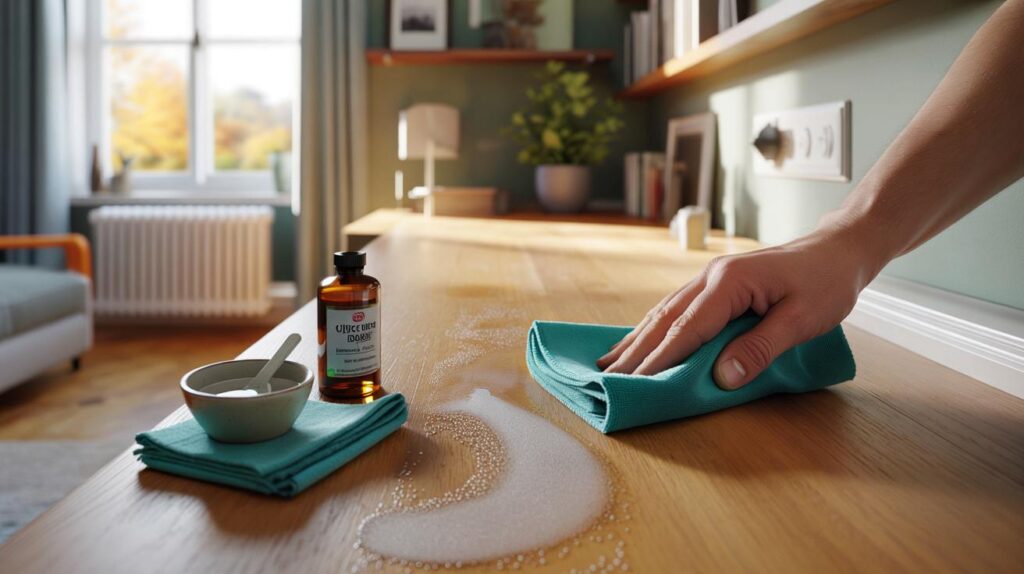
You wipe on Sunday and it’s back by Tuesday. Heating dries the air. Shelves haze over again. What actually stops it?
Britain’s return to radiators flips a switch on static. Dry rooms stir particles. Fabrics rub. Dust sticks faster. A tiny tweak to how you dust breaks that cycle and keeps surfaces clearer for days, not hours.
Why dust returns within hours
Most household dust is a blend of skin flakes, textile fibres, soot, pollen and mite debris. It rides warm air, lands, and clings to smooth surfaces. Central heating lowers indoor humidity. Low humidity boosts static charge. A sleeve on a shelf, or a brisk wipe with a dry cloth, adds more friction and more charge. That static acts like a magnet.
Screens, glossy lacquers and melamine build charge quickly. So do plastics and varnished wood. Pets and wool jumpers add fibres to the mix. Open windows stir fresh particles as boilers fire up. You clean, the charge remains, and dust finds its way back.
Cut the static, and you slow the dust. That’s the whole game in autumn and winter.
The 50p fix: vegetable glycerine with microfibre
Vegetable glycerine—often made from rapeseed or sunflower oil—costs pennies and sits on pharmacy and supermarket shelves. It is colourless, odourless and mildly hygroscopic. That last property matters. A whisper-thin glycerine film holds a trace of moisture. That trace levels out static and stops dust bonding as fast.
Microfibre does the heavy lifting. Its split fibres grip particles rather than flicking them into the air. Add a drop of glycerine to a damp microfibre cloth, and you lay down a near-invisible antistatic barrier while you lift away existing dust.
A 1–2 teaspoon glycerine mix in 200 ml of lukewarm water can keep shelves visibly clearer for 7–10 days.
What you need and how to apply it
- 1 clean microfibre cloth
- 200 ml lukewarm water (preferably distilled if you have hard water)
- 1–2 teaspoons vegetable glycerine
Mix the water and glycerine in a small bowl. Lightly dampen the cloth. It should never drip. Work in slow, even strokes along the grain on wood and in straight lines on laminates and plastics. Cover verticals, shelves and skirting boards. Let surfaces air-dry for a few minutes. Avoid piling on product; too much leaves tacky patches.
Treat once, then top up every 10–15 days depending on traffic, pets and heating use.
Proof in minutes: a quick time-and-effort check
Many households dust small surfaces three times a week once the heating goes on. The glycerine method stretches that interval to weekly for most rooms. That shift saves time without adding pack-after-pack of chemical sprays.
| Method | Visible dust return | Typical weekly time on dusting |
|---|---|---|
| Dry cloth or feather duster | 24–48 hours | 45–60 minutes |
| Standard polish spray | 2–4 days, fragrance residues | 35–50 minutes |
| Microfibre + glycerine mix | 7–10 days on most surfaces | 25–35 minutes |
Where it shines, where to pause
Use the mix on sealed wood, laminates, lacquered furniture, painted finishes and plastic housings. It works well on speaker cabinets, skirting, picture frames and smooth shelves.
Skip the mix on screens, keyboards and touch displays. Use a screen-safe cloth and distilled water only. Avoid unsealed or raw wood, marble, limestone and open-grain finishes. Test a discreet spot first. Never treat floors or stairs with glycerine: it can increase slip risk.
Make results last between cleans
Dial in the room conditions
- Ventilate for 5–10 minutes each morning to flush suspended particles.
- Aim for 40–50% relative humidity. Dry air drives static; very damp air breeds mites.
- Vacuum carpets and sofas twice a week with a HEPA filter. Empty the bin outdoors.
- Wash throws, cushion covers and pet blankets at 60°C when fabrics allow.
- Shake doormats outside and clean them weekly. They trap grit that turns into airborne dust.
Set a simple schedule
Week 1: treat high-touch, high-dust zones—TV stand, bookcases, coffee table. Week 2: rotate to bedroom surfaces. Keep a small spray bottle made with the same ratio for quick spot passes. Mark a 10–15 day reminder on your phone when the boiler first kicks in.
What’s happening at surface level
Microfibre lifts particles because each filament splits into wedge-shaped strands that create vast contact area. Glycerine reduces static by holding trace moisture and smoothing the surface energy a fraction. Less charge plus fewer fibres in the air equals a slower build-up. Moderate humidity completes the triangle.
Triboelectric effects explain the rest. Different materials trade electrons when they touch or rub. Plastics and varnishes sit high on that scale. The glycerine film interrupts that exchange just enough to prevent a rapid charge.
If you live with allergies or asthma
House dust carries mite allergens and pet dander. Fewer particles on surfaces mean fewer particles in the air each time you brush past. Combine the glycerine method with HEPA-grade filtration for the best effect. Keep humidity closer to 45% to discourage mites. Wash bedding weekly at 60°C. Use zipped covers for pillows and mattresses if symptoms flare in autumn.
Small mistakes to avoid
- Soaking the cloth. Excess liquid streaks and lifts finishes.
- Overdosing glycerine. Start low; increase only if dust rebounds within days.
- Buffing too fast. Slow passes lay a more even film.
- Using on glossy screens. It smears and may affect coatings.
- Skipping fresh air. Stale rooms keep particles suspended.
Extra tips that add up
Hard-water smears can defeat the look, so switch to distilled water for your mix if limescale marks annoy you. Microfibre needs care as well. Wash cloths without fabric softener, and tumble on low. Softeners coat fibres and kill their grip.
If you own antique waxed furniture, stick to the manufacturer’s wax and use the microfibre-glycerine method on surrounding modern pieces. The contrast still reduces overall dust, because fewer particles resettle on the antique once nearby surfaces stop acting like static pads.
One small change—glycerine plus microfibre—nudges the physics in your favour and buys back time each week.
For the curious: a quick home test
Mask off half a shelf with tape. Treat one half with the glycerine mix, leave the other half as is. Photograph both sides today and again in seven days. You will spot fewer sparkly specks on the treated half under torchlight. That simple check helps you dial in your dose and frequency for your home, your heating and your habits.
If you prefer a fragrance, add one drop of pure essential oil to 300 ml of the mix, not more. High doses attract dust. Keep the focus on antistatic action, not perfume. The goal stays the same: fewer passes, cleaner lines, calm air.



Tried the glycerine + microfibre mix today (1 tsp in 200 ml) and my TV stand still looks dust-free by evening. If this holds a week, I’m sold!
50p and two minutes to beat dust? Sounds like one of those too-good-to-be-true hacks. Any independent tests or is this just anecdote city?