
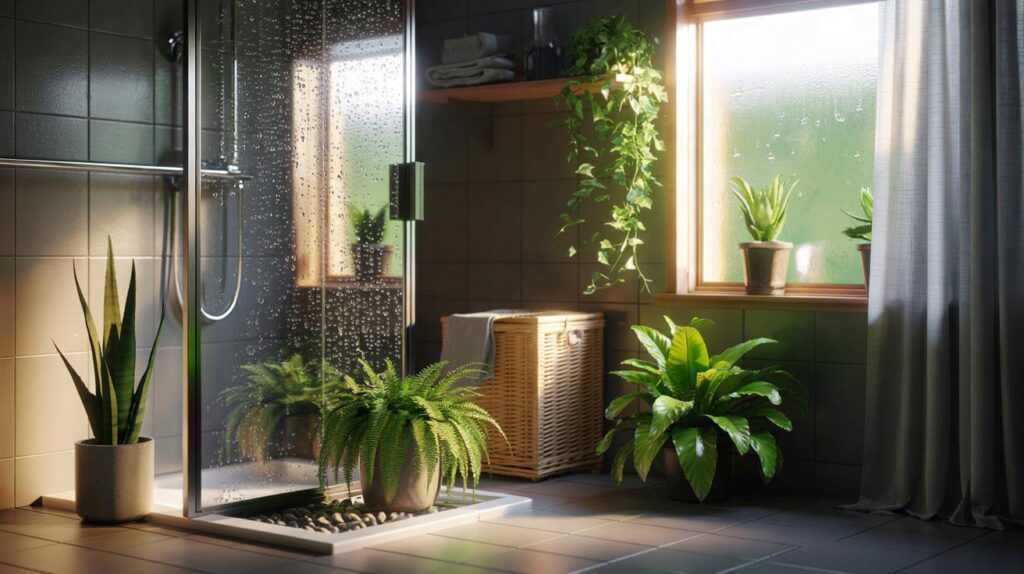
Your mirror keeps misting, towels linger damp, and a sour whiff hangs around. Green helpers can shift the bathroom mood.
High humidity, poor airflow, and low light turn bathrooms into stubborn microclimates. A smart selection of plants can buffer moisture, tame odours, and freshen the space while you get on with your day. You do not need tools, just pots, placement, and simple care.
Why plants change a steamy bathroom
Plants move water through their leaves and soil. In a moist room, they sip airborne moisture and use it. Their leaf surfaces trap particles that carry smells. Soil microbes help bind volatile compounds. The result is gentler humidity swings and cleaner air near plant clusters.
Plants help stabilise bathroom humidity, but they do not replace an extractor fan, a window crack, or a daily airing.
Many shade-tolerant species evolved under tree cover. They accept low winter light and warm steam. They also forgive missed watering. Grouping three to five small pots boosts the effect. The shared transpiration creates a steady microclimate near your mirror or laundry basket.
Seven low-effort choices that thrive in damp rooms
Pick species that love moisture, accept indirect light, and shrug off temperature dips. Avoid midday sun on leaves. Keep pots away from cold draughts. Rotate plants a quarter turn each week for even growth.
| Plant | Best spot | Light needs | Water guide | Helps with | Pet-safe? |
|---|---|---|---|---|---|
| Boston fern (Nephrolepis) | Near shower steam | Low to medium | Keep evenly moist | Moisture buffering | Yes |
| Spathiphyllum (peace lily) | By laundry basket | Low to medium | Moist, not soggy | Odour hotspots | No |
| Aloe vera | Bright shelf, no sun | Medium | Water when dry | Condensation window ledges | No |
| English ivy (Hedera) | High ledge, trailing | Low to medium | Slightly moist | Musty corners | No |
| Chlorophytum (spider plant) | Anywhere stable | Low to medium | Moist, let top dry | Everyday freshness | Yes |
| Sansevieria (snake plant) | Floor near door | Low | Infrequent | Night-time air refresh | No |
Placement that works in real bathrooms
- Mirror shelf: spider plant plus a small fern to reduce fog near face height.
- By the hamper: peace lily to tame stale fibres and damp socks.
- High corner: trailing ivy to pull air across dead zones.
- Window ledge with voile: aloe vera for bright, indirect light.
- Floor near shower screen: snake plant for temperature swings and low light.
Cluster 3–5 small pots within 30 cm of each other. Leave 5 cm between pots for airflow. Use trays with pebbles, not standing water. In a typical 3 m² bathroom, one cluster can shave drying time for hand towels by around a fifth under mild conditions. Your fan still does the heavy lifting. The plants smooth the peaks.
How the science stacks up
Leaves and soil act as a living filter. They intercept aerosols and volatile compounds. That eases the odour load, especially near laundry and drains. Transpiration shifts water from surfaces into plant tissue and back to the room more evenly. You feel fewer fog bursts and less clammy air after a shower.
Target 45–60% relative humidity indoors. A £10 hygrometer on the shelf tells you if the balance looks right.
Laboratory tests show potted plants can remove small amounts of VOCs. Real homes have airflow, so the effect is modest. Pair plants with a 15‑minute fan run after showers and a window crack. Together they help mirrors clear faster and towels dry sooner.
Care that fits a busy week
Watering and feeding
In a humid room, water less, not more. Let the top 2 cm of compost dry before watering most species. For ferns and peace lilies, keep the surface just moist. Empty saucers after 10 minutes. Feed a half‑strength houseplant fertiliser once a month from March to September. Skip winter feeding.
Light and rotation
Bathrooms without windows need a weekly holiday. Move plants to a brighter room for 6–8 hours once or twice a week. Rotate pots a quarter turn each Sunday. Wipe leaves with a damp cloth every fortnight. A brief, lukewarm shower clears dust and boosts performance, then drain well.
Pots and compost
Use 12–15 cm pots with drainage holes. Mix 2 parts peat‑free indoor compost, 1 part perlite, 1 part fine bark. This drains fast after steamy spells. Repot every 12–18 months. Trim dead fronds to curb mould.
Safety, costs, and quick wins
Households with children or pets should avoid peace lily, snake plant, ivy, and aloe vera due to mild toxicity if chewed. Stick to spider plants and Boston ferns. Place trailing plants high to reduce nibbling risk. Label each pot with last water date to prevent overwatering.
- Starter bundle cost: £20–£35 for three small plants and pots.
- Running cost: roughly 1–2 litres of water per month across a cluster.
- Time: 5 minutes a week for watering, wiping, and rotation.
Overwatering is the number one bathroom plant killer. If leaves yellow and feel soft, hold water for a week and add airflow.
Troubleshooting common bathroom issues
Condensation that lingers on mirrors
Add a fern and a spider plant at face height. Run the fan for 15 minutes. Warm the mirror with task lighting for 3 minutes before showering.
Musty towels and bathmats
Peace lily near the hamper plus a snake plant by the door improves flow at nose level. Wash mats at 60°C weekly and hang them fully open.
Mould on grout
Plants do not remove existing mould. Scrub with an appropriate cleaner, seal grout, then use plants to buffer spikes that feed regrowth. Keep RH under 60% after showers.
Going a step further
Pair a plant cluster with a timer plug on your fan. Set 20 minutes after shower time. Track RH morning and evening for 7 days. Aim for a 5–10 point drop within 30 minutes of fan plus plant routine. Adjust plant numbers if the needle barely moves.
Short on space? Use a two‑tier corner rack. Place a fern on top, spider plant below, and a narrow snake plant on the floor. This creates a column of leaves that stirs air from floor to ceiling. For renters, a suction‑cup shelf above the cistern gives a perfect perch without drilling.



Love this! The mirror fog is my nemesis. If I cluster a spider plant with a Boston fern on the vanity, do I need pebble trays too, or will normal saucers do? Also, rotating a quarter turn each Sunday is such a practical tip—never thought of that.
15% faster drying sounds great, but is that measured in real bathrooms or just modeled? Do you have a citation or a range (e.g., 10–20%)? My fan already runs 15 minutes; wondering how much plants add beyond improved airflow.