
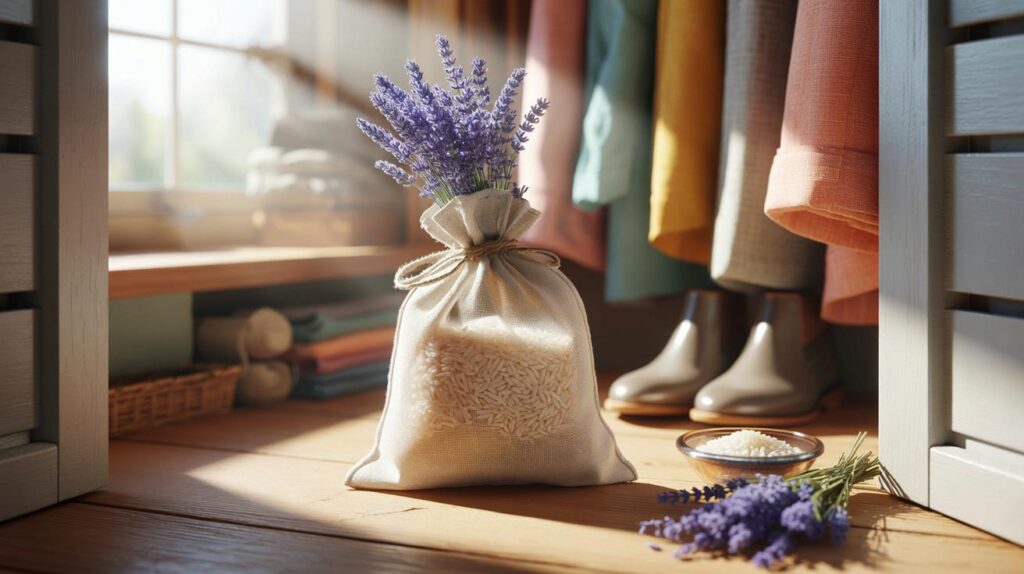
A calm, quiet fix is creeping back into British homes, reviving a time-worn habit that swaps plug-ins for stitched pouches and patience.
As damp months linger and spare-room wardrobes sit shut, a quaint, low-tech method has resurfaced: small rice-and-lavender sachets that promise dramatically fresher cupboards. The pitch is simple and specific — up to a 95% drop in that musty whiff within 24 hours — using rice as an absorbent base and essential oils for a clean, lasting scent. Many households report spending around £2 per sachet, often less if they repurpose old pillowcases or sheets.
What’s behind the 24-hour claim
Rice draws in ambient moisture, the very humidity that feeds stale, closed-in smells. When the air in a cupboard is slightly damp, odour molecules cling and linger. Dry grains have a porous surface that helps take up some of that humidity, while a pinch of bicarbonate of soda binds acid and sulphur compounds responsible for that “stale wardrobe” note. Essential oils then layer a gentle fragrance that carries as the grains warm and cool with daily room changes.
Household tests suggest a noticeable reduction in musty odour — reportedly around 95% within a day — when sachets are placed in closed cupboards and drawers.
This is not industrial dehumidifying. It’s a modest, targeted approach for contained spaces: wardrobes, linen drawers, luggage, shoe cupboards and the storage corners that rarely see fresh air. In those places, small shifts in humidity and odour chemistry can be surprisingly obvious to the nose.
How the method works
Ingredients and kit
- Breathable fabric: cotton, linen or muslin (roughly 20 cm squares)
- White rice: about 60 g per sachet (around four tablespoons)
- Dried botanicals: roughly 15 g of lavender buds or rose petals
- Essential oils: 10–15 drops (lavender, lemon or eucalyptus work well)
- String or ribbon: about 15 cm
- Optional: a small pinch of bicarbonate of soda
For a budget option, cut old cotton bedding into squares. Breathable weaves help the scent travel and keep moisture from pooling.
Quick assembly
Mix rice, dried botanicals and essential oil drops in a bowl for two minutes so the grains take up the fragrance. Add a small pinch of bicarbonate. Spoon roughly three tablespoons of the mix onto the centre of your fabric square. Gather the corners to form a small pouch and tie firmly with string, leaving a short tail so it can hang.
Pro tips for stronger results
- Warm the mix in your hands before tying; it helps the scent rise.
- Use lavender in summer for a clean, herbal note; try orange-cinnamon in winter for a cosy tone.
- Shake sachets every fortnight to liven the scent. Add five drops of oil when it fades.
- Swap in rose petals, rosemary or dried citrus peel if lavender isn’t your thing.
A pinch of bicarbonate inside each pouch helps neutralise stale notes before the fragrance takes over.
Where to place them — and what to expect
These pouches shine in contained spaces that trap air. Hang one on a rail, tuck one on a shelf or slip one into a shoe box lid. Keep them away from direct spills and avoid pressing them against delicate fabrics that might pick up oil spots.
| Spot | Placement | When you’ll notice change |
|---|---|---|
| Wardrobe | One sachet per section or rail | Within 12–24 hours |
| Linen cupboard | One per shelf | About 24 hours |
| Shoe storage | One per pair of boots or shoe box | Overnight |
| Luggage | One inside the main compartment | By the next day |
| Car boot | One inside a net or side pocket | 1–2 days |
Costs, lifespan and upkeep
A single sachet uses roughly 60 g of white rice, a tablespoon of dried lavender and 10–15 drops of oil. Using cupboard staples and reclaimed fabric, most people spend under £2 per pouch. The fragrance tends to last a few weeks, with humidity control providing a steady background benefit. Refresh with five drops of oil when the scent dips, or rebuild a new pouch every two to three months if you prefer a stronger note.
If your home is especially damp, pair sachets with basic ventilation and, if needed, a small dehumidifier for the room itself. The sachet handles the microclimate inside your storage, not the building’s overall moisture load.
What it beats — and where it falls short
Compared with aerosol sprays, these pouches avoid propellants and heavy, lingering fragrances. Against gel fresheners, they’re cheaper and easier to customise. Charcoal bags absorb odours well but add little scent; rice sachets do both, lightly. For active mould or leaks, these pouches won’t solve the underlying cause. Fix the moisture source, clean surfaces safely, then use sachets to keep the space pleasant.
- Strong suits: small spaces, mild damp smells, custom scents, low cost
- Weak spots: large rooms, active leaks, deep-seated mould growth
Safety and sensible use
Keep sachets out of reach of children and pets. Some essential oils can bother cats and dogs; if in doubt, skip oils and rely on dried botanicals plus bicarbonate. Avoid placing pouches directly against silk or other sensitive fabrics that might stain if oil seeps through. If a sachet feels clammy after a spill, bin it and make a new one; wet rice can sour.
Why people are turning to this low-tech fix
Rising energy costs, sensitivity to strong synthetic fragrances and a desire to reuse what’s already at home have pushed many towards simpler solutions. A stitched square from an old pillowcase, a handful of rice from the cupboard and a few drops of oil produce a neat, repeatable result in a day.
In small, shut spaces, tiny changes make a big difference: less humidity, fewer stale compounds, a cleaner first breath when the door swings open.
Extra ideas to get more from each pouch
Rotate scents by season to prevent “nose fatigue” — lavender in summer, lemon-eucalyptus during cold season, or rose with a hint of cedar for linen shelves. Trial a neutral sachet with only bicarbonate in shoe boxes, then add two drops of oil if you want a light top note. If you live by the coast or in a valley, stash one sachet near door mats where damp boots sit; swap it monthly.
For a simple check on effectiveness, rate the smell in a cupboard from 0 to 10 before placing a sachet, then again after 24 hours and a week later. If the cabinet still smells stale after a day, add a second pouch or crack the door ajar for a few hours to vent. Combine with open-bowl bicarbonate for a heavier-duty reset in very musty spaces, then maintain with the rice sachet alone.
Think of these bags as micro-managers. They won’t dry a whole house. They will, in many cases, tame the stale air where you actually notice it: the wardrobe you open before work, the drawer you reach for towels, the suitcase you pack before a trip. Low cost, quick to make and easy to refresh, they give you cleaner storage air by tomorrow morning — using things you likely already have at home.



Tried this last night and wow — my linen cupboard went from swampy to fresh in a day. The pinch of bicarb really helps. Cost me about £1.80 using scrap fabric. Thanks for the clear steps! 🙂