
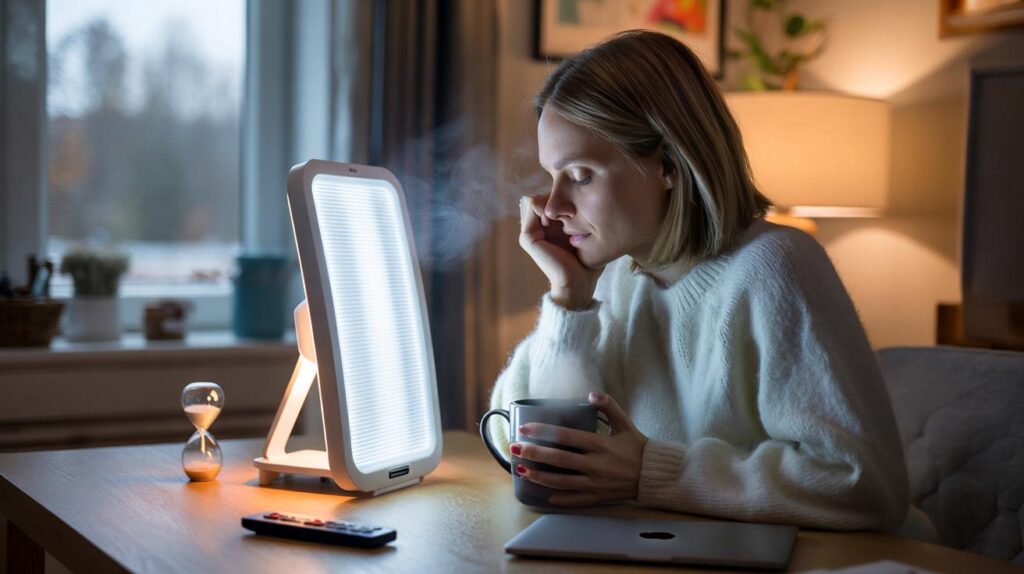
Dark mornings chip away at energy, focus and patience. A small bright box is suddenly everywhere, promising a steadier start.
As the clocks go back and daylight shrinks, shoppers have flocked to a budget light-therapy lamp on Amazon that aims to mimic clear morning sun. Priced at £42.99, the Caromolly SAD Light Therapy Lamp pushes up to 10,000 lux, offers multiple light tones, and slots neatly onto a desk or bedside table. Users say it makes wake-ups feel less grim and the first meeting of the day less of a slog.
Why winter light matters
Short days delay the body’s internal clock. Melatonin lingers into breakfast, while serotonin can dip, and mood follows the light. Many people notice the “winter blues”, and a smaller group meet the criteria for Seasonal Affective Disorder (SAD). Light therapy tries to replicate a bright morning, nudging circadian timing earlier and signalling “daytime” to the brain.
Up to 10,000 lux for 20–30 minutes soon after waking often gives the strongest circadian nudge.
The £42.99 lamp drawing five-star chatter
Amazon reviewers highlight simple setup and a routine-friendly design. Many place it at a workstation. Others pair it with a smart plug so it flicks on with the alarm. Parents mention using it while assembling packed lunches. Remote workers swear by a timed burst before the inbox opens.
Key features
- Maximum brightness: up to 10,000 lux at recommended distance
- Light modes: warm white, natural light, and daylight white
- Timers: four pre-sets for set-and-forget sessions
- Controls: touch surface and remote control
- Remote power: CR2025 coin-cell battery bought separately
- Form factor: slim, compact, desk- and bedside-friendly
- Use case: works well with a smart plug for automatic morning starts
- Price point: £42.99 at the time of writing
People report calmer mornings, easier get-ups, and more consistent concentration when the lamp becomes a daily habit.
How users are fitting it into real life
Home-office desks see the most action. Some tilt the panel at a slight angle beside a monitor. Early risers place it on a breakfast counter for a quick dose during coffee. A few leave it on a dresser aimed at the face while getting ready. Several connect it to a smart plug that switches on at the same time each day to create a reliable cue.
How to use light therapy well
- Timing: use it soon after waking, ideally within an hour.
- Duration: start with 20 minutes at a comfortable brightness; many settle between 20 and 40 minutes.
- Position: keep it slightly off to the side, at eye level or higher, angled toward the face.
- Distance: sit at the recommended range for the device to reach intended lux; avoid staring directly at the LEDs.
- Consistency: build a daily routine on at least workdays for two weeks, then adjust.
- Sleep: avoid bright-light sessions in the evening so you don’t shift bedtime later.
A bright dose in the morning can advance your body clock; a bright dose late at night can push it the wrong way.
Evidence and guidance in context
NHS guidance recognises that many people feel lower in winter and that bright-light therapy may help some individuals with SAD-like symptoms. Clinical SAD affects a minority, but milder winter low mood is common. Research supports morning light for circadian alignment and for some people this translates into better energy and improved mood. Results vary. Expect a modest lift rather than a transformation on day one. Two weeks of regular sessions is a fair test.
Who should take care
- Eye conditions: people with retinal disease, recent eye surgery or macular issues should speak to an optometrist or GP before use.
- Migraines: bright light can trigger headaches; lower brightness and shorter sessions can reduce risk.
- Photosensitising medicines: certain antibiotics, acne treatments and herbal supplements increase light sensitivity; check your leaflet or consult a clinician.
- Bipolar disorder: bright morning light can, in some cases, help bipolar depression but may risk hypomania or mania; seek specialist advice first.
- Sleep: if you struggle to fall asleep, keep sessions early in the day and dim screens at night.
What you get for £42.99
Premium light boxes often add medical certifications, larger panels and fancier stands. This budget pick focuses on the essentials: enough brightness to reach a 10,000-lux dose at typical desktop distance, adjustable colour temperature for comfort, timers so you don’t overdo it, and a remote for convenience. You will need to source a CR2025 battery for the remote, which adds a small extra cost. Most therapy lamps filter UV, but always check the product documentation if you have skin concerns.
| Specification | Detail |
|---|---|
| Maximum illuminance | Up to 10,000 lux at recommended distance |
| Light modes | Warm white, natural light, daylight white |
| Timer options | Four presets |
| Controls | Touch panel and remote (CR2025 battery required) |
| Footprint | Compact, desk/bedside friendly |
| Typical use | 20–40 minutes after waking |
| Price | £42.99 |
A practical seven-day starter plan
Day 1–2: run 15–20 minutes at a comfortable brightness while you read or check your calendar. Day 3–5: increase to 25–30 minutes and nudge the session earlier if you wake groggy. Day 6–7: fine-tune the distance or switch to a cooler light mode if you want a crisper feel. Track your wake time, energy at 11am, and evening sleepiness; minor gains add up.
Boosting the effect without spending more
- Open blinds fully and sit near a window for breakfast, even on grey days.
- Take a brisk 10–20 minute walk after your light session to reinforce the daytime signal.
- Keep evenings dim: warm bulbs and screen dimmers help melatonin rise on time.
- Consider vitamin D as per UK advice in autumn and winter; many adults take 10 micrograms daily unless a clinician advises differently.
What readers often ask
How quickly should you expect results?
Some people feel a lift in a few days. Many need 1–2 weeks of regular use. Keep a short log to judge changes in energy, concentration and sleep timing.
Where should the lamp sit on a desk?
Place it slightly to one side at or above eye level, angled towards the face. You should see the light’s glow in your peripheral vision while you work.
Can you use it after lunch?
Midday sessions may help during overcast spells, but late afternoon light can delay sleep. Keep the bright blast for mornings if you struggle to nod off.
For many households, a reliable, bright cue after the alarm beats another coffee. This £42.99 unit lands at a sweet spot on price and practicality. Pair it with earlier mornings, a short walk and softer evenings, and winter often feels more manageable.



Used a 10,000‑lux lamp last winter—20 minutes while making coffee and my 9am meetings felt less brutal. This Caromolly at £42.99 looks like a solid budget pick; timers + color temps are a nice touch. Might actually ditch the second espresso.
10,000 lux at what distance exactly? Listings often quote max lux at 1 inch. Has anyone checked with a lux meter at typical desk range (30–50 cm)? Not trying to be a grump, just wary of marketing bling.