
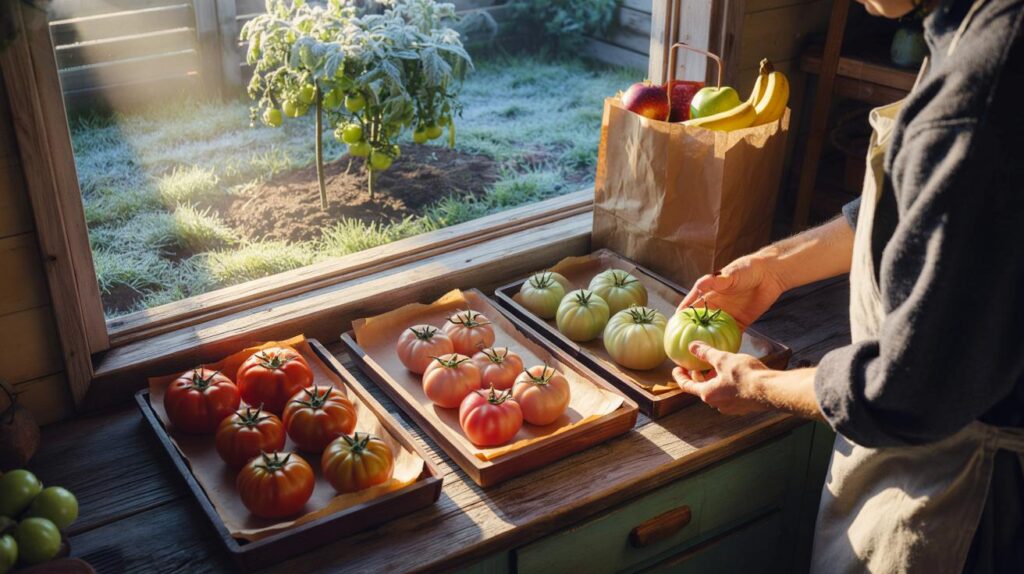
Dawn glitters on lawns, days shrink, and vines hang heavy with stubborn fruit that still won’t blush before winter bites.
With night-time temperatures sliding towards single figures across the country, growers are racing the season. The good news is that tried-and-tested country methods still work, and they don’t need gadgets or guesswork. Three simple moves—timed picking, controlled ripening, and strict sorting—can turn a threatened crop into weeks of flavour.
Read the sky: knowing when to pick beats the first freeze
Tomato plants hate cold snaps. Once nights drift below 10°C, cell damage creeps in and the first ground frost can scupper a month’s patience overnight. Watch your local forecast and act fast when a clear, still night is coming.
Below 10°C at night the clock starts ticking; pick before the first white frost rather than after it.
Choose firm fruits showing a pale, milky sheen rather than bottle-green. Leave a short piece of stem attached to each tomato to slow moisture loss and extend storage. Reject split or blemished fruit; one soggy outlier can ruin a tray by morning.
If a frost is due and the vines are still loaded, give yourself a short grace period: drape plants at dusk with horticultural fleece or an old sheet. That buys a few crucial hours of protection, enough to harvest in daylight without losing your hands to the cold.
The 3 moves you can action tonight
- Pick by temperature, not routine: harvest when nights brush 10°C, not when you planned to at the weekend.
- Ripen off the vine under control: choose light-and-warmth or paper-bag methods depending on space and speed.
- Sort by maturity on day one: keep near-ripe fruits apart from hard green ones, and cook what stalls.
Turn waiting into flavour: how to redden green fruit indoors
Once the crop is in, switch from weather-watching to nurturing. You have two reliable ripening routes. Both avoid the fridge, which dulls flavour and halts the chemistry you need.
Light and warmth method
Spread tomatoes in a single layer on trays or newspaper. Keep good airflow and space them so any softening fruit doesn’t touch its neighbours. Aim for 18–22°C in a bright room; a spare bedroom or sunny kitchen shelf works well. Check every 48 hours, rotate the slower ones, and remove any that turn. Expect 10–15 days to full colour with balanced flavour.
Paper bag method
For speed, use a kraft paper bag or a plain cardboard box. Add a ripe apple or banana to release ethylene, the natural ripening gas. Close the top without sealing it; you want a gentle build-up of gas, not condensation. Keep at room temperature. Many batches colour in as little as seven days.
| Method | Where | Temperature | Typical time | Pros | Watch-outs |
|---|---|---|---|---|---|
| Light and warmth | Bright, airy room | 18–22°C | 10–15 days | Even flavour, easy monitoring | Space needed; daily checks |
| Paper bag with apple/banana | Room-temperature cupboard | 16–22°C | 5–10 days | Faster, compact setup | Mould risk if overcrowded |
Ethylene from a ripe apple or banana triggers ripening hormones—no tech, no cost, just chemistry.
Small details that protect your haul
- Layer newspaper between trays to soak up moisture and buffer cold draughts.
- Keep stems facing sideways, not down; it reduces pressure points and bruising.
- Never refrigerate green or just-blushed tomatoes; cold stalls flavour development.
Sort to win: keep batches by maturity and cook what stalls
Mixing shades invites trouble. Split your harvest by colour on day one: pink-tinged in one tray, pale-green in another, dark-green in a third. Label them. You’ll save time later and prevent a soft one hiding among hard fruit.
Near-ripe fruit suits quick turnaround. Use within a few days for salads, roasted trays, or soup. Hard greens often take longer, and some may refuse to colour fully. Put them to work in the kitchen rather than forcing the issue.
Green tomatoes that won’t turn: cook them like this
- Soft-set jam: 500 g green tomatoes, 250 g sugar, lemon zest and juice. Simmer to setting point; jar hot.
- Spiced chutney: 1 kg green tomatoes, 250 g onions, 200 ml cider vinegar, 150 g brown sugar, ginger, mustard seeds, chilli. Cook low and slow until thick.
- Savory fritters: salt sliced greens to draw moisture, dip in seasoned gram flour, fry until crisp; serve with cheese.
Batching by maturity slashes waste and stops one bad tomato from seeding rot across a whole crate.
Modern gardens, old hands: small habits that save your harvest
Old-timers relied on observation and routine. Those habits still deliver. Mulch to steady soil temperatures. Prune lightly to improve airflow but keep a leaf canopy to shield fruit from cold nights. When a cold snap is flagged, stage your harvest over two evenings, covering unpicked plants between runs.
City balconies and allotments benefit from the same logic. A fold-up drying rack becomes a ripening station. Bread crates make breathable trays. A cheap thermometer on the windowsill tells you if your spot stays in the 18–22°C sweet zone.
What to do on the day before a forecast frost
- Sort stakes, trays, newspaper, and labels in the afternoon so harvesting is smooth.
- Pick anything showing a blush first, then the firm pale-greens, leaving the darkest for last.
- Cover the remaining vines at dusk; finish harvesting next morning once the frost lifts.
Risk and reward
Ethylene speeds ripening but also nudges microbes. Balance speed with ventilation. Don’t cram bags or boxes. Inspect daily for soft spots, off smells, or skin breaks. Remove problems immediately so the rest keep pace.
Energy use matters. Skip heaters. Use rooms that already sit near 20°C. A sunlit corridor or spare room often beats the kitchen, where steam and splashes raise humidity.
Practical extras to stretch your season
Estimate your throughput. If one tray holds 20 medium tomatoes and colours in 10 days, two rotating stations can handle 40 per fortnight. That cadence helps you plan meals and preserves without gluts or gaps.
Think beyond tomatoes when organising. The same ripening corner suits late peppers. The same fleece protects tender herbs. Build a simple cold-night drill: check forecast, ready covers, pre-label trays, set a reminder for the daily inspection.
Finally, keep a notebook. Note which varieties colour well off the vine, which sulk, and which shine in chutney. Next spring you’ll plant with confidence, and when the mercury slides towards 10°C again, you’ll already have a plan—and fewer regrets in the compost bin.



Brilliant guide! Picked at 9°C last night, wrapped vines with an old sheet, and now my spare room is a tomato triage. The paper-bag + banana method got a batch blushing in 6 days last year. One tip back: keeping stems sideways really does cut bruises—who knew? Thanks for the no-gadget sanity. It definately helps.