
You start a plan with a thud in your chest and a calendar full of promise, then watch it fizzle as life gets loud. The HIIT timer beeps. Your knees ache. The joy slips away. What if long-term health doesn’t live in the red zone, but in the small, bright moments you actually want to repeat?
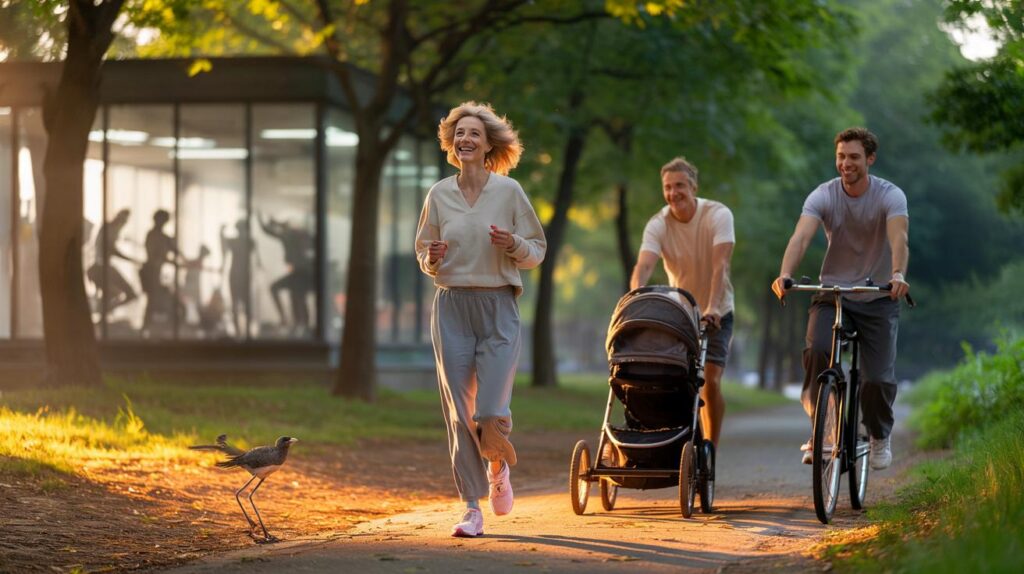
The 6 a.m. class flung open its doors like a nightclub, all lights and sweat-slicked mirrors. People punched the air at nothing and everything. Ten minutes in, a woman glanced at the clock, lips pressed tight. On the walk home, I passed a man pushing a pram at an easy pace, grinning at a thrush hopping the kerb. We’ve all had that moment when movement feels like a chore, or like a friend. The difference isn’t willpower. It’s joy. What if joy is the missing muscle?
The feel-good shift: Why joyful movement outlasts hardcore hustle
Most people don’t quit exercise because they’re weak. They quit because the plan asks them to live a life that isn’t theirs. Joyful movement fits inside the life you already have. A walk with a neighbour, a dance in the kitchen, a bike ride that steals half your lunch hour. It’s lighter on the nervous system and kinder on your calendar.
Look at January gyms in week one versus week four. The energy drains, the faces change. Then meet Marie, 42, who swapped bootcamps for a sunrise stroll and a weekend swim. Her blood pressure dropped, her sleep deepened, and she hasn’t missed a week in nine months. Research often points to adherence as the real victor: people who enjoy their activity stick with it, sometimes two or three times longer. Consistency wins boring every time.
There’s chemistry to this. Enjoyable movement triggers dopamine and safety signals, wiring a loop you’ll return to tomorrow. Grim determination spikes stress hormones, then steals your drive for the rest of the day. **Sustainability beats heroics.** The World Health Organization suggests 150–300 minutes of moderate movement a week or 75 minutes vigorous. You can meet that with brisk walks, happy laps, and the odd sprint for your train.
How to make joyful movement your default
Start with a Joy Menu: list five ways you like to move that don’t require perfect weather, special kit, or a booking. Keep it messy: ten songs to dance to, three walking routes, a set of stairs, a five-minute mobility flow. Use the “10-Minute Joy Block.” Pick one item, do it for ten minutes, stop while you still want a bit more. **Ten joyful minutes beat zero perfect minutes.**
Common traps? All-or-nothing plans. Tracking every metric until the fun leaks out. Copying an influencer’s routine that doesn’t fit your knees or your job. Swap “targets” for “touchpoints” and count wins like how your back feels after sitting, or how your mood lifts at 3 p.m. Let your playlist do some heavy lifting. Let’s be honest: nobody actually does that every day.
Joy scales when it feels social, simple, and slightly playful. Keep a pair of trainers at the door. Set a daily “move cue” with your morning brew or the school run. Then let the rest be flexible.
“If you can smile while moving, your body is telling you it’s safe to repeat. That’s the signal that builds lifelong fitness.” — a community physio in Bristol
- Keep it bite-sized: 10–20 minutes, repeatable, done.
- Pair it with a habit you already have: coffee, commute, calls.
- Choose friction-free options: minimal kit, easy routes, free spaces.
- Make it social: a friend, a dog, a class that laughs out loud.
- Vary the vibe: walk, dance, stretch, roll, splash, play.
A gentler future for fitness
Maybe the next big fitness trend is smaller, kinder, and more honest. Imagine a culture where “Did you enjoy it?” matters as much as “How many reps?”. Where a lunchtime stroll is praised, and a Sunday kickabout counts. **Your body remembers how joy feels.** It will follow that feeling without a fight.
Joy doesn’t mean easy. It means meaningful. A hill that shows you the view. A swim that quiets your head. A stretch that lets you sleep. Movement should feel like an invitation, not a summons. When the invitation is warm, you RSVP again tomorrow. And that’s where health hides, patiently waiting for us to notice.
Share the thing that makes you want to move again. Not the “best” exercise, the enjoyable one. A song. A path. A person. Watch how motivation behaves when it’s fed pleasure, not pressure. This is how bodies stay in motion for years, not weeks.
| Point clé | Détail | Intérêt pour le lecteur |
|---|---|---|
| Joy drives adherence | Enjoyable activities are repeated more often and for longer | Builds a routine that survives busy weeks |
| Moderate beats manic | 150–300 minutes of moderate movement meets guidelines | Less fatigue, fewer injuries, better energy |
| Design beats discipline | Joy Menu, 10-minute blocks, friction-free choices | Makes motivation optional and action easy |
FAQ :
- Is “joyful movement” enough to improve fitness?Yes. Brisk walking, cycling to the shops, dancing, and swimming can raise heart rate, build endurance, and support strength when mixed with bodyweight moves. Add two short strength sessions weekly for muscles and bones, and you’ve got a balanced, sustainable routine.
- What if I don’t enjoy any exercise?Start with movement, not “exercise.” Try audio walks with a great podcast, gentle mobility while the kettle boils, or throwing a ball with your kids. Rate your mood before and after. If it rises a notch, you’re on the right track. Keep what lifts you, scrap what doesn’t.
- Can joyful movement help with weight loss?It can support it by increasing daily energy burn and reducing stress-driven snacking. Long-term weight changes mostly come from consistent habits around sleep, food, and movement. Joy keeps those habits alive when motivation dips, which is where the magic tends to happen.
- How do I add strength without losing the fun?Use “micro-sets” sprinkled through your day: two sets of squats after a meeting, a 30-second plank while dinner simmers, suitcase carries with shopping bags. Make it playful—time a song, count landmarks, or train with a mate. Small doses, big payoff.
- What about progress if I’m not tracking hard metrics?Track what matters to you: stairs without breathlessness, better sleep, fewer aches, consistent mood. Use a simple weekly check-in: What felt good? What felt clunky? What will I repeat? Progress shows up fastest where you’d like your life to be easier.



Finally a take that doesn’t blame willpower. My 6 a.m. classes felt like punishment. The Joy Menu idea is brill—already wrote mine. “Sustainability beats heroics” is going on my fridge. Thank you!
Isn’t this just rebranding “do what you like” while ignoring progresssive overload? Without some tracking, how do you prevent plateaus or build real strength? Also, Marie is N=1—what does the broader evidence say?