
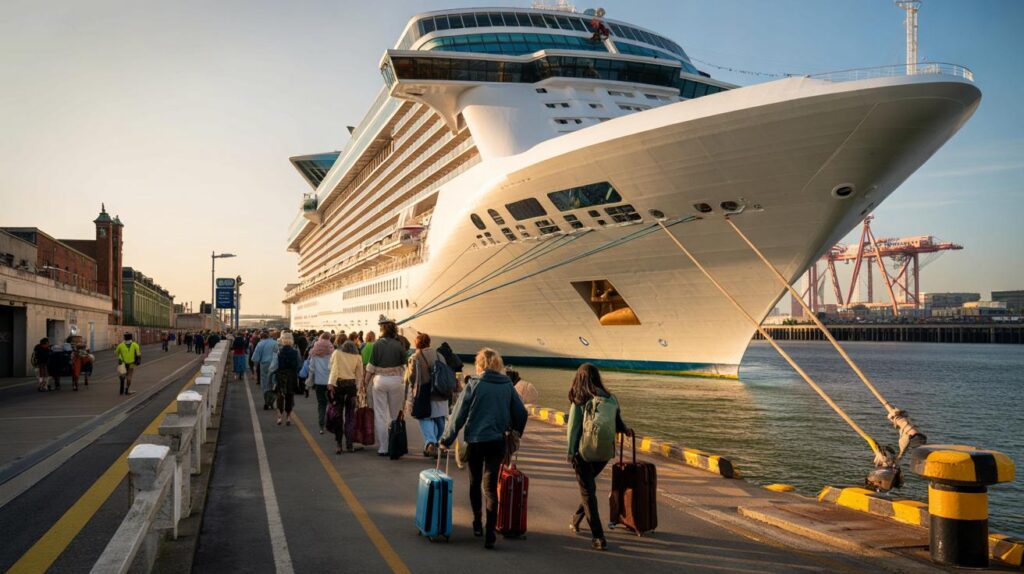
Queues on the quay and cabins booked months ahead hint at a story shaping Britain’s cruise habits this decade already.
Southampton’s skyline now has a familiar moving landmark. MSC Virtuosa, among the world’s largest cruise ships, has reached a five-year milestone since construction finished, and its journey says as much about changing travel tastes as it does about maritime engineering.
Five years that changed a ship — and a port
The UK’s biggest cruise ship by regular schedule first rolled out of the yard in 2020. The pandemic delayed her formal handover until February 2021, yet the calendar still ticks to a symbolic five-year mark in 2025. In that span the ship has maintained a brisk programme, logging just under 100 port calls each year and making Southampton a genuine deep-sea gateway for no-fly holidays.
2025 marks five years since completion, with nearly 100 calls a year and space for about 6,300 guests per voyage.
Virtuosa sits comfortably in the top 15 cruise ships globally by size. More crucial for British travellers, she is the largest vessel to sail regularly to and from Southampton, turning the city into a launchpad for big-ship amenities without the faff of an airport transfer.
What makes it the UK’s biggest regular visitor
The ship’s scale is noticeable the moment you board. At full capacity it carries around 6,300 passengers, supported by a large international crew. Public spaces include multiple restaurants, theatres and family venues. A covered indoor promenade crowned by an LED canopy allows late-evening strolls whatever the weather, a comfort appreciated on shoulder-season departures from the Solent.
The design favours flexibility. Shorter, family-friendly itineraries sit alongside longer journeys. That mix keeps cabins filled year-round, and it feeds a repeat market of travellers who want a familiar ship but fresh ports.
Southampton’s seasonal rhythm
For summer 2025, MSC Virtuosa is based in Southampton, running northern Europe routes with calls in Portugal and Spain. The programme blends city breaks with coastal stops, so passengers can split time between museums, markets and beaches. When the North Atlantic turns brisk, the ship heads for warmer water: winter 2025 is scheduled from Pointe‑à‑Pitre in Guadeloupe, offering Caribbean island-hopping before a return to Southampton for summer 2026.
| Season | Home port | Typical region | Notes |
|---|---|---|---|
| Summer 2025 | Southampton | Northern Europe with Portugal and Spain | Regular turnarounds; no-fly option for UK travellers |
| Winter 2025/26 | Pointe‑à‑Pitre | Caribbean | Warm-weather itineraries; island-hopping focus |
| Summer 2026 | Southampton | Northern Europe | Return to UK base after the Caribbean season |
Winter redeployment to the Caribbean keeps cabins full while the North Atlantic cools, then the ship returns for the British summer.
What it means for travellers
For holidaymakers, the headlines turn into practical gains: less travel faff, more choice and predictable schedules. A large, modern ship also lifts accessibility across the board, with step-free routes, multiple dining windows and a wide spread of cabin types.
- No-fly convenience from Southampton cuts luggage stress and connection risks.
- Frequent departures make short breaks possible outside school holidays.
- Families find kids’ clubs and splash areas, while couples can pick quieter venues.
- Shoulder-season sailings offer lower crowds in Iberian ports.
- Caribbean rotations provide winter sun without complex itineraries.
Behind the scenes: size, staff and sustainability
MSC Virtuosa stretches more than 330 metres and measures over 180,000 gross tonnes, making her a true mega-ship by any yardstick. Capacity reaches roughly 6,300 guests at maximum occupancy, served by a crew running into the thousands. That scale pins down the onboard variety but raises obvious questions about efficiency and emissions.
The ship uses a suite of energy-saving technologies designed to trim fuel burn at speed and cut noise and vibration. Advanced wastewater treatment and exhaust cleaning systems support cleaner operations at sea. When in port, the vessel is built to connect to shore power where facilities exist, enabling engines to idle while drawing electricity from the dock. Southampton has rolled out shore power at select cruise berths, with more connections planned, a change that reduces local emissions during long turnarounds.
Shore power capability means quieter, cleaner calls in port when a berth offers a compatible connection.
Crowd management matters at this size. Staggered embarkation slots, timed dining and digital queuing smooth the flow. Travellers see the benefit most during port days, when well-drilled tender teams and extended gangways keep foot traffic moving. The aim is simple: fewer queues, more time ashore.
Why five years matters now
This anniversary lands in a different travel climate to 2020. Demand for no-fly holidays has grown as households try to control costs and avoid airport disruption. Big ships deliver economies of scale that push down the per-night price for entry cabins, while still offering splash-out suites for milestone trips. The upshot is a broader audience for cruising from the UK, with Southampton’s hotels, taxis and suppliers feeling the weekly surge in spend.
For the ship, five years also means a maturing operation. Crew teams know the local tides and traffic patterns, and port agents have fine-tuned their logistics. That institutional memory helps hold schedules together on busy weekends when several ships share the Solent.
Thinking of booking? A quick reality check
Big ships bring choice, yet a little planning pays off. Weather on Bay of Biscay crossings can turn lively in spring and late autumn. If you prefer a gentler ride, pick a midship, lower-deck cabin. Iberian calls mean warm days but bring layers for offshore winds. On Caribbean routes, pack light rain gear for brief showers between sunny spells.
- Travel insurance that covers missed departures and medical care at sea adds peace of mind.
- Book accessible cabins early; inventory is limited and demand stays high year-round.
- Check whether your sailing connects to shore power in Southampton if local air quality matters to you.
- Reserve specialty dining and theatre seats in the app once your booking opens to avoid queues onboard.
- Give yourself time: arrive in Southampton the day before if you can, especially during rail strikes or peak traffic.
Where this could go next
As the ship cycles between the Solent and the Caribbean, expect incremental tweaks rather than radical shifts: small itinerary changes, refreshed shows, and seasonal menus tied to Iberian and Antillean ports. If more UK berths add shore power, calls could grow quieter and cleaner. For passengers, the bigger change may be cultural rather than technical: cruising feels closer to mainstream city-break tourism than it did five years ago, with familiar brands onboard and predictable pricing windows.
If you are weighing up a first cruise, run a quick personal test. List the three things you value on a city break—food variety, walkability, or a kids’ programme—and match them to ship features. On a vessel this large, chances are you will find a close fit. For regular cruisers, the five-year mark signals stability: a proven ship, a homeport you can reach by rail or road, and a seasonal switch that offers both Lisbon squares and Caribbean coves within one rolling calendar.



500 calls already? Wild. From Soton without flights is a win.
Curious about the actual shore-power usage in Southampton: how many berths are compatible and does Virtuosa plug in on every turnaround? Big ships mean big emmissions—any transparent data on cuts achieved since 2021?