
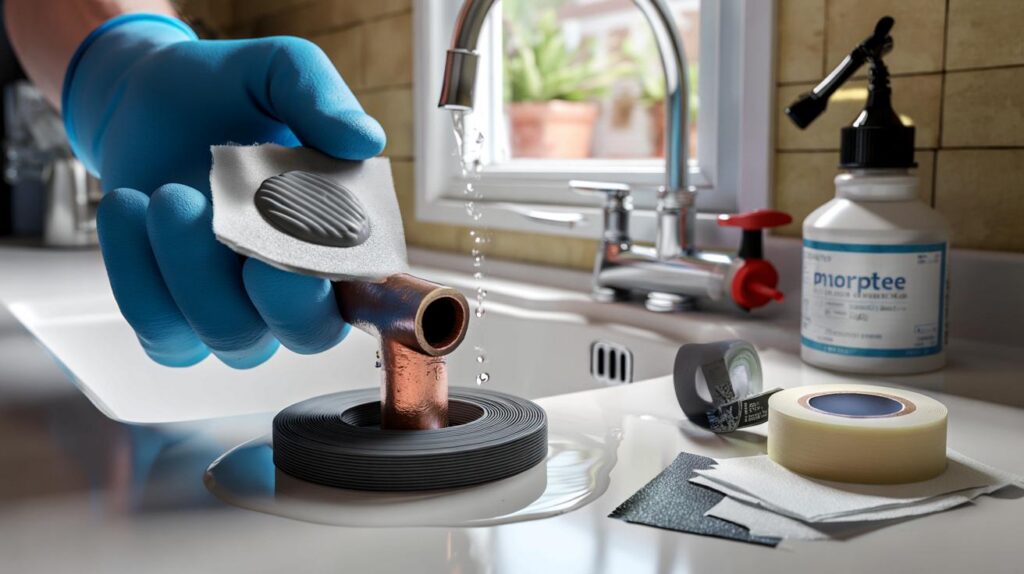
A hairline leak rarely looks dangerous. It’s a pinprick on a copper bend or a dark bead forming under a sink, easy to swipe away with a tea towel. Then the skirting swells, paint blisters, and you’re hunting for dehumidifiers at 10pm while the drip ticks like a metronome on nerves and bank balance alike. Sealant is the quick, human answer in that messy middle — not a miracle cure, but a way to stop the bleed before the house starts to bruise.
It began with a wet sock. Monday morning, kitchen tiles cool and glossy, a small crescent of water blooming near the dishwasher kickboard. I pulled the plinth and found the whispering culprit: a weeping compression joint, glistening like it knew. There was no spare washer, no plumber in the next hour, and school drop-off looming. Out came a roll of self-fusing silicone tape and a thumb-sized lump of epoxy putty, both living in the “just in case” drawer between old batteries and a lone Allen key.
I can still hear the drip count the seconds. The water was off for fifteen minutes, the pipe dried with a hairdryer, the metal dulled with a bit of sandpaper. Wrap, press, smooth. The leak didn’t stop immediately — it slowed, settled, then fell silent as the epoxy warmed in my palm. One tiny fix changed the whole day.
Why small leaks turn into big bills — and what a sealant can really do
Water damage rarely starts with drama; it starts with a whisper. A fine mist from a pinhole looks innocent until it soaks into plasterboard, creeps under laminate, and feeds mould behind a wardrobe. That’s the quiet, expensive kind of chaos. A quick seal — done when the pipe is clean and the flow paused — can halt that chain reaction early and cheaply.
Think of the classic under-sink drip. It’s often a loose threaded joint or a tiny split where the pipe meets a bend. UK insurers quietly note that “escape of water” sits among the most common home claims, and it often runs to thousands of pounds once floors, electrics and decoration get involved. One reader sent me a photo of a copper elbow with a hole no wider than a pinhead. It had soaked a pantry for weeks, hiding behind flour tins and a stack of trays. A two-minute wrap and a blob of epoxy stopped it on the spot — and kept the plasterer away.
Sealants work in different ways. Epoxy putty is a two-part compound you knead together; as it cures, it hardens into a waterproof plug that bonds to metal or PVC. Self-fusing silicone tape stretches and bonds to itself, creating a tight, pressure-resistant band. Thread sealant paste and PTFE tape help threaded joints form a watertight seat. None of these is a licence to ignore a tired pipe or a corroded valve. They buy time, sometimes years, and often enough to avoid the grim, spreading stain that turns into a claim.
A simple, field-tested method to stop a leak fast
Turn off the water at the local isolator or mains. Open the nearest tap to relieve pressure, then dry the pipe completely — hairdryer, towel, patience. Degrease with methylated spirits. For a pinhole, roughen the area lightly with emery cloth so the sealant can grip. Wrap self-fusing silicone tape under tension, overlapping by half-width for three to four layers. Then knead epoxy putty until it’s a uniform colour, and press it over the leak, shaping it into a smooth, slightly domed patch that extends a couple of centimetres around the hole. Give it the cure time on the pack before re-pressurising. Breathe.
Let’s be honest: nobody does that every day. People rush. They dab at a wet pipe and slap on silicone while it’s still weeping. That’s when patches fail. Dry and clean wins every time. Cold garages slow the cure, so warm the putty in your hands or near a radiator before mixing. On threads, wrap PTFE tape clockwise so it doesn’t unravel as you tighten. And don’t muscle joints into submission — overtightening crushes olives and distorts threads, which makes leaks worse and future disassembly a horror show.
We’ve all had that moment when a drip becomes a tiny panic and the room suddenly feels smaller. The trick is to carry a calm, repeatable recipe.
“Dry, clean, rough—then seal. That’s my whole sermon,” says Sam, a London plumber who keeps epoxy in his van door pocket. “If it’s still dripping, I use tape first to tame it, then epoxy for the long hold.”
- Quick kit: self-fusing silicone tape, epoxy putty rated for potable water, PTFE tape or thread paste, emery cloth, nitrile gloves, small torch, clean rags, methylated spirits.
- Use potable-grade products on drinking water lines. Look for WRAS or NSF ratings.
- If water is near sockets or appliances, kill the power to that circuit before you start.
- For a split on a straight run, add a pipe repair clamp over the epoxy for belt-and-braces security.
Keeping the calm — and sharing what works
Sealant buys you time and saves you money. It also builds a kind of domestic confidence: the sense that you can meet a small crisis without waiting three days for a call-out. When a home has a few careful patches, not as secrets but as sensible triage, it starts to feel looked after. Friends swap photos of repairs that held for years, not because they cut corners, but because they learned what to do in those first, decisive twenty minutes.
The conversation matters. A neighbour might have a spare roll of silicone tape; your aunt swears by thread paste over tape on stubborn joints; the apprentice on the forum posts a photo essay that saves you a soaked carpet. Share what you’ve tried. Admit what failed. *A neat repair carries a quiet pride, and it’s contagious.* When we tell these small, practical stories, we make homes that are less fragile and lives that are a touch less frantic.
| Key points | Details | Interest for reader |
|---|---|---|
| Stop the leak fast | Shut water, depressurise, dry, degrease, roughen, then apply tape and epoxy | Simple sequence you can follow under stress |
| Pick the right product | Epoxy putty for pinholes, self-fusing tape for live drips, PTFE/thread paste for joints | Avoids wasted time and repeat leaks |
| Avoid common mistakes | No wet surfaces, no overtightening, respect cure times, use potable-grade sealants | Better, longer-lasting fixes and safer water |
FAQ :
- Can I use sealant on a live, spraying leak?If the jet is strong, pause it first. Close the nearest valve or the mains, bleed pressure at a tap, then wrap self-fusing tape tight to tame any remaining seep before adding epoxy.
- How long does epoxy putty take to cure?Most brands start to set in 5–10 minutes and reach handling strength in 30–60. Full cure can take a few hours. Cold rooms slow this; warming the putty in your hands helps.
- Is sealant a permanent fix?It can hold for months or years on a sound pipe with a small defect. Treat it as a durable repair or a smart bridge to a scheduled replacement, not a licence to ignore corroded pipework.
- Should I use PTFE tape or paste on threads?Both work. Tape is clean and quick; paste can excel on worn threads. Some pros use both: a light wrap of tape plus a thin smear of paste for a belt-and-braces seal.
- What if the leak is near electrics?Kill the power to that circuit at the consumer unit before you go near it. Dry the area, repair the pipe, then have a qualified electrician check any affected sockets or wiring.



Turned a 2am drip into a calm 10‑minute fix. The “dry, clean, rough—then seal” line is sticking on my fridge. I used self‑fusing tape first, then epoxy putty over a pinhole on a copper elbow; held pressure overnight, no more ticking. Defintely worth keeping a small kit by the sink. Thanks for the clear steps!
Isn’t this just a band‑aid? At what point do you stop patching and replace the section? Also, could a long‑term epoxy patch affect insurence claims if a bigger leak happens later?