
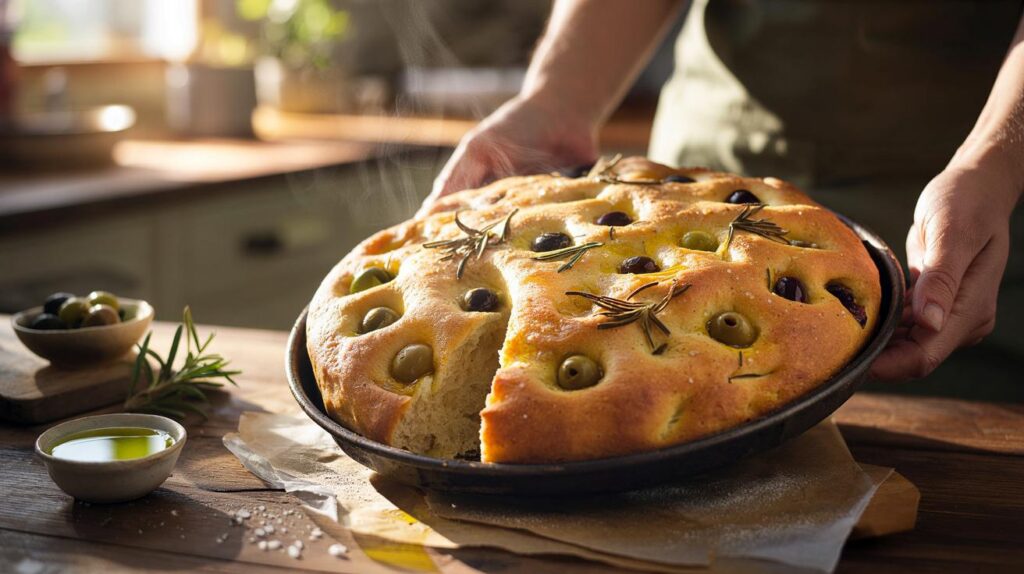
As nights draw in, kitchens across Britain chase warmth, flavour and easy wins that bring friends together without draining wallets.
One pan of soft, dimpled focaccia ticks those boxes with little kit and less stress. It leans on store‑cupboard basics, carries bold Mediterranean notes, and lands on the table hot enough to lift the mood in minutes.
Why soft olive and rosemary focaccia is trending this season
People want shareable food that doesn’t bully the clock. This focaccia brings a crisp edge, a plush crumb and a perfume of rosemary that feels sunny even when the wind bites. It works for a Friday glass of wine, a Sunday brunch, or a soup-and-bread supper that still feels generous.
You don’t need a mixer. You don’t need specialist flour. You do need a hot oven, a bowl, and a willingness to let yeast do the heavy lifting while you set the table.
One bowl, 64% hydration, 1 hour to rise, 20–25 minutes to bake at 220°C. That’s your timeline.
What you need and the real-world costs
The base formula relies on 500 g strong or plain flour, 320 ml warm water, 10 g fine salt, 10 g sugar, 15 g fresh yeast (or 7 g fast-action dry), and 40 ml extra‑virgin olive oil. A good handful of pitted olives and a couple of rosemary sprigs deliver the signature finish.
| Item | Quantity | Typical UK cost | Budget swap |
|---|---|---|---|
| Wheat flour | 500 g | £0.35–£0.60 | Plain flour works; add 1 tsp vital gluten if you have it |
| Yeast | 7 g dried or 15 g fresh | £0.10–£0.20 | Use sourdough starter and add 30–40 minutes to each rise |
| Olive oil | 40 ml (+ drizzle) | £0.30–£0.60 | Split half olive, half rapeseed to cut cost |
| Olives | 1 handful | £0.40–£0.90 | Use green for bite, black for sweetness; both work |
| Rosemary | 2 sprigs | £0.20–£0.50 | Dry rosemary at half the quantity |
Pantry swaps if shelves run low
- Fleur de sel gives a gentle crunch; regular sea salt flakes behave similarly.
- Add 1–2 tbsp grated parmesan or pecorino for extra colour and savour.
- Fold in chopped sun-dried tomatoes or a pinch of chilli for a warmer profile.
Step-by-step that fits weeknights
Mixing by hand in 8 to 10 minutes
Whisk the yeast and sugar into warm water. Tip flour into a large bowl. Add the yeasted water, then salt and oil. Stir with a spoon until rough. Switch to your hands and knead in the bowl or on a lightly oiled surface. Aim for a supple dough that clings slightly. That gentle stickiness signals moisture, which bakes into softness.
Aim for tacky, not gluey. If the dough feels dry, wet your hands and keep kneading.
The one-hour rise that changes everything
Grease a clean bowl, drop in the dough, turn to coat, and cover. Park it somewhere warm but not hot: an oven with the light on, near a radiator, or inside a microwave with a mug of hot water alongside. In roughly 60 minutes, it should double. That rise builds flavour and gives the crumb room to open.
Shaping, dimpling and topping for flavour pockets
Oil a baking tin or tray with high sides. Turn out the dough and press it out with your fingertips, nudging air towards the edges. Scatter chopped olives and rosemary needles over the surface. Fold the dough once or twice to tuck the flavour inside, then spread it back into the tin. Rest for 20 minutes so bubbles recover.
Bake hot, serve warm
Heat the oven to 220°C (fan if you have it). Dimple the surface with oiled fingertips. Gloss with more olive oil and a few extra olives and rosemary tips. Slide in a small tray of hot water on the bottom shelf if you want a thinner, crackly crust. Bake for 20–25 minutes until burnished gold and aromatic. Lift out and cool for a few minutes before cutting.
Hosting tactics and serving ideas
Pairings that travel well from fridge to table
- Charcuterie works: prosciutto, mortadella, or bresaola, sliced thin.
- Cheese softens the edges: mozzarella, taleggio, or a mild gorgonzola.
- Antipasti sit neatly: grilled peppers, artichokes, or caperberries.
- Soup loves it: ladle pumpkin, tomato, or minestrone alongside.
Serve in chunky squares on a wooden board with a bowl of peppery olive oil, or spread with pesto for a green glow. Light toasting brings back the crisp rim if you bake ahead.
Make-ahead, storage and no-waste moves
Wrap leftovers in a clean tea towel or box them up airtight. Warm gently at 150°C for 6–8 minutes to revive the softness. Dice stale slices and toast into quick croutons for salads or stews. Build overnight breakfast bakes with cubes of focaccia, egg, milk and spinach for a hands-off brunch.
Nutrition, energy use and kitchen maths
This quantity serves 8–10 as a side. At 10 servings, you land near 210–260 kcal per piece depending on how much oil you add after baking. Salt sits around 0.8–1.0 g per serving with a flaked finish. The hydration sits at 64% before oil, which keeps the crumb tender without drifting into ciabatta territory.
Energy costs matter right now. A typical electric oven averages about 1.6–2.0 kW while cycling. With 10 minutes to preheat and 25 minutes to bake, you use roughly 0.8–1.0 kWh. At 28p per kWh, that’s around 22–28p for the bake. Split across 10 portions, the oven cost stays under 3p each. Add ingredients, and a warm, generous tray still lands near £0.20–£0.35 per person.
Troubleshooting and small upgrades
If the crumb feels tight
- Let the first rise go a touch longer until the dough looks airy and domed.
- Resist heavy handling during shaping; push with fingertips rather than rolling.
- Add 10–15 ml extra water next time for a softer bite.
If the base lacks colour
- Preheat the tray to help the underside set and brown.
- Brush the tin with a thin film of oil to boost contact heat.
- Shift the bake to a lower shelf for the final 5 minutes.
Going further: flavour paths and timing tweaks
Swap rosemary for thyme and lemon zest for a brighter edge. Stir a teaspoon of honey into the dough for a rounder crust. If your evening runs short, mix the dough in the morning and chill it covered; a slow, cold rise deepens aroma and buys you time. Bring it back to room temperature before shaping, then continue as usual.
For crowds, double the quantities and use a full sheet pan. Keep the dimple pattern regular so oil pools evenly and doesn’t sog the centre. If the room runs cool, proof in a lidded plastic box to hold warmth and moisture. A simple digital probe helps too: pull the bread when the centre hits roughly 95°C for a set crumb that stays soft after slicing.



Just baked this tonight—followed the 500 g/320 ml ratio and went 23 minutes at 220°C. Puffy, gold edges, rosemary perfume for days 🙂 Served with tomato soup and it vanished in 5 mins. Next time I’ll try the tray of hot water for extra crackle 🙂