
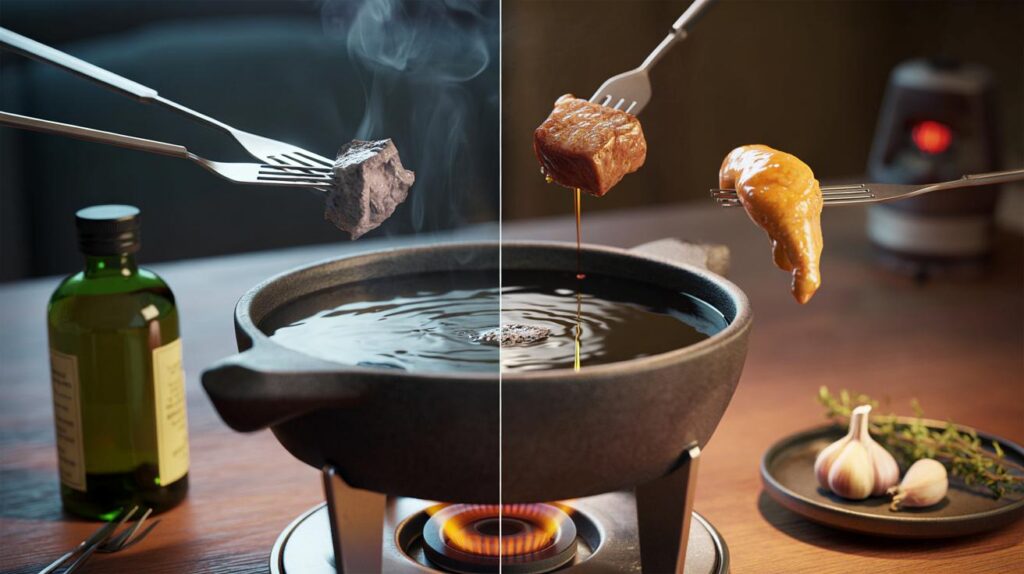
There are two ways a fondue night goes wrong: the oil smokes and stings your eyes, or the meat turns out grey and dry. Both feel avoidable in hindsight, yet they happen in busy kitchens, with chatter in the air and a pot that looks innocent until it isn’t. This is about the small choices that decide which way your evening swings.
It was a January evening in a friend’s terrace, rain worrying the windows and a pot of oil humming like a low note. We passed forks and told stories as if the table itself was a hearth. Then the room shifted: a breath of burnt perfume, the smoke alarm’s rude truth, a cube of beef that chewed like old tape. The pot looked the same. The meat looked the same. Something invisible had gone wrong. We ate, joked, tried again. The second round was better, not perfect. The third was beautiful. The fix was not fancy.
The oil that decides your night
Oil isn’t just a vehicle in fondue; it’s the heat you taste. Pick the wrong one and it punishes you with smoke, stickiness and a bitter afterthought. The right oil stays calm at high heat, smells clean and lets beef or chicken be the headline. Think refined oils with high smoke points: groundnut (peanut), rapeseed, sunflower high-oleic, grapeseed, rice bran. Extra-virgin olive oil is a show-off here, and not in a good way. It breaks, darkens and drags the evening with it.
We’ve all had that moment when the first sizzle feels like triumph and ten minutes later you’re waving a tea towel at the alarm. I watched this happen in Brixton with an expensive bottle of extra-virgin. It tasted glorious on salad at lunch, then turned peevish at 180°C. We swapped in rice bran oil mid-dinner, reset the heat to 175°C, and the room exhaled. Same pan. Same forks. New mood. The meat finally browned instead of sulking.
Why does this happen? Heat breaks fragile compounds first. Oils heavy with flavour compounds and low in refinement burn earlier, leaving polymerised gunk on the pot and off-notes on the meat. Refined oils remove those delicate bits and push the smoke point higher, which keeps the chemistry on your side. Aim your dial for 170–180°C, and hold it. That range is hot enough to sear quickly, yet not so savage that moisture races out of the meat. Keep an eye on the surface: gentle shimmer, not angry ripples.
How to keep meat tender, not dry
Start with forgiving cuts and thoughtful prep. Beef loves sirloin, rib-eye or fillet trimmed of silverskin, cut across the grain into 2–3 cm cubes. Chicken does best as thigh, not breast; it has more intramuscular fat and keeps its juiciness under heat. Pat the pieces dry until they feel tacky, not wet. Let them lose their fridge-chill on a tray for 20 minutes while the pot warms, then cook in small batches. A minute to a minute and a half gives you a blush-centre beef cube; chicken needs a little more until opaque and bouncy.
There’s a quiet trick from Chinese home kitchens called velveting. Toss meat with a pinch of bicarbonate of soda, a teaspoon of neutral oil and a whisper of soy, then wait 20 minutes. Rinse, pat dry, and carry on. The bicarb gently raises pH, keeping proteins from tightening too hard. If dairy is your lane, a yoghurt or buttermilk marinade works the same soft magic in 30–60 minutes. Salt? Either dry-brine an hour ahead and pat very dry, or finish with flaky salt at the table. Both routes keep splatter down and texture plush.
What ruins tenderness faster than heat that’s too hot? Heat that’s too cold. If the oil drops, moisture floods from the meat and you end up boiling the outside while toughening the inside. Keep the pot half full, not brimming; 1–1.5 litres suits a classic 1.5–2 litre caquelon. Limit the pot to two or three pieces at once per person. Use a thermometer if your set doesn’t have a reliable dial. And rest the meat for 30 seconds on the plate before you bite. That tiny pause lets juices settle instead of running onto your napkin.
Disasters to dodge, tiny wins to grab
Stability is your friend. Preheat the oil patiently, add a peeled garlic clove or a sprig of thyme for scent, then fish it out once it perfumes the pot. Don’t chase colour too hard; fondue pieces are small, and a deep crust can mean a dry core. Work with a clean, dry surface on the meat and a steady hand on the dial. If you want a richer flavour, blend 80% high-oleic sunflower with 20% beef dripping. It lifts the aroma without lowering your smoke ceiling.
Common stumbles look like enthusiasm. Overcrowding the pot because everyone’s hungry, turning pieces every few seconds, or leaving the fondue fork in the oil and wicking away heat through the handle. I’ve done all three, sometimes at once. Soyons—no, let’s be honest: nobody really does this every day. So give yourself permission to slow the table. Swap forks after raw handling, use a clean plate for cooked meat, and keep a lid nearby, just in case the oil gets feisty. Tiny disciplines, big payoff.
Heat has a personality. Treat it like a guest you want to keep for the whole night, not a blaze to conquer. My fork hovered, then dipped, and the room went quiet in that good way people get when food smells right.
“Heat is a tool, not a test,” said a Swiss-trained chef I rang last week. “If the oil is right and the cut is kind, tenderness is the default.”
- Target oil temp: 170–180°C; hold steady between rounds.
- Best oils: refined peanut, rapeseed, high-oleic sunflower, rice bran, grapeseed.
- Best cuts: beef sirloin/rib-eye/fillet; chicken thigh; pork tenderloin.
- Cube size: 2–3 cm; pat dry; cook 60–90 seconds for beef, longer for chicken.
- Tenderness hacks: quick bicarb velvet, short yoghurt marinade, rest 30 seconds.
The fondue that lingers for the right reasons
What people remember the next morning isn’t the kit or the cute forks. It’s the easy rhythm of dip, sizzle, talk, bite. That rhythm survives on small, repeatable choices: calm oil with a high smoke point, meat that starts dry and kind, a pot that never gets bullied into extremes. You can dress it up with sauces and pickles, or keep it monastic with just salt and lemon. Either way, the tenderness feels like care. And yet the method is humble. One dial, one rule about crowding, one cut trimmed with intent. Try it once with rice bran oil and thigh meat and you’ll taste the difference. Try it twice and you’ll forget the last time a fondue fork delivered disappointment. The ritual grows on you. The table gets quiet in the best way. The food seems to meet you halfway.
| Key points | Details | Interest for reader |
|---|---|---|
| Choose the right oil | Refined peanut, rapeseed, sunflower high-oleic, rice bran, grapeseed; aim for high smoke point | Cleaner taste, no smoke alarm, golden crust without bitterness |
| Control temperature | Hold 170–180°C; avoid overcrowding; use 1–1.5 litres of oil in a standard pot | Juicier meat, quicker rounds, less mess and stress |
| Prep for tenderness | Trim and cube across the grain; pat dry; bicarb or yoghurt velvet; rest 30 seconds | Softer bite, better browning, confident results even for first-timers |
FAQ :
- Can I use extra-virgin olive oil for fondue?It burns too soon and tastes bitter at fondue heat. Save it for salads or finishing, not the pot.
- What’s the best temperature for oil fondue?Keep it between 170–180°C. That range browns fast without squeezing out all the juices.
- Which cuts stay tender in the pot?Beef sirloin, rib-eye or fillet; chicken thigh; pork tenderloin. Trim silverskin and cube across the grain.
- How do I stop the oil from smoking mid-meal?Use a refined, high-smoke-point oil, don’t overcrowd, skim any dark bits, and nudge the dial down between waves of cooking.
- Can I reuse the oil?Yes, if it still smells clean. Cool, strain through a coffee filter, store dark and cool, and use it within a week or two.



Fantastic breakdown—switching to rice bran oil and holding around 175°C finally stopped the smoke alarm. The “gentle shimmer, not angry ripples” cue is pure gold. Thanks for the calm, practical advice.
Are we sure grapeseed is a good idea? I’ve had it taste a bit rancid after a couple of heats. Would high-oleic sunflower be more stable across multiple rounds and re-heats?