
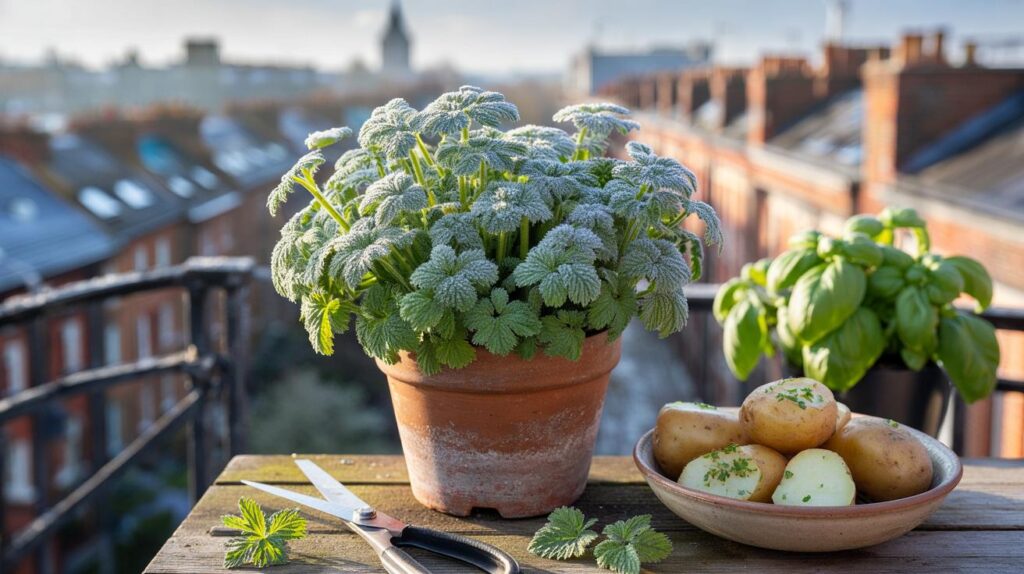
Basil turns sulky by late October on most UK balconies. The leaves blacken, the stems flop, and your pasta tastes a bit sad. There’s another herb that doesn’t blink at frost, fits into a jam-jar of soil, and brings a clean, surprising flavour that wakes up winter food. You’ve probably walked past it at the garden centre without noticing.
I’m standing on a fourth-floor balcony in Hackney on a bright, sharp December morning. The wind bites, the pavements glitter, and a small pot of feathery green rosettes is beaded with frost like sugared mint. I pinch a leaf, bring it to my lips and get a cool, cucumbery snap that feels almost cheeky in the cold.
Basil gave up weeks ago. Parsley is a sulking clump. This plant, though, keeps pushing fresh leaves between showers and sleet. It tastes like summer in January.
It shouldn’t be here. It is.
Meet salad burnet: the winter-proof herb for British balconies
Salad burnet, or Sanguisorba minor, is the quiet hero of winter balcony gardening. It’s a perennial from sun-washed European meadows, yet it copes with British winds and the odd sideways hail. The leaves are delicate, serrated, almost fern-like, and they carry a bright, clean flavour that lands somewhere between cucumber and green apple.
On a Cardiff terrace, a reader sent me a photo of salad burnet peeking through a dusting of snow, still perky. Another in Glasgow grows it in a narrow railing planter and snips leaves for sandwiches all winter, even after a cold snap. It’s compact and polite in pots, and it doesn’t sprawl like mint or sulk like basil. **Hardy down to -20°C**, it’s evergreen in mild winters and bounces back fast in spring.
Why does it thrive where others fade? Think of its natural home: thin soils, chalky slopes, a lean diet and exposure. In a container it loves a free-draining mix and a sunny ledge that catches weak winter light. The plant keeps a low profile, hugging the pot and keeping growth tight, which makes it less vulnerable to wind scorch. Leaves stay tender when growth is steady rather than lush.
How to grow salad burnet in a pot, step by step
Start with a 20–25 cm pot with generous drainage holes and a saucer you can remove during rainy spells. Fill with a gritty, airy blend: 60% peat-free multipurpose compost, 30% horticultural grit or sharp sand, 10% composted bark or leaf mould. Tuck in a small plant or sow seeds 1 cm deep, three to a pot, thinning to one strong rosette. Set the pot where it catches winter sun and summer morning light.
Water lightly, letting the top few centimetres dry between drinks. Overfeeding makes the flavour watery; a spring top-dress with fresh compost is plenty. Snip outer leaves as you need them, keeping the centre growing, and nip off flower stems in late spring to keep the taste bright. We’ve all had that moment where the supermarket herbs are a limp memory in the crisper; this is the antidote. Let’s be honest: nobody really does that every day.
Windy balcony? Tuck the pot behind railings or group it with heavier containers for shelter. A simple fleece on the wildest nights helps on exposed sites, not because it can’t take the cold, but to stop desiccating wind. **Perfect for small pots**, it plays well with chives, thyme and parsley in a window box and doesn’t bully its neighbours.
“It asks for so little and gives so much,” says North London balcony grower Priya Shah. “In January, that cucumber snap makes everything taste awake.”
- Sprinkle chopped burnet on omelettes, radishes, or tuna mayo.
- Layer leaves into a cheese toastie for a cool, green lift.
- Stir into yoghurt with lemon zest for a quick fish sauce.
- Mix with apple and celery for a crisp winter salad.
From low-maintenance to high flavour: why it belongs on your ledge
Basil is a heat-lover, a summer fling. Salad burnet is a reliable friend who shows up in the cold and stays when you forget to water for a day. It’s forgiving, it’s perennial, and it delivers a specific flavour you can’t fake with dried herbs. The leaves don’t scream; they whisper cucumber through buttered potatoes, eggs, and soups.
There’s a small mental switch here. Instead of chasing Mediterranean herbs in December, lean into plants that love our weather. Burnet doesn’t demand grow lights or heated propagators. Give it a bright spot, a lean mix, and short trims. It doesn’t bolt the moment you blink, and it won’t turn to sludge after a frost. **Tastes like cucumber, stays evergreen** feels almost like cheating.
If you like data, here’s your nudge: a single 25 cm pot can yield a handful of leaves every three days in a mild winter, and double that from March. One £3 plant can replace a weekly plastic pack of imported herbs, and the flavour is cleaner. The plant’s compact habit makes it queue-friendly on crowded ledges, and it recovers fast from snipping.
A small herb with big winter impact
There’s a quiet joy in stepping outside on a cold morning and finding something green that wants to be picked. Salad burnet won’t be the star of your roast, but it will be the line of brightness that makes everything else click. It turns bread and cheese into lunch, gives poached eggs a reason to be, and makes boiled potatoes taste like someone thought about them.
I keep a pot by the balcony door and use it almost without thinking, and that’s the point. The more you cook with what’s thriving right now, the more winter feels like a season, not a waiting room. Share a bunch with a neighbour, teach a friend the name, watch it spread through conversations like a good rumour. You’ll start noticing it in old hedgerows and new window boxes. You might even forget basil until June.
| Key points | Details | Interest for reader |
|---|---|---|
| What it is | Salad burnet (Sanguisorba minor), a hardy perennial with cucumber-scented leaves | A new, fuss-free herb to try when basil fails |
| How it grows | Thrives in pots with gritty, peat-free compost; happy on bright UK balconies through winter | Reliable harvests without grow lights or heated rooms |
| How to use it | Snip into eggs, potatoes, sandwiches, yoghurt sauces and green salads | Instant flavour lift with minimal effort and zero food waste |
FAQ :
- Does salad burnet really survive frost on a balcony?Yes. It’s genuinely hardy and copes with repeated frosts. In exposed, windy spots, give it a bit of shelter to prevent leaf scorch.
- What does it taste like, exactly?Clean, fresh cucumber notes with a mild, green bite. Younger leaves are softer and brighter; older leaves are stronger and a touch tannic.
- Seed or plant — which is easier?Both work. Plants give you instant leaves. Seeds are cheap and germinate quickly; thin to one strong seedling per pot for best results.
- How much sun does it need?Winter: as much light as you can give it. Summer: morning sun and light afternoon shade keep leaves tender and stop stress.
- Is it safe for pets and kids?It’s a culinary herb widely grown and eaten. As with any plant, teach kids not to graze unknown leaves, and steer curious pets away from the pot.



Tried salad burnet on my balcony in Leeds last winter — it shrugged off frost and kept tasting crisp and cucumbery. Basil sulked; burnet delivered. Great tip, genuinely.
Cucumber taste in January sounds a bit marketing-y. Any links to trials or hard data on hardyness to -20°C? Also, does it stay tender or get tannic fast? peer‑reviewd sources?