
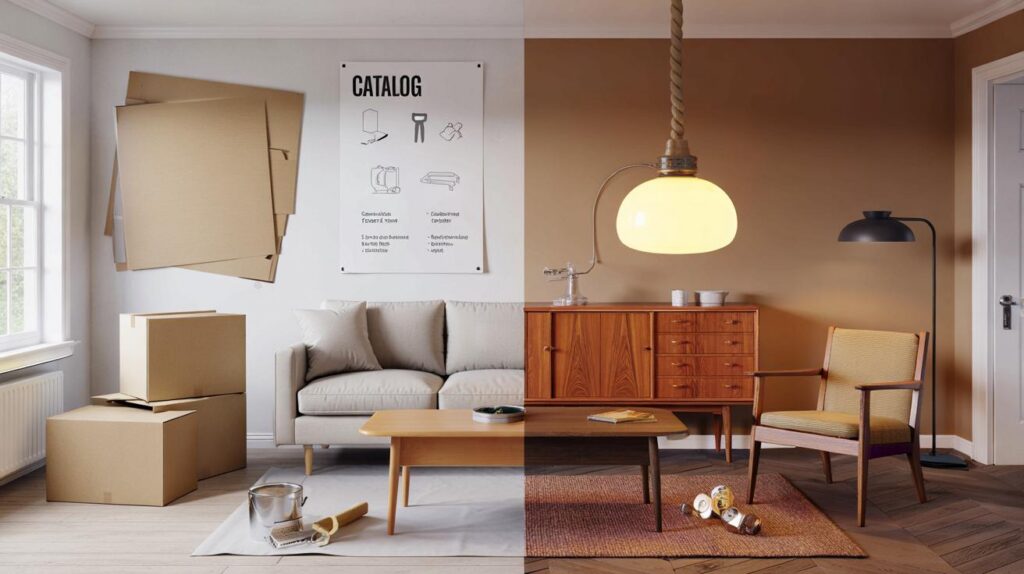
Budgets are tightening and homes risk blending into one. A quieter shift is reshaping living rooms across Britain now.
As shorter days draw in, British decorators are steering clients towards second-hand finds, claiming warmer rooms, slimmer bills and far less waste. The pitch is blunt: spend less, get character, and stop copying your neighbour’s catalogue look.
Why second-hand treasure hunting is beating flatpack this autumn
Designers point to a craving for tactility and story. Patinated wood, hand-thrown ceramics and timeworn brass give depth that factory-fresh chipboard can’t match. The appeal is financial too, with many households rethinking every line of their home budgets.
Character and story trump uniformity
A teak sideboard with dovetail joints or a 1970s opaline lamp can anchor a room. These pieces hold attention, so the rest of the scheme can stay simple. Texture and provenance do the heavy lifting, not price tags.
One striking vintage piece can carry a whole room, letting you save on everything around it.
Real savings without feeling cheap
Repeated shop-floor looks rarely age well. By contrast, a curated mix of second-hand furniture, newly rewired lights and fresh textiles cuts spend while lifting quality. Good bones—solid wood, wool, steel, glazed ceramic—age better and repair well.
Across the case studies we reviewed, households reported 40–60% savings per room versus buying new.
Greener choices that still look good
Reusing keeps bulky furniture out of landfill and slashes embodied carbon. A vintage table sealed with a hardwearing, low-VOC varnish can outlast a flatpack equivalent by years. Repair culture is back, not as nostalgia but as sound design practice.
How professionals make old pieces look new
The trick is editing. Fewer, better pieces, styled with intent. Pros keep palettes tight, metals consistent, and silhouettes varied so nothing feels matchy-matchy.
Blend eras to keep rooms sharp
Pair a mid-century sideboard with a crisp, graphic floor lamp. Set a farmhouse table under a slimline LED pendant. The frisson between warm, storied surfaces and clean modern lines creates energy.
- Keep one hero per zone: a mirror, a sideboard, or a rug. Let everything else whisper.
- Limit finishes to three: for instance, oak, matte black and unlacquered brass.
- Use contemporary art or bold lampshades to stop vintage reads from slipping into pastiche.
Quick revamps that pay off
Small interventions deliver outsized change. A £12 pot of paint unifies odd chairs. New knobs turn a tired chest into a focal point. A matte seal tames orange varnish and dials up grain.
Paint, hardware and a light sand: three low-cost steps that transform most wooden pieces within a weekend.
Where to hunt without wasting your Saturdays
Pros set alerts and plan routes. They mix charity shops, council reuse centres, car boot sales and online marketplaces. They also bring a tape measure, blanket and cash for quick deals.
- Check joints, undersides and backs. Look for solid wood, real veneer, and dovetails.
- Ask for extra photos in daylight. Surface scratches are fine; wobbly frames are not.
- For upholstered items, insist on the permanent fire-safety label required in the UK.
- For lamps, budget for a rewire or a PAT test from a qualified technician.
What a second-hand room actually costs
We priced a basic living-room bundle using typical October listings across UK charity shops, car boot sales and online marketplaces, then compared a “new on the high street” equivalent. Numbers are indicative and vary by region and condition.
| Item | New, high street | Second-hand mix | Notes |
|---|---|---|---|
| 3-seat sofa | £500 | £200 | Choose models with removable covers; steam-clean on arrival. |
| Coffee table | £90 | £30 | Solid wood sands back; avoid swollen chipboard. |
| Sideboard | £220 | £100 | Real veneer with solid edges outlasts flatpack. |
| Floor lamp | £60 | £25 | Rewire for safety; fit LED bulbs. |
| Wool rug (160×230) | £150 | £80 | £55 used plus ~£25 professional clean. |
| Accent chair | £180 | £60 | Look for sprung seats; reupholster only if frame is sound. |
| Bookcase | £120 | £40 | Wall-fix for stability; paint to match trim. |
| Total | £1,320 | £535 | Approximate saving: 59% |
Typical saving on a British living room this month: around 58%, with higher quality materials in play.
Risks, repairs and the quick checks that save money
Bedbugs: avoid upholstered items stored outdoors; inspect seams and piping; transport in sealed bags; wash covers at high heat or use a professional cleaner. Paint: older pieces may carry lead; wet-sand, use a proper mask, and seal with a shellac or bonding primer before repainting. Mould: sniff and probe; spongy timber suggests rot. Electrics: rewire vintage lamps and test with a qualified professional.
Fire regulations: British law requires permanent labels on most upholstered goods. If a label is missing, skip it. For nursery and rental use, stick to current standards without compromise.
Style strategies decorators swear by
Start with one anchor per space
Choose the hero first: perhaps a 1960s sideboard, a gilt mirror or a stone coffee table. Build out with quiet basics—linen curtains, plain cushions, a neutral rug—so the star reads clearly.
Pick a palette that warms the season
Autumn suits warm woods, rust textiles and soft glazes. Combine oak, terracotta and ecru for calm. Add one sharp contrast—ink blue or bottle green—to stop the scheme from drifting.
Upgrade touch points
New switches, door handles and lamp shades modernise a room instantly. Swap chrome for brushed brass, fit dimmers, and choose fabric-covered flex for vintage lamps. Small, tactile changes raise the perceived quality of every second-hand piece nearby.
Buying guide for the weekend hunter
- Timing: arrive early at car boot sales; check charity shops midweek after house clearances.
- Negotiation: ask “what’s your best price if I take it now?” and carry exact cash.
- Transport: bring straps and a blanket; measure doorways before you buy.
- Finishes: test on an underside; use matte varnish or hardwax oil to tone down orange pine.
- Textiles: wool is self-extinguishing and cleans well; avoid thin synthetics that pill.
Beyond the living room: stretching the value
Second-hand shines in kitchens and halls. A freestanding larder cupboard beats flimsy pantry units and can move with you. An antique runner in the hallway draws the eye and hides scuffs. In bedrooms, a vintage chest with new runners glides better than many budget chests and holds value for resale.
If you plan to rent out a room or move within two years, consider resale value as a number. Aim to buy pieces you can sell for at least 70% of what you paid after light refurbishment. Track spend and exit price in a simple spreadsheet; the better your eye, the lower your net cost of living with great design.



Switched to second-hand this autumn and honestly saved about 55% overall—rug, lamp, sideboard all better-made than flatpack. A quick rewire + steam clean and they’re good as new. The ‘one hero per zone’ tip is gold. Wish I’d stoped copying catalogs years ago. Quality definately feels higher.