
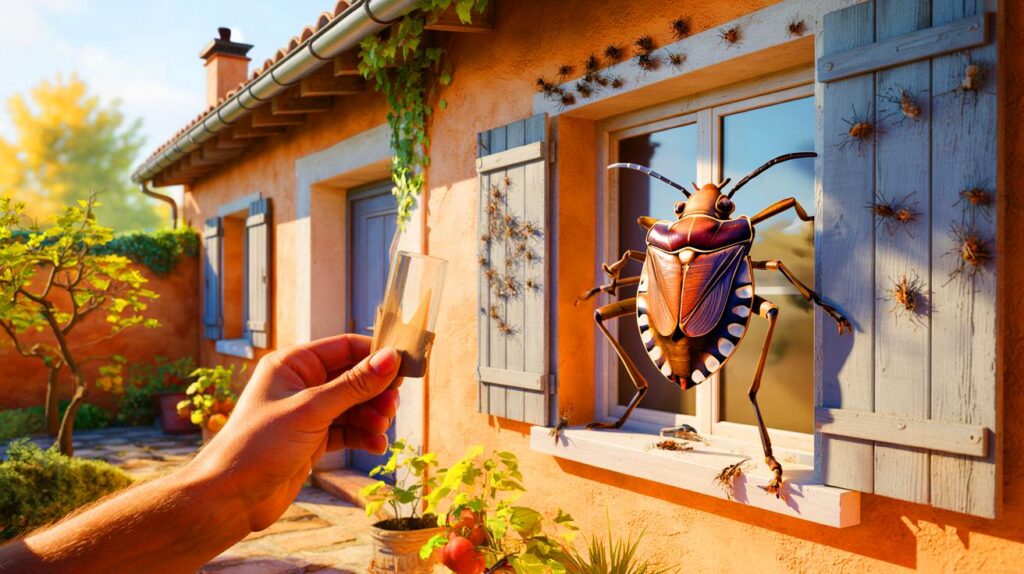
As the nights draw in, strange mottled insects gather on sunny walls and find their way indoors, rattling nerves nationwide.
Across France, households report clusters of shield‑shaped bugs settling on façades, shutters and window frames. The species behind the spectacle, the brown marmorated stink bug (Halyomorpha halys), has spread steadily since first detection in 2012. It feeds on plants, not people, yet its urge to overwinter under warm roofs makes it a seasonal nuisance inside homes.
What you are seeing on your walls
The brown marmorated stink bug, often dubbed the “devil” bug, measures about 1.5 to 1.7 cm, with a marbled brown back shaped like a shield. Look for white bands on the antennae and alternating pale markings on the rear edge of the abdomen. In early autumn, adults abandon host plants and look for dry, sheltered crevices to survive winter.
France has seen a clear expansion since 2012, with records now spanning more than half of departments. Clusters form on sun‑warmed, south‑ and west‑facing walls, then individuals slip indoors through tiny gaps. Many homes see a handful; some see dozens. The difference often comes down to exposure, micro‑gaps and chance.
They do not bite, do not spread disease, and do not breed inside homes. They are seeking a dry, warm shelter for winter.
Why your house and not your neighbour’s
These insects cue on warmth and light. Brick and pale render that hold heat late in the day prove inviting. Homes with timber shutters, attic vents, trickle vents, cracked seals or loose fly screens offer ready entry points. Gardens rich in host plants—fruit trees, hazel, ivy, tomatoes—raise local numbers and increase the odds of a visit.
- Sun exposure: south/west façades warm up and draw aggregations.
- Micro‑gaps: worn window seals, cable pass‑throughs, roof tiles and soffits tempt sheltering adults.
- Garden proximity: orchards and veg patches keep feeding adults nearby until cold nights arrive.
- Aggregation odours: once a few arrive, more can follow the scent to the same spot.
On milder days, overwintering bugs often re‑emerge, fly to the façade and then creep back in by night. Numbers usually fall again once temperatures drop for good.
Are they dangerous to you or your pets?
No. The risk sits with fruit and vegetable crops, not people or animals. The species is polyphagous, feeding on the sap of around 120 plants. In the home it neither bites nor spreads pathogens. It releases a strong odour only when stressed or crushed, and that smell can linger on fabrics or hands.
Keep calm: the real damage is to apples, pears, peaches, tomatoes and many ornamentals—gardens and farms, not you.
Immediate actions without chemicals
Five‑minute routine for indoors
- Do not crush them. That invites the smell and can stain surfaces.
- Use a glass and a card to capture individuals, then release them outside away from doorways.
- Vacuum clusters, then seal and freeze the bag or canister content for 24 hours before binning.
- Set a shallow tray of soapy water beneath a lamp in a dark room; light draws them down, the detergent breaks surface tension.
- Keep windows shut at dusk during warm spells; use intact insect screens where possible.
Make your home harder to enter
| Entry point | Quick fix | Effort | Cost |
|---|---|---|---|
| Window and door seals | Replace perished gaskets; add brush door sweeps | 1–2 hours | Low |
| Vents and grilles | Fit fine mesh behind louvres; keep airflow | 1 hour | Low |
| Cracks around frames | Seal with exterior‑grade silicone or acrylic | 1–3 hours | Low |
| Loft and roof gaps | Repair tiles; add foam closures at corrugations | Half day | Moderate |
Avoid using indoor insecticides. Sprays rarely reach insects hidden deep in voids, and they can leave residues where you live and cook. Physical removal and exclusion deliver better, safer results for a seasonal issue.
When numbers surge outside
If hundreds gather on walls during warm afternoons, act at the perimeter. Fit tighter screens to attic vents. Seal cable and pipe penetrations with appropriate sealant. Clear climbing ivy from eaves until winter passes. Some gardeners use pheromone lures and traps, but keep any attractant well away from living spaces; a poorly placed trap can draw more bugs to the house.
The bigger picture for farms and gardens
In orchards, feeding punctures mar the skin of apples, pears and peaches and can cause fruit to deform. In vegetable plots, tomatoes, peppers and sweetcorn suffer blemishes and corky patches. The species’ broad diet and high mobility make management tricky once populations build across a region.
Researchers are refining monitoring with baited traps and testing landscape‑level tactics. Netting valuable crops during peak risk, harvesting promptly and removing alternative hosts near orchards all help reduce damage. Biological control with natural enemies is a live research area in Europe, and growers follow updates closely as new tools become available.
Spot the difference: stink bugs are not bedbugs
- Body shape: shield‑shaped and mottled versus flat, oval and reddish‑brown for bedbugs.
- Where you find them: windows, attics and walls versus mattresses, bed frames and skirting boards.
- Behaviour: active on warm afternoons and at lights versus night‑time biting in sleeping areas.
- Health: plant feeder with no disease risk versus a blood‑feeder that causes itchy welts.
Extra tips you can use this weekend
Try a 10‑minute “gap audit”. Stand outside on a sunny afternoon and watch where bugs land. Note the exact routes they take. Seal the top three entry points you observe the same day. That targeted approach often halves indoor sightings without major work.
Think seasonally. These insects enter a dormant state called diapause. They want a stable, dry refuge, then they will leave again when spring warmth returns. That rhythm means exclusion and gentle removal work best. Keep the vacuum ready, store logs outdoors rather than in the hallway, and plan a quick reseal of frames before the first cold snap next year.



Thanks for the clear explainer. I was about to spray pyrethroids inside, but your glass-and-card + vacuum-then-freeze routine makes way more sense. Good to know they don’t bite or breed in homes, and that the smell only comes when stressed. I’ll audit gaps around vents and window seals this weekend. Also, appreciate the reminder to store logs outside—guilty. Definately calmer now.