
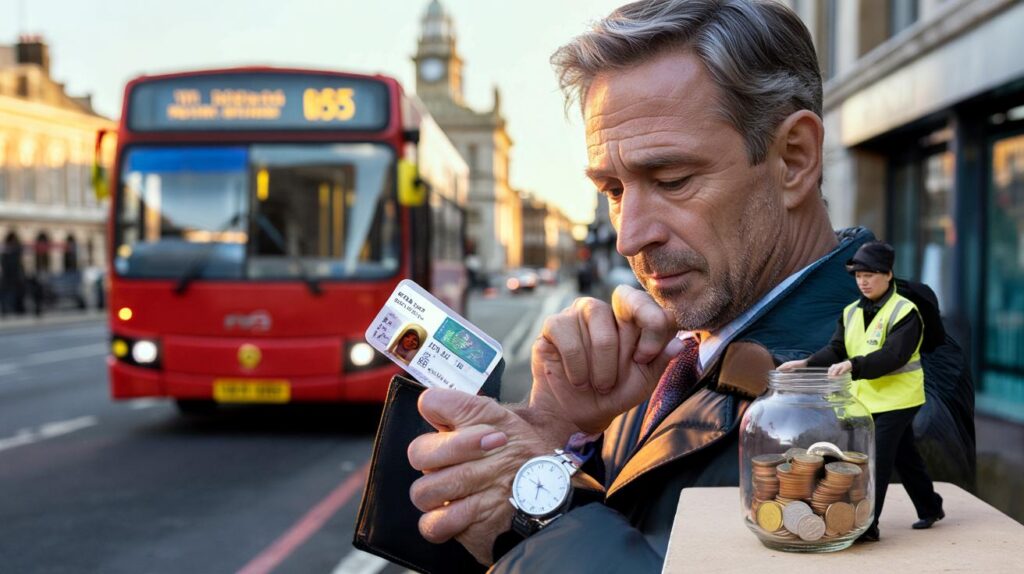
As living costs bite and bus routes change, a perk many older readers rely on faces a significant and contentious shake‑up.
From next April, England’s free bus travel rules will tighten, drawing a clear line between those who qualify at state pension age and those who miss out by months. The change links your bus pass to a timetable already set for retirement.
What changes next April
The Department for Transport (DfT) has confirmed that people in England will need to wait an extra year for a free bus pass from next April. The eligibility age will move with the state pension age, which steps up from 66 to 67 on a rolling basis through to 2028. The shift hits new applicants only; existing passholders keep their cards.
Free bus pass eligibility in England will mirror the rising state pension age, adding a 12‑month wait from next April.
Ministers planned this uplift years ago. The Pensions Act 2014 accelerated the 66‑to‑67 rise and set the expectation of a further move to 68 between 2044 and 2046. The bus pass follows that legal timetable.
Who will feel the wait
If you were born between 6 March 1961 and 5 April 1977, you will not qualify for a free bus pass until your 67th birthday. People already aged 67 remain eligible as usual. Those with qualifying disabilities can still receive concessionary travel regardless of age, subject to local assessment.
- New applicants turning 66 after next April will need to wait 12 months longer.
- Current passholders keep their entitlement and do not need to requalify due to the age change.
- Disabled concessionary travel remains available based on eligibility criteria rather than age.
- Off‑peak rules continue: 9.30am to 11.00pm on weekdays, all day at weekends and on bank holidays.
Why England differs from the rest of the UK
Concessionary travel sits with each nation. Scotland, Wales and Northern Ireland offer national schemes from age 60. England ties the benefit to the state pension age. The DfT argues that approach keeps the system consistent with retirement policy and protects funding for the statutory scheme.
| Nation | Standard eligibility age | Typical times |
|---|---|---|
| England | State pension age (66 now, rising to 67 by 2028) | Off‑peak on weekdays; all day at weekends/bank holidays |
| Scotland | 60 | All day, scheme rules apply |
| Wales | 60 | All day, scheme rules apply |
| Northern Ireland | 60 | All day, scheme rules apply |
Local lifelines that can soften the blow
Councils in England can fund extras on top of the national minimum. London offers the 60+ Oyster card. Merseyside and a handful of other areas run their own concessions. These local top‑ups are discretionary and depend on budgets and priorities. If you live near a boundary, you might see very different rules across invisible lines on a map.
Councils can lower the age locally, but they must pay for the difference from their own resources.
That local flexibility matters because a large share of trips taken by older residents are routine: GP appointments, food shopping, volunteering and visits that keep people connected. A council‑funded card can bridge the gap during the extra year.
Show me the money
The English National Concessionary Travel Scheme costs around £700 million a year. The government has announced a £1 billion package for buses, including £712 million channelled to local authorities to support and improve services. Officials say councils may use some of that to extend discretionary concessions if they choose.
Campaigners argue that the numbers point in the opposite direction: if public money aims to get people back on buses, lifting the age risks deterring newly retired residents from making regular journeys. The DfT says wider reforms seek to tackle reliability and affordability for everyone, not just passholders.
Public pressure is building
A parliamentary petition calling for free bus passes in England from age 60 has passed 100,000 signatures, which triggers a debate. That puts fresh pressure on the Transport Secretary, Heidi Alexander, to consider whether the age link should shift again or whether councils should receive a stronger steer to cushion the change.
More than 100,000 people have demanded equal access to free bus travel from 60 across England.
Supporters of the petition point to fairness, noting that many over‑60s reduce driving or give up cars altogether and rely on public transport to work part‑time, volunteer and look after grandchildren.
Key dates and entitlements
What to expect between now and 2028
The rise from 66 to 67 completes by 2028. The exact timing depends on your date of birth rather than a single national switchover day. You can check your state pension age to pinpoint when your bus pass becomes available.
What your pass covers
Your English concessionary pass covers free local bus travel off‑peak. You can ride free between 9.30am and 11.00pm on weekdays, and all day at weekends and on bank holidays. Some councils add extras such as earlier weekday starts, tram or ferry concessions, or companion passes for people who need support to travel.
Practical steps if you are turning 66 next year
- Ask your council about discretionary schemes for residents aged 60–66 or 66–67.
- Check whether your area offers a local travelcard with discounts before 9.30am.
- Look at day and week bus tickets if you travel several times a week; these often cut costs per journey.
- Keep proof of address and identity ready so you can apply quickly when you hit eligibility.
- If you qualify for a disability pass, gather your supporting documents now to avoid delays.
How this affects your weekly budget
Build a simple estimate. List your typical weekly trips—shopping, healthcare, social visits. Multiply by the local single fare or by the cost of a day ticket on your route. Compare that total with the cost once you receive your pass. This gives you a clear monthly figure to plan around while you wait the extra year.
If your travel is essential during peak hours, check whether your council offers any early‑morning relaxation for older or disabled residents. The rules vary widely, and a small local concession can save significant money over several months.
What might change next
The next shift under current plans lands two decades away: a state pension age of 68 between 2044 and 2046. If government keeps the bus pass tied to that age, the eligibility bar would climb again for future cohorts. Any change to the statutory scheme carries a cost and must stack up against the £700 million already spent each year.
Politically, the debate touches more than fares. Buses knit together town centres, outlying estates and villages. If newly retired residents cut back on trips, shops, GP surgeries and community groups may see lower footfall. Transport planners say reliable services and steady demand reinforce each other; a rise in the free travel age pulls gently in the other direction unless councils counteract it locally.
Applying when you qualify
When you reach the eligible age, apply through your local council. You will usually need a passport or driving licence, proof of address and a passport‑style photo. Many councils issue a photocard that works on contactless readers. Processing can take a few weeks, so start early if you need the pass for a specific date.
If you move within England, you can keep using your pass in your new area. Remember that some discretionary extras—like earlier weekday travel—might change when you cross council borders.



England ties free bus passes to the rising state pension age while Scotland, Wales and NI keep 60—how is that fair when many over‑60s already cut driving? The £712m heading to councils sounds helpful, but without a clear steer it’s definately just hope. Will ministers ring‑fence anything for concessions, or is this another “local discretion” fig leaf?
Guess I’ll celebrate my 66th with… another 12 months of full fares. Yay me 🙂