
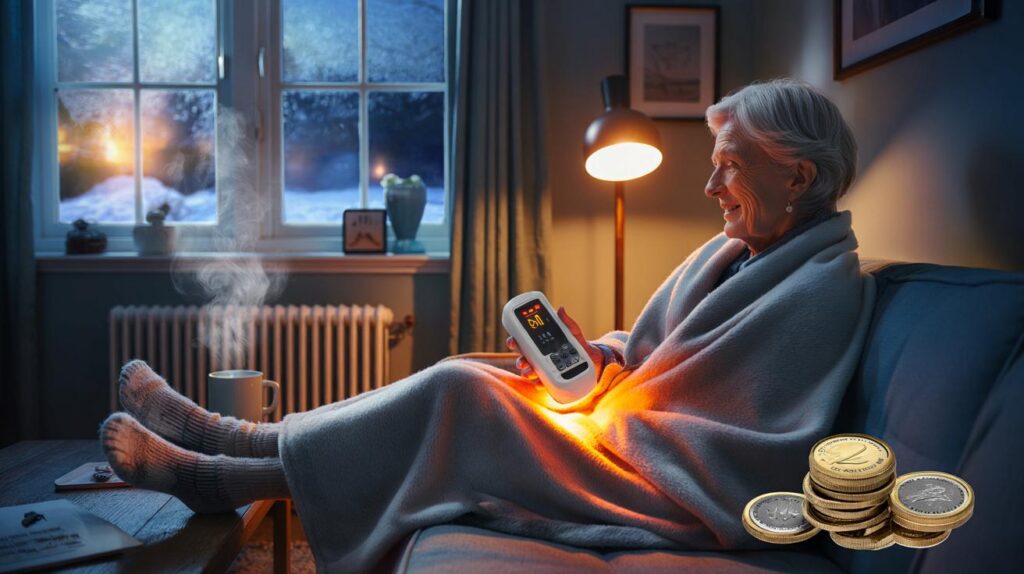
Cold rooms, tight budgets and long nights test households again this winter, while a new wave of targeted help quietly gathers pace.
Two of Britain’s biggest energy suppliers now focus on keeping people warm for pennies, not pounds, with support aimed at those who feel the chill first and pay for it hardest.
Why electric blankets matter this winter
Heating a whole home costs far more than warming the person. That simple shift underpins the new programmes. Electric blankets sip power at roughly 2–4p per hour. Whole-home heating often runs to about £4 per day when radiators click on for hours. For many, a low-watt heated layer turns a draughty evening into a manageable one.
Research from suppliers shows measured savings. Households that switch on a blanket instead of the boiler on milder evenings cut winter bills by 10–20 per cent. Some report annual reductions approaching £300 when they consistently prioritise personal warmth over heating empty rooms.
Run a heated throw at 2–4p an hour and leave the thermostat off. Many households bank up to £300 across the season.
Octopus Energy scheme: who can apply and how
Eligibility and priority
Octopus Energy has put aside 10,000 electric blankets for customers who face genuine financial strain. The company limits distribution to one blanket per household so more people benefit. Priority sits with those most affected by cold:
- Elderly residents who struggle to keep warm
- People with mobility issues who spend long periods seated or in bed
- Customers with health conditions made worse by low temperatures
Octopus asks customers who can afford the typical £60 retail price to buy their own, freeing stock for neighbours in tougher situations.
Application steps and timing
Applicants start by creating a Paylink budget. This tool lays out income and essential spending, so advisers can match support to need. A team then reviews each case alongside account health data. Decisions generally arrive within seven days. Detailed information helps the process: explain current bill pressure, list other debts and state any medical vulnerabilities.
One blanket per home, human review of need, and a Paylink budget upfront: that’s the Octopus route to support.
OVO Energy support: beyond blankets
What’s on offer
OVO Energy’s winter package totals £56 million for struggling households, with applications open from 1 October. The offer ranges wider than blankets. The supplier can provide heated throws, smart plugs to control energy-hungry devices, and practical efficiency upgrades that trim usage at the source. Where appropriate, OVO may also adjust direct debits temporarily to ease short-term pressure.
Since 2022, OVO says it has channelled £190 million into customer assistance. Last year alone, 42,000 customers received targeted help. It reports strong public concern this season: 91 per cent of people fear higher winter costs, and 71 per cent feel more anxious than last year.
How to check eligibility
OVO customers can check eligibility by confirming an account reference and postcode against their records. The company works with charity partners to direct help, aiming support at those who need it most and who stand to benefit quickly from focused measures.
Running costs at a glance
| Item | Typical running cost | Best use case | Potential saving |
|---|---|---|---|
| Electric blanket/heated throw | 2–4p per hour | Evenings on the sofa or in bed | 10–20% winter bill reduction; up to ~£300 a year |
| Whole-home heating | About £4 per day | Coldest spells or homes with multiple occupants | None, but necessary during severe cold snaps |
Safe, smart use: get more warmth for less
Use a blanket as a throw over your body rather than under a sheet. Preheat on high for a few minutes, then switch to medium for steady warmth. Place the connector near the feet so it stays accessible and ventilated. Keep the blanket flat and avoid folding. Creases can damage internal wires and block heat flow.
Supervise children when they use a heated throw. Check the manufacturer’s guidance for maximum run times and washing instructions. Look for automatic shut-off and overheat protection on the control. Store the blanket loosely rolled, not tightly folded, to protect the elements for next winter.
Who should act now
If you feel cold at home and dread the next bill, you sit within the target group. The schemes prioritise older people, those with limited mobility, and anyone whose health worsens in cold rooms. If that describes you or someone you care for, prepare the information you need and apply promptly.
- Octopus Energy: set up a Paylink budget, gather income and expense details, and explain your situation clearly.
- OVO Energy: have your account reference and postcode ready, then check your eligibility and request suitable items.
Will a blanket really move the needle?
Run a quick test. Spend a week using an electric blanket for two evening hours and turn the heating down by one degree. Check your smart meter or daily reads. Many homes see an immediate dip in consumption. Repeat the pattern across three months and the numbers add up fast. A typical 50W heated throw used for four hours costs roughly 8–16p per night. Multiply by 120 winter nights and you pay under £20, while you avoid much larger gas or electricity use from the boiler.
Blankets work best as part of a stack of small wins. Shut internal doors, block draughts around letterboxes, and use heavy curtains after dusk. Focus heat where people sit or sleep. A single person in a two-bed flat gains most. Families may mix approaches: a short heating burst for shared rooms, then personal throws for television time.
Other help you can combine
Ask your supplier about hardship funds, discretionary credit, and payment plans. Check whether you qualify for the Warm Home Discount. Join the Priority Services Register if age, disability or long-term illness applies. Local councils may offer emergency vouchers or small grants for essential appliances.
Time-of-use tariffs can also help. If your plan varies by hour, charge hot-water bottles or preheat rooms during cheaper periods, then rely on low-watt throws later. Track usage weekly so you spot any spikes and correct them quickly.
Risks and checks before you plug in
Only use a blanket that meets UK safety standards and comes with a visible safety mark. Register the product with the manufacturer so you receive recall alerts. Inspect the cable and controller before each season. Replace any blanket with frayed fabric, damaged wiring or a faulty plug. Never use a heated throw with a damaged extension lead. Keep liquids away from the controller and unplug the unit before sleeping if the model lacks a timer.
The bottom line for households
For many readers, a heated throw bridges the gap between comfort and crushing bills. Octopus limits support to 10,000 units, and OVO’s programme serves many needs across a large customer base. Supply will not last forever. If you qualify, move early. If you can spare the £60 to buy your own, you still gain the same low running cost while leaving funded stock for neighbours who cannot.



Warm the person, not the house—smart move.
Question for Octopus/OVO: do those savings assume off-peak rates? At ~50–100W, 2–4p/hour maps to about 30–40p/kWh. My unit rate is 44p—will the maths still reach £300 saved, or is that optimisitc?