
That loaf you stash in the freezer to save money and time might be doing the opposite. Taste, texture and gut health all hang in the balance.
Across Britain, families slide leftover baguettes and sliced loaves into the freezer, thinking they’re safe. Food hygiene advisers say the routine hides traps. Packaging, temperature swings and rushed thawing can let bacteria survive, then roar back when the bread warms up.
Why frozen bread isn’t as safe as you think
Bread holds moisture, traces of flour dust and crumbs—ideal fuel for microbes. Cold slows their activity, it doesn’t wipe them out. If contamination sneaks in before freezing, those cells stay dormant, then revive during thawing. That means off odours, stale notes and, for some people, mild gut upsets. The freezer is a pause button, not a disinfectant.
Freezing halts growth; it doesn’t kill. What slips into the freezer alive can step out alive.
The biggest blunder: leaving bread in its paper bag
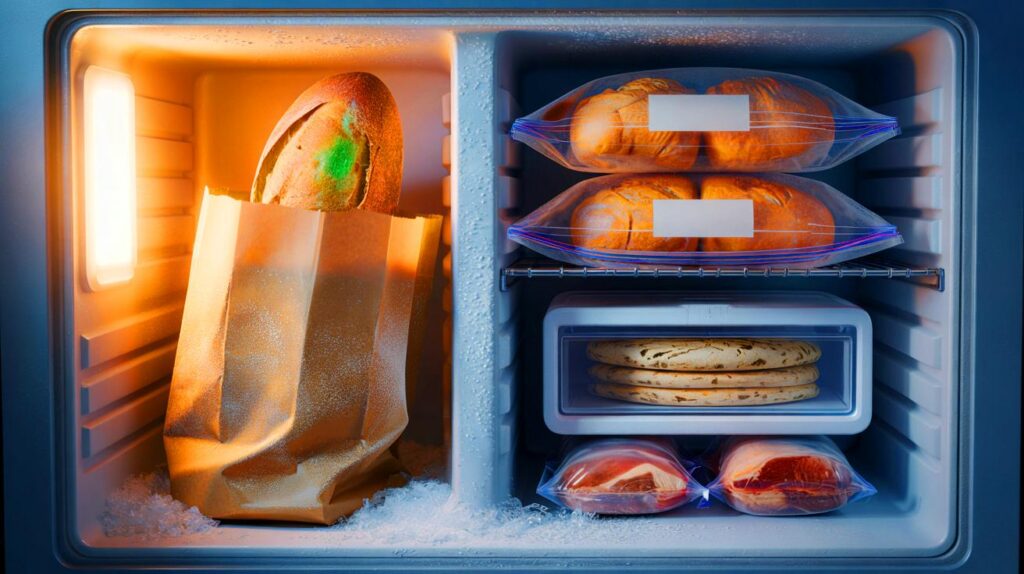
Dropping a loaf into the freezer still wrapped in its paper sleeve looks harmless. It isn’t. Paper breathes. Air and moisture move freely, so frost forms, ice crystals damage the crumb, and any microbes get a steady flow of humidity. The result after thawing is a leathery crust, a gummy centre and a faint musty note.
The fix: airtight packaging that really seals
Switch to freezer-grade, airtight options. Expel as much air as you can before closing, then label and date. Let the bread cool fully first.
- Thick zip-seal freezer bags (reusable where possible)
- Rigid lidded containers sized to the loaf or slices
- Double-wrap for extra protection: a light wrap of baking paper, then a sealed bag
- Vacuum sealer bags if you already own the kit
Put warm bread straight into a bag and you trap steam. Condensation builds, moisture collects on the surface, and moulds love that environment.
Cold doesn’t wipe out microbes
Many bacteria and spores survive freezing. They slow down and wait. Once the loaf warms—on a sunny worktop, near a hob or after a quick blast in a microwave—activity resumes. Uneven heating leaves damp pockets that bacteria exploit. Good hygiene before freezing matters: clean hands, clean knife, clean board, and clean bag.
Start clean, pack airtight, freeze fast at −18 °C (0 °F), and thaw without adding moisture.
Safe-freezing rules that protect flavour and your stomach
A few simple steps reduce risk and preserve quality.
- Slice before freezing. Portioning reduces handling later and avoids refreezing.
- Cool to room temperature first. Warm loaves steam inside a bag.
- Pack airtight. Remove air to limit ice crystals and freezer burn.
- Freeze fast. Store at a steady −18 °C (0 °F) on a cold shelf, not in the door.
- Label and date. Rotate older packs to the front.
- Never refreeze thawed bread. Texture collapses and microbial risk climbs.
How long can you keep it?
Bread stays safe for months when frozen, but quality fades. Most bakers aim for best texture within one to three months; many households push to six months with acceptable results. Beyond that, the crumb dries and aromas fade. Sourdough often copes slightly better due to its acidity, yet wrapping still matters.
| Bread type | Best quality window | Notes |
|---|---|---|
| Sliced white or wholemeal | 1–3 months | Freeze in stacks of 2–4 slices for quick toasting |
| Artisan sourdough loaf | 2–4 months | Cut into quarters, wrap tightly to protect the crust |
| Baguette | 2 months | High crust area; dries quickly if poorly wrapped |
| Flatbreads | 3–6 months | Layer with baking paper, then bag |
Thawing without inviting trouble
Rushed thawing creates damp spots and uneven temperatures. Skip the microwave for full loaves; it softens the crust and leaves the centre clammy. Instead, take the bread out of its bag and place it on a clean rack or tea towel at room temperature. Air can circulate, so moisture escapes rather than condenses.
- For slices: toast from frozen or leave five minutes, then toast or grill.
- For part loaves: thaw 45–90 minutes at room temperature, then refresh in a 200 °C oven for 2–5 minutes.
- For baguettes: mist the crust lightly with water and re-crisp in a hot oven for 3–5 minutes.
Simple ways to keep bread fresh before freezing
Not every loaf needs the freezer on day one. A breathable home helps. Store bread in a clean cotton bag or ventilated bread bin away from heat and direct sun. Keep it separate from raw foods in the kitchen and in the freezer to minimise cross-contamination.
Plan portions. Freeze half the loaf on day one and keep the rest for immediate use. Tranches frozen individually reduce waste because you only thaw what you need.
What to watch for: signs your bread has turned
Fresh bread smells bready and slightly nutty. Be wary if you notice a sweet, fruity odour, a sticky “ropey” crumb that stretches into threads, or any green, black or pink patches. Rope spoilage—often linked to Bacillus species—turns the interior tacky and gives a faint pineapple scent. Discard the loaf in full; don’t try to salvage it by toasting.
If you see mould, or the crumb goes sticky and stringy, bin the lot. Heat won’t fix it.
Money, energy and waste: what your freezer habits really cost
A quick calculation shows why habits matter. A family that bins one £2 loaf each week loses around £104 a year. Poor freezing multiplies that loss: ruined texture means more bread goes uneaten. Airtight packing and portioning cut waste sharply. Energy use from storing bread is tiny compared with the value saved if you actually eat what you froze, especially when you batch-freeze slices and open the door less often.
- Freeze in the middle shelves where the temperature stays stable.
- Keep bread away from raw meat and fish, above them if they share a compartment.
- Shut the door promptly; repeated warming encourages ice build-up and moisture.
Practical workflow that works in busy homes
Buy or bake a loaf in the evening. Once fully cool, slice it. Pack four-slice stacks into small freezer bags, squeeze out the air, and label. Keep two stacks in a cotton bag for the next day. Move stacks from the freezer to the worktop ten minutes before breakfast, or toast from frozen. Refresh weekend loaves in a hot oven to revive the crust without adding moisture.
Frequently asked questions you might be too busy to ask
- Can I freeze a warm loaf? Wait until it’s cool; steam trapped inside becomes water, then ice, then soggy crumb.
- Can I refreeze bread after thawing? Avoid it. Texture breaks down and microbial risk rises.
- Is sourdough safer? Its acidity helps limit some spoilage, yet freezing rules remain the same.
- Is plastic the only option? Rigid containers and reusable bags work well; focus on an airtight seal.
For keen bakers, a quick test helps you gauge quality: freeze two slices in different wraps—thin grocery bag versus thick freezer bag. Thaw after one week and compare. You will see less ice, a crisper crust and a cleaner aroma from the better seal. Scale up that gain across a year, and you cut waste, save several hours of baking effort, and keep breakfasts consistent.
There’s also a health angle worth keeping on your radar. People with sensitive digestion, young children and older adults feel the effects of spoiled bread more quickly. Good practice—clean prep, airtight packs, fast freezing, careful thawing—keeps risk low while preserving the flavour you paid for. A small change at the freezer door stops bacteria from getting a second chance on your table.



Thanks for the practical steps—didn’t realise paper bags were such a culprit. Quick question: is double‑wrapping with baking paper then a zip bag enough for sliced sourdough, or is vacuum sealing really worth it? Also, defintely cooling first, got it.