
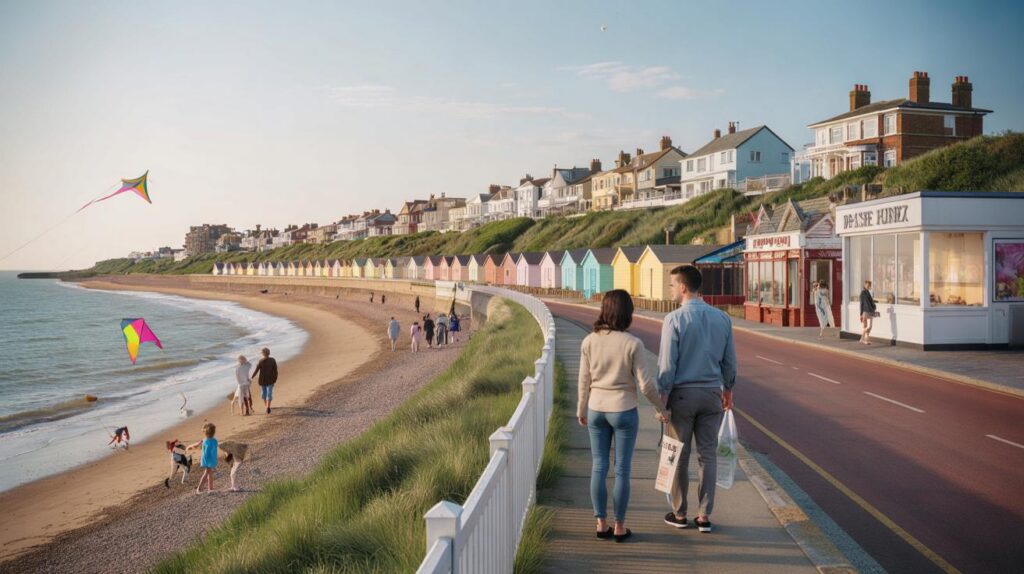
Schools bustle, galleries thrive and beach huts glow; a quiet corner of north Essex is drawing fresh, curious crowds again.
Muddy Stilettos has named Frinton-on-Sea among the 10 most appealing places to live in Essex, a nod to its beachside calm, cultural heritage and steadily rising desirability. The verdict places this genteel resort back in the conversation for buyers and renters weighing value against lifestyle on the county’s north-east coast.
Why Frinton-on-Sea stands out
Frinton’s reputation was forged in the 1920s, when Londoners christened its high street the Bond Street of East Anglia. A century on, the town leans into elegance rather than razzmatazz. The promenade is broad and impeccably kept. Huts line the shore in soft pastels. The sand falls away gently, making family beach days calm and easy.
The centre is small and independent-led. Cafés, bistros and cocktail bars bring an evening hum without the stag-do noise found in brasher resorts. That balance matters. It’s why couples trading city flats for sea air, remote workers seeking space, and families wanting clean beaches can share pavements without friction.
Golden sands, a trim esplanade and a low-key high street give Frinton a tidy, timeless feel.
Culture gives the town deeper roots. Frinton Summer Theatre, founded in 1934, remains the country’s oldest weekly summer repertory company. It stages eight productions across July and August. The Driftwood Gallery at Photovogue shows contemporary pieces in a light-filled, modern space. That mix adds year-round reasons to stick around.
The numbers at a glance
Average price across Frinton-on-Sea sits at £396,762, with detached homes averaging £535,750.
| Property type | Average price |
|---|---|
| Detached | £535,750 |
| Semi‑detached | £347,389 |
| Flats | £231,666 |
| Overall average | £396,762 |
These figures place Frinton below many London commuter belts, yet above some inland Essex towns. Buyers get beach access and a tight, walkable centre, while sellers benefit from steady demand from retirees and hybrid workers. Stock tends to be a mix of 20th‑century bungalows, interwar houses and flats close to the seafront.
Eat, shop, play
Where to eat
- Bird & Bean – brunch favourite with seaside comfort plates
- Pier One – smart fish and grill with evening buzz
- Avenue Bistro – neighbourhood dining, seasonal menus
- Arnies Cocktail Bar – low-lit drinks and small plates
Independent shops
- Limehouse Frinton – homeware and gifts with coastal notes
- Kittys Jules – fashion edits, accessories and friendly styling
- East Coast Distillery – local spirits and tasting-room chat
Culture and calm
Frinton Summer Theatre has staged eight shows each summer since 1934, a rare run for a seaside town.
Beyond the stage, the greensward is a natural gathering place. It rolls above the shore and doubles as a picnic strip, a kite field and a viewing gallery for huge winter skies. For a gentle day out, the coastal path threads north to Walton-on-the-Naze. Birdlife lifts at Hamford Water Nature Reserve, and the Naze tower gives long views when the air is clear.
Nearby attractions
Clacton Pier, a short hop south, won best family attraction in the 2024 Essex awards. Rides fill summer afternoons. Ten‑pin bowling and arcades rescue rainy days. It’s a handy pressure valve when visitors descend and the promenade crowds.
How it compares across Essex
Muddy Stilettos’ Essex line‑up sets Frinton alongside urban and rural heavyweights. Each offers a different pitch to residents.
- Chelmsford – a cathedral city with fast rail links
- Saffron Walden – market-town charm and medieval streets
- Maldon – estuary walks and maritime heritage
- Leigh – creative energy on the Thames
- Frinton – seaside poise and cultural staples
- Wivenhoe – riverside life near the university
- Stock – commuter-country feel with village spirit
- Coggeshall – timber-framed history and vineyards
- Buckhurst Hill – tube access and Epping Forest
- Mersea – island living and oysters
Frinton’s edge lies in seaside order rather than flash. It is tidy, slow in the best sense, and shaped by long-standing rules that kept amusements out of the centre. People who like that rhythm tend to stay.
Practicalities for potential movers
Trains run from Frinton-on-Sea on the Sunshine Coast Line. Typical journeys to Colchester take about 45 minutes with a change. London Liverpool Street is usually around 1 hour 40 to just under 2 hours, depending on connections and time of day. Services can bunch at peak times, so flexible workers gain most.
By road, Colchester sits roughly 14 miles west, often 35 minutes by car outside rush hour. Stansted Airport is about an hour on a clear run. Cycle routes shadow the coast and connect to Walton and Holland-on-Sea, giving options that don’t involve parking on sunny weekends.
School provision includes primary choices nearby and secondary places served by larger local academies, including the multi-campus Tendring Technology College. Sports clubs focus on tennis, golf and sailing, fitting the town’s gentle, outdoorsy rhythm.
What to weigh up before you commit
Seasonality shapes life here. Summer brings visitors and energy; winter brings sweeping quiet. Some love that switch. Others prefer livelier year-round streets. The housing stock leans older, so energy upgrades and maintenance should sit in your budget calculations. Flood defences and coastal management are part of the landscape, as with many East Coast towns; buyers of seafront homes should check insurance excesses and long-term plans.
On the plus side, beach walks start from the doorstep, the greensward doubles as a communal park, and cultural fixtures ensure the calendar never runs dry. Independent businesses give the high street pride of place. You can live car-light if you stay close to the centre and train station.
Key takeaways for home-hunters
Think calm days, cultural nights and a price point that undercuts many commuter belts while delivering the sea.
- Budget guide: £231,666 for flats, £347,389 for semis, £535,750 for detached homes
- Culture: eight summer theatre shows, gallery programme, community events
- Lifestyle: clean beaches, big skies, independent cafés and bars
- Logistics: rail to London in around 1h40–2h; Colchester within easy reach
If you are weighing the move
Try a winter weekend as well as a summer day. Speak to agents about heating costs in older homes and storage for beach gear if you are not on the front. Check train times that match your schedule rather than headline fastest services. Walk the route from station to shore at dusk to judge lighting and footfall. If you need workspace, test mobile data speeds along your most likely dog-walks.
Families can map out daily life with a simple drill: morning run on the promenade, school drop-off, café table for laptop work, evening theatre in July or a pier trip in August. If that picture fits, Frinton-on-Sea’s place on Essex’s latest hotlist will make perfect sense.



Yes please to clean beaches and a real theatre scene! £396,762 seems fair if you can ditch the car and walk everywhere. Tried the coastal path to Walton last year—bliss. If the greensward doubles as my park, I’m in. 🙂
Value vs lifestyle: would I pay nearly £400k and still face a 1h40–2h train to London with changes? Maybe not. Also older housing stock means retrofit bills (insulation, windows), plus coastal insurance can be fiddly. Lovely write‑up, but the practicals might bite.