
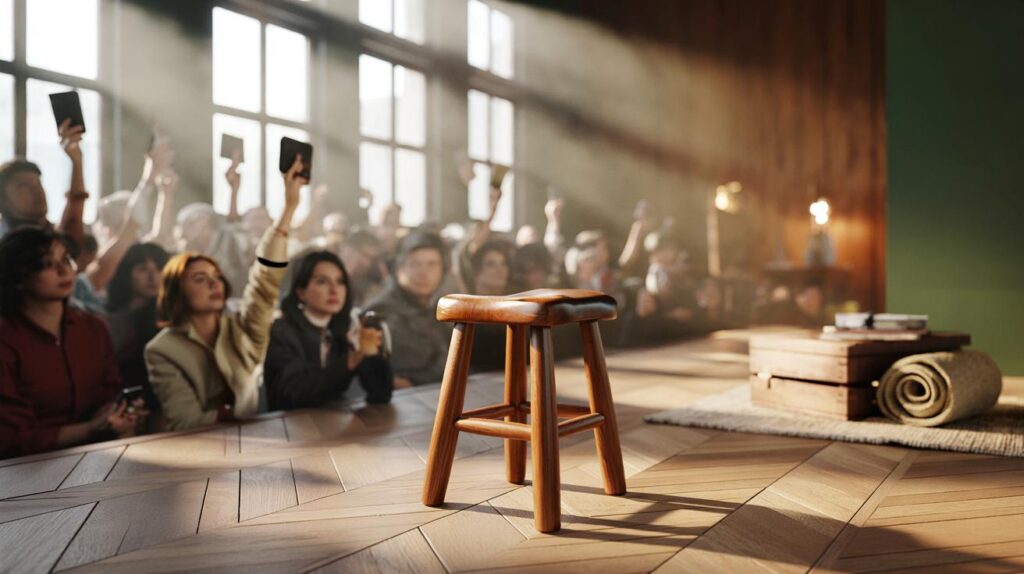
Spotted in stylish flats and whispered about at design fairs, one humble seat is quietly stirring big emotions nationwide.
It used to lurk in estate sales and back rooms. This autumn, the same small stool is driving fierce bidding, sparking long threads on design forums, and nudging even sceptical decorators to think again about scale, craft and value.
How a forgotten stool crashed the trend lists
The Chapo S31: from cold shoulder to cult status
In 1974, French designer Pierre Chapo sketched a compact, disciplined stool that made no attempt to charm with frills. The S31 sat low, on three converging legs, with a sculpted saddle seat in solid wood and an oil finish that let the grain do the talking. At the time, interiors leaned towards voluptuous shapes and synthetic swagger. The S31 looked austere by comparison. Dealers shrugged. Many owners tucked it away.
Half a century later, tastes have pivoted. Minimal lines read as calm, and small pieces with tactile honesty earn prime placement. The S31 now signals knowledge as much as style. It bridges architectural clarity with human warmth. You can shift it with one hand. You can use it, not just look at it.
Three splayed legs, a gently dished seat, and visible joinery: the S31’s restraint is its calling card.
From dismissal to demand
In the vintage market’s steady rise, overlooked objects can turn swift winners once curators and collectors align. That is what has happened this season. Original S31 stools are now scarce. When one appears, phones come out and bids stack up. Across French auction rooms this autumn, hammer prices have pushed beyond €4,500 for strong examples, with interest from abroad adding heat to already crowded salerooms.
Dealers say the shift began online. A handful of well-shot interiors placed a single S31 next to generous sofas and thick rugs. The contrast amplified the stool’s purpose: an elegant utility, not a heavy statement. From there, listings tightened, waiting lists formed, and private sales moved faster than public ones.
Recent sessions in Paris and Marseille have seen S31 stools clear €4,000–€4,500, drawing bidders far beyond France.
The S31 steps into the spotlight
Auction rooms go electric
Specialists now trail S31 lots in their catalogues and flag them during the previews. The atmosphere sharpens as soon as a porter brings one to the rostrum. Bidders who came for lamps or ceramics join in. Others rely on written bids to keep a lid on impulse. The pre-festive calendar heightens the mood. People want a talking point for the living room and a piece with a story.
Who is buying
It is no longer a collectors-only game. Interior architects, stylists and design-led homeowners join the chase. The stool works as a nimble extra seat, a nightstand, or a punctuation mark in a clean-lined hallway. Its neutrality helps it sit comfortably next to stone, wool, clay or glass. That adaptability, plus a modest footprint, makes it a quiet problem-solver in compact homes as well as generous lofts.
Social media pours on the fuel
Instagram, Pinterest and TikTok compress the cycle from sighting to desire. A single post from a respected studio, showing a S31 beside a low linen sofa and a potter’s lamp, can set off a wave of enquiries. The more the stool appears, the more it suggests scarcity, and the more the market treats it as a badge of discernment. Limited re-editions announced for winter hint at sustained appetite, even as vintage examples remain the most chased.
One persuasive image in a calm interior can add hundreds of euros to the perceived value of a small, well-made object.
Why this sudden crush makes sense in 2025
Design values, reset
The S31’s rise folds into a broader return to authenticity, repairability and materials that age gracefully. People want fewer pieces that work harder. They also want furniture that talks softly but carries evidence of hand and mind. The stool’s measured geometry and visible craft give that in spades. It looks honest. It stays useful.
Practicality beats hype
The format answers current life patterns. Homes must flex between work and leisure. Guests appear with little warning. A small perch that shifts from the bedroom to the dining corner solves real problems. Its weight, volume and toughness mean it survives frequent moves, while the wood softens with wear rather than looking tired.
What to look for if you are tempted
- Check the seat profile: a gentle dish, not a flat plank, indicates the intended comfort and craft.
- Study the leg junctions: tight joints and consistent edges show care in assembly and later handling.
- Run a hand across the finish: an oil-waxed touch feels warm and natural; heavy varnish can mask repairs.
- Ask for provenance: invoices, old photos and workshop markings help confirm age and originality.
- Inspect repairs: a well-executed fill or re-glue can be fine; loose legs or split seats affect value.
Condition, joinery and provenance move the needle more than minor scratches or a soft sheen from use.
How to bring the look home without overpaying
Three neat moves for an autumn refresh
- Pair one compact wooden seat with a thick wool rug and a linen throw to warm a pared-back room.
- Use a small bench and a side stool instead of a single coffee table; the mix adds rhythm and function.
- Layer honest materials—oiled wood, clay, jute, mouth-blown glass—to let texture lead the scheme.
Budget, care and risk management
If a four-figure price feels steep, look for contemporary artisan stools that respect similar principles: solid timber, legible joinery, and a seat shaped for the body. Prices often sit under €300, and the effect can be striking when paired with quality textiles. For maintenance, wipe with a barely damp cloth, avoid pooled water, and refresh the oil once or twice a year. Furniture wax can add a soft lustre if the piece feels dry.
Watch for pitfalls. Over-restoration can blur edges and swell joints. Fresh screws in old holes may signal a leg re-fit; that is workable if honest and tight. Beware of pieces marketed as “in the style of” at vintage prices. When in doubt, request close-up images, measure twice, and compare profiles with documented examples.
The numbers buyers keep asking about
Prices, availability and where the heat comes from
| Metric | Current picture |
|---|---|
| Typical auction range (autumn 2025) | €4,000–€4,500+ for strong vintage examples |
| Private-dealer asks | Often above auction results for top condition pieces |
| Re-editions | Limited runs signalled for winter; check lead times before gifting season |
| Where demand concentrates | France, plus active buyers from northern Europe and select US studios |
Extra context to help you decide
Authenticity checklist you can use today
- Proportions: the S31 reads compact; seat diameter and leg splay look balanced, not spindly.
- Under-seat view: clean intersections without metal brackets on vintage builds.
- Feel: edges are eased by hand, not sharp as on CNC-heavy replicas.
- Finish: an oil presence that shows grain depth rather than a thick, uniform gloss.
A simple what-if for value planning
Suppose you secure a clean S31 at €4,200 in November. Comparable lots in the last quarter point to a broad band between €4,000 and €4,500, with condition and provenance making the difference. If you plan to hold for three to five years, factor in storage, insurance, and a light annual care routine. Even without chasing gains, you keep utility and the option to rotate it through rooms as needs change.
If you are weighing insurance, photograph the stool from all angles and record measurements. Ask your insurer about adding a specified item to your policy. For daily use, fit felt pads to protect floors and reduce wobble. If the seat shows dryness, a thin coat of linseed-based oil, applied sparingly and buffed after curing, restores depth and touch.



Just pulled my old Chapo S31 from the attic—didn’t realize it’s hot again! Minimal, tough, and actually useful. Might keep it rather than chase the €4.5k buzz 🙂