
Vintage furniture is everywhere right now — Facebook Marketplace, the charity shop on the corner, your nan’s loft. Gorgeous bones, tired finishes. The trend catching fire? Using colour and clever techniques to make those classics feel crisply modern without losing their soul.
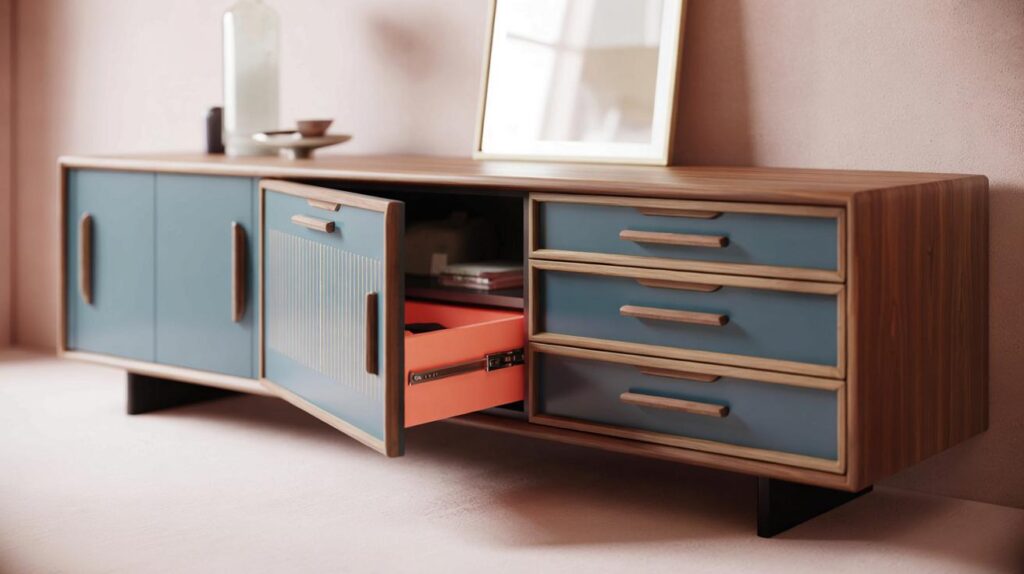
I watched a woman at a Saturday car boot in Peckham run her hand along a scuffed mid‑century sideboard, the varnish crazed like old toffee. She didn’t flinch. Out came a fan deck of paint chips and a photo on her phone titled “Blue ideas”. A seller muttered, “Bit of work, that,” and she smiled like it was a secret. Later, in her flat, she taped off the legs, sanded the edges, rolled on a quiet green and tucked a neon coral surprise inside the drawers. *The room suddenly had a heartbeat.*
Why colour is rewriting the vintage rulebook
For years, “don’t paint good wood” was whispered like gospel. That’s fading. People want pieces that hold stories but also spark joy next to a plug-in dimmer and a stack of cookbooks. Enter colour drenching, tone-on-tone fronts, and unexpected interiors. You keep the timber where it shines and layer modern hues where age shows. The result looks new, but not newborn.
In a small Manchester flat, a 1970s teak sideboard got two shades: a clay-grey shell with a whisper of brown, and a deep ink blue on door panels. The grain still winks through, but the palette speaks 2025. Friends thought it was designer. It wasn’t. It was three evenings, a foam roller, and a pot of eggshell that cost less than a dinner out.
Here’s the quiet genius: colour shifts scale and mood. Darker plinths make tall wardrobes feel lighter on top. Painting only the carcass leaves doors floating like picture frames. Inside-drawer pops turn everyday rummaging into a tiny ritual. Used smartly, **colour drenching** pulls vintage lines into the present while letting patina keep telling the past.
Techniques that quietly transform old pieces
Start with a gentle reset. Degrease with sugar soap, scuff-sand just enough for a key, then block stains with shellac-based primer if you’re dealing with tannins or nicotine. Choose a soft-matte or satin finish in a contemporary shade: think muddied sage, inky blue-black, or warm plaster pink. Paint the body with a mini foam roller for glassy strokes, then leave the handles in wood, or swap them for **hardware with personality**. That contrast is your wink.
Little tricks go a long way. Mask a 5 mm border on drawer faces so a sliver of timber frames the colour. Lacquer just the top for wipeability and leave the sides raw. If veneer is chipped, splice a stick-on walnut edge and tone it with wax. Keep sheen consistent: matte on bulk, satin on horizontal touchpoints feels luxe. Let the paint cure. We’ve all had that moment when we stack books too soon.
There are traps. Silicone polishes cause fish-eyes, so clean twice. Orange bleed-through? Swap to a stain blocker and pause overnight. Drips hide under edges; tip the piece to catch them in the light. Let’s be honest: no one really does that every day. Aim for “lived-in perfect”, not factory perfect. Keep a Q‑Tip for tight corners and a credit card to press tape tight along fluting. If a brush drags, add a splash of water or floetrol to your paint and breathe.
“Leave a thread to the past,” says London restorer Mia Khan. “If you drown the grain, keep the handles. If you paint the lot, open a drawer and let a shot of timber grin back at you.”
- Ebonising oak with steel wool soaked in vinegar for a dramatic, smoke-black look.
- Whitewashing open grain for **cerused oak** that reads coastal-modern, not farmhouse.
- Colour-blocking only the plinths and side edges to sharpen chunky silhouettes.
- Adding fluted strips or cane panels to flat doors for texture without bulk.
- Refreshing brass with a lemon-and-salt rub, then sealing with microcrystalline wax.
Your home, your history, your palette
The loveliest remodels rarely scream. They edit. Keep the warmth of a walnut top, paint the apron in chalky mushroom, and tuck a citrus lining in the cutlery drawer that makes you grin on Wednesday nights. Mate a Victorian washstand with slate-blue fronts and a slim marble handle. There’s nothing purist about it — which is a relief.
Stories travel when you mix finishes. A battered pine chest feels urban with graphite sides and a pale limed lid. A cracked lacquer hall table becomes a statement once the legs go glossy petrol and the top goes satin stone. The palette doesn’t need to match your walls. It needs to make your sofa look happier.
Real talk from the workshop: prep is 80% of modern magic. Clean, key, prime where needed, then roll thin and wait. If the room is chilly, borrow a fan heater. If a colour looks shouty, knock it back with a drop of grey. If you panic halfway through, walk away for ten minutes. When you return, the piece will tell you what to do next.
Gently, a pattern has emerged in British homes. People are rescuing “brown” furniture, bathing it in fresh colour, and sneaking in small feats of craft that belong to today. No manifestos, no gatekeeping. Just ordinary rooms learning to hold history and light at once.
| Key points | Details | Interest for reader |
|---|---|---|
| Use colour to modernise without erasing character | Paint carcasses, leave some timber, add inside-drawer pops | Quick visual impact while respecting the piece’s story |
| Prep and products matter | Sugar soap, scuff-sand, shellac primer, foam rollers, satin/eggshell | Fewer failures, smoother finishes, longer-lasting results |
| Smart techniques elevate budget finds | Ebonising, cerusing, fluting, fresh hardware, edge masking | Designer look without designer prices |
FAQ :
- Can you paint veneer, or will it peel?Yes, if you prep well. Degrease, scuff with 240‑grit, then use an adhesion or shellac-based primer. Thin coats of eggshell or satin on top behave beautifully.
- What stops yellow or brown stains bleeding through?Tannins from oak and old varnish can ghost. Block them with a shellac or tannin-sealing primer, and allow a good dry time before colour.
- Is chalk paint still a thing for modern looks?It works, but seal it with a water-based varnish for a crisp, wipeable finish. Pair with clean hardware to avoid the shabby-chic vibe.
- How do I pick colours that won’t date fast?Lean into muddied, complex shades: blue-black, olive grey, plaster pink, tobacco brown. They flatter timber and look grown-up under warm light.
- Brush or spray for the best finish?A high-density foam roller gives near-spray smoothness without the faff. Use a good synthetic brush just for edges and detail.



Absolutely loved the “leave a thread to the past” advice. I tried colour drenching on a tired G-Plan sideboard last month—muddied sage on the carcass, walnut handles left bare—and it suddenly felt 2025 without losing its hum. Foam roller + satin was a game‑changer; no brush marks, just a soft glow. Inside-drawer coral? Chef’s kiss. Only thing I’d add: label your screws, I lost a hinge and nearly cried. Great guide, properly practical and inspiering.