
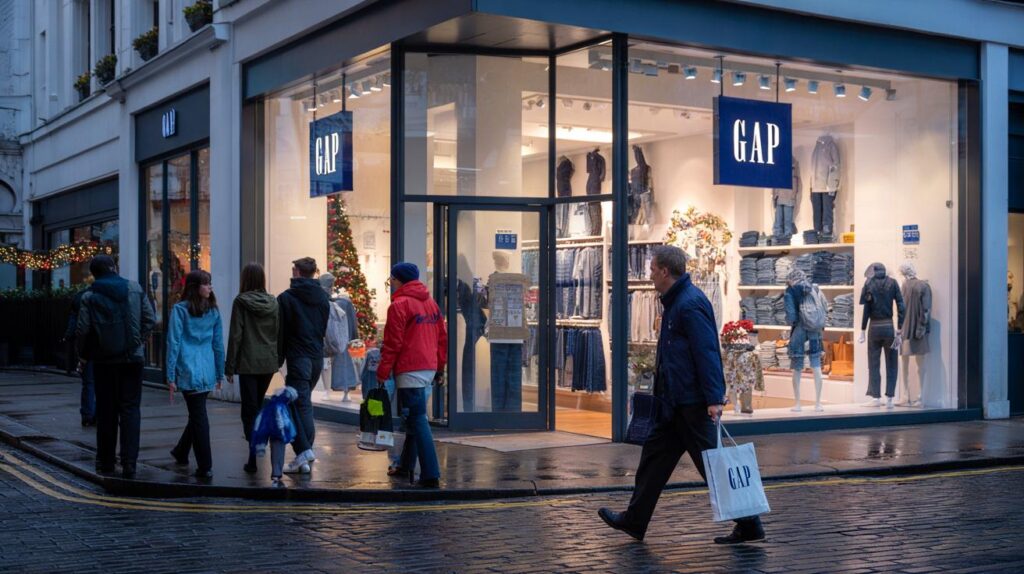
After years of closures and concessions, a once-favourite label is quietly mapping a comeback, with London at the centre again.
Gap will return to standalone bricks-and-mortar retail in Britain with three London openings over five weeks, marking a shift from its recent shop-in-shop model and online-first strategy.
A return to bricks and mortar
The US brand plans a phased relaunch on the capital’s busiest shopping circuits. A new flagship arrives in Covent Garden on 6 November, followed by Westfield London on 4 December and Wembley Park London Designer Outlet on 12 December. The move ends a four-year physical absence after Gap shuttered its last UK store in September 2021.
Three dates, three districts, one comeback: 6 November (Covent Garden), 4 December (Westfield London), 12 December (Wembley Park LDO).
Each site is expected to stock full collections, including denim, everyday basics, kidswear and seasonal capsules, aiming to reconnect with lapsed shoppers while drawing in younger customers who know the brand online but not in-store.
Key dates and locations
| Date | Location |
|---|---|
| 6 November | Covent Garden (flagship) |
| 4 December | Westfield London |
| 12 December | Wembley Park London Designer Outlet |
Why the brand is choosing now
Rents have reset in some prime locations since 2021, while footfall in London’s centres has strengthened with tourism and event traffic. Retailers also report that well-located stores boost online sales in surrounding postcodes, supporting an omnichannel strategy. Gap is betting that a compact fleet of high-performing sites can do more for brand presence than a broad network of costly leases.
Customer habits have shifted towards intentional shopping trips. That favours retailers that offer easy navigation, strong basics, and sharp pricing. Gap’s core offer—denim, tees, casual shirting and kidswear—fits that pattern if the in-store experience is clean, quick and reliable on sizes.
The Next partnership remains central
Gap’s UK and Ireland joint venture with Next continues to shape the brand’s footprint. The partnership is owned 51% by Next and 49% by Gap, combining British retail operations with American design and branding.
Beyond the new stores, the label already trades through more than 40 concessions in Next across England and Ireland, and maintains four prominent shop-in-shop formats, including Oxford Street in London, Braehead in Glasgow, and the Trafford and Arndale centres in Manchester.
A 51:49 joint venture with Next underpins over 40 concessions today—and provides operational muscle for the relaunch.
The online shop remains active, giving customers the choice to browse digitally and try in-store. That joined-up approach aims to reduce returns and lift basket sizes.
From 1987 to 2025: a short timeline
- 1987: Gap opens in the UK, building a nationwide estate over three decades.
- 2021: The brand closes its final UK store and pivots to online and concessions.
- 2025 season: Three London stores reopen in time for peak trading and January traffic.
What shoppers will find inside
Expect a tightly edited store layout: clear denim walls, heavy stock of core fits, and seasonal colour drops. Essentials such as hoodies, crew tees and chinos will likely form the backbone, with kidswear and baby lines drawing family spend. Accessories and gifting will be prominent during the festive period.
Staff training and speedy checkouts matter to win back trust. Click-and-collect and easy exchanges drive repeat visits even when wardrobes are full. The locations—Covent Garden’s theatre corridor, Westfield’s destination mall and Wembley Park’s outlet district—serve different price expectations, so assortments may vary by store to match the catchment.
What the openings mean for the high street
The trio of launches creates new retail roles and signals confidence in well-trafficked London zones. It also supports surrounding cafés and services that rely on steady shopper flow. A quality return from a well-known brand can nudge nearby landlords to back new leases, accelerating recovery in mixed-use streets.
Gap’s playbook contrasts with the mixed fortunes of other chains. Marks & Spencer has pushed forward with new-format flagships while pressing ahead with selected closures across its estate. The pattern is consistent: fewer, better stores, stronger digital, and disciplined property costs.
Fewer stores, higher impact: brands are trading expansive estates for focused flagships that lift online and local spending.
How to make the most of the relaunch
- Shop early for sizes: opening weeks bring high demand for core fits and kidswear multiples.
- Compare districts: full-price lines at Covent Garden and Westfield, outlet-led value at Wembley Park.
- Use the calendar: 6 November, 4 December and 12 December openings align with gifting and winter wardrobe refresh.
- Check concessions: if you live outside London, more than 40 Next concessions continue to carry key lines.
Why this comeback could stick
A leaner estate aligns costs with sales density. London stores capture tourists and commuters, while concessions spread reach in regional centres. The joint venture supplies scalable logistics, seasoned store ops and marketing muscle. If pricing stays tight and fits stay consistent, Gap can restore habit shopping—the weekly top-up tee or dependable pair of jeans that keeps customers loyal.
Risks remain. Consumer budgets are stretched, and fashion cycles move quickly. To keep momentum, the brand needs fresh colour drops, dependable denim replenishment and clear value at every visit. Outlet pricing at Wembley Park will help, but clarity on quality and fit will matter more than short-term markdowns.
Extra context for shoppers and investors
For families, a compact strategy brings practical gains: easier access to kids’ multi-packs, fewer stock outages, and predictable sizing. For retail watchers, the openings test a model that mixes full-price flagships with outlet value and nationwide concessions. If the balance holds, expect targeted expansions in major cities where footfall and tourism justify the rent.
Think of the three launches as a live simulation of modern British retail: anchor a brand in a flagship, amplify it through a destination mall, and widen appeal with outlet savings. Add an active website and a network of concessions, and the result is coverage without the drag of legacy leases—a formula many fashion names will study during the next trading year.



Finally! Covent Garden on 6 Nov is perfect timing—been missing a proper denim wall. Will definately check the fits.
We closed in 2021 and now a re-openning in 2025—what’s truly different beyond fewer leases and a glossy flagship?