
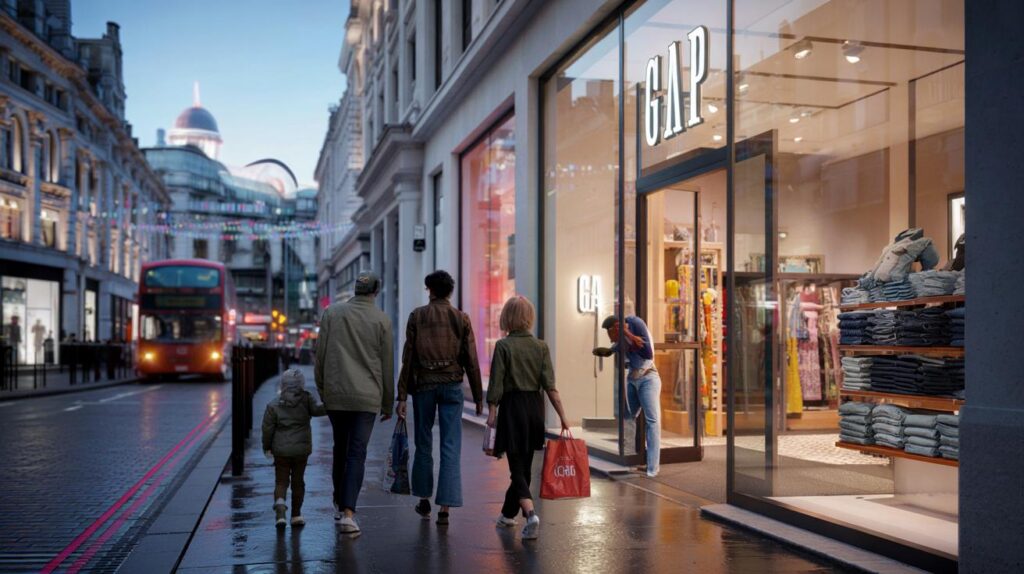
Shoppers scanning empty units may soon recognise a familiar logo as a major American label prepares fresh lights and fittings.
After years of retreat and an online-only presence, Gap will reopen physical doors in the capital, testing whether British shoppers still want its clean cuts and denim staples on the rack, not just in a basket. The move follows a period of store closures across retail, but also a quiet rebuild through concessions and partnerships.
A flagship returns, then two more openings
The US brand is relaunching with three standalone shops in London. A central flagship in Covent Garden leads the way on 6 November, followed by Westfield London on 4 December and Wembley Park London Designer Outlet on 12 December. Each site is expected to carry a full spread of menswear, womenswear and childrenswear, echoing the broad assortments that made the retailer a default choice for basics.
Three openings, three neighbourhoods, three key December dates: Covent Garden on 6 November, Westfield on 4 December, Wembley Park on 12 December.
The choice of locations reflects a calculated return. Covent Garden gives footfall from tourists and office workers, Westfield offers volume and visibility, while Wembley Park taps price-conscious outlet traffic. Together, they provide a live test of different shopper profiles before any national rollout.
Four years after the shuttering, a different playbook
Gap first arrived in Britain in 1987 and shut its last UK shop in September 2021. At the time, the business pointed to tough local trading conditions and began a formal consultation with staff. Online sales continued, but the brand left high streets and malls. That absence now ends, with a model shaped by the lessons of the past four years.
During its store hiatus, Gap embedded itself inside Next. The joint venture, majority-owned by Next (51% to Gap’s 49%), runs more than 40 concessions across England and Ireland, and four larger shop-in-shop sites, including Oxford Street in London, Braehead in Glasgow, and the Trafford Centre and Arndale in Manchester. Those spaces kept the brand tangible for shoppers who prefer to try on jeans or gauge sizes in person.
Gap’s UK comeback builds on a Next partnership that has kept more than 40 concessions trading while online sales continued uninterrupted.
Where you might have seen Gap in recent years
- Oxford Street, London – shop-in-shop inside Next
- Braehead, Glasgow – shop-in-shop inside Next
- Trafford Centre, Manchester – shop-in-shop inside Next
- Manchester Arndale – shop-in-shop inside Next
- Dozens of concessions across England and Ireland under the Next joint venture
What the new stores likely mean for shoppers
The standalone sites should carry deeper denim ranges than most concessions, more seasonal storytelling on the floor, and a wider mix of fits and lengths. That matters if you have struggled to find specific cuts in smaller corners of department stores. Expect clear price points, regular promotional cycles, and a push on kids’ wear, where brand loyalty tends to be strong.
For those who shop across channels, the return also improves fulfilment options. Click-and-collect, exchanges and returns usually get faster and cheaper when a retailer has its own counters, instead of sending parcels solely through couriers. Stock pooling between stores and online can reduce out-of-stocks on popular sizes, especially during December peaks.
Physical shops change the experience: faster returns, easier size swaps, and more depth in core denim and childrenswear lines.
Why now, and why London first
Retail has been reshaped by hybrid working, higher costs and shifting footfall. Yet central London’s steady recovery, strong tourist flow and concentrated spending still offer an effective launch pad. Opening in three very different environments lets the brand read demand before committing to leases elsewhere. It also aligns with a busy pre-Christmas period, when wardrobe refreshes and gifting deliver data quickly.
The broader picture features caution and investment in equal measure. Marks & Spencer is upgrading a string of sites while closing others, reflecting a wider strategy of fewer, better shops. Against that backdrop, Gap’s return suggests a belief that curated, flexible footprints—anchored by e‑commerce and supported by concessions—can work where full estates struggled.
Key dates and locations at a glance
| Date | Location | Format |
|---|---|---|
| 6 November | Covent Garden, London | Flagship store |
| 4 December | Westfield London | Standalone store |
| 12 December | Wembley Park London Designer Outlet | Outlet store |
What to watch if your town wants a store
Brands study three signals before expanding: local spending power, rental flexibility and vacancy levels. Towns with mixed-use centres—housing above shops, offices nearby, strong transport—often win the next wave of leases. Shopping centres offering turnover-linked rents also appeal, as they spread risk when trading softens. If these three London shops hit targets, other cities with similar profiles could follow.
Shoppers can nudge demand. Strong footfall around launch weekends, healthy sell-through on core ranges, and steady returns rates make a case for further openings. Engaging with local events—styling sessions, denim repairs, student nights—also raises a site’s value beyond pure sales.
How the Next partnership fits into the plan
The joint venture has done more than keep the lights on. It blended Gap’s brand equity with Next’s logistics, customer accounts and store network. That meant faster delivery, simpler returns and access to Next’s popular marketplace. Reopening standalone outlets does not replace that infrastructure; it adds theatre and space for larger ranges while the backbone of fulfilment remains in place.
For you, that could mean consistent sizing and stock across channels, plus the convenience of returning online purchases to either a Gap shop or a participating Next location. The blend reduces friction at a time when ease often decides where people spend.
Practical tips for shopping the relaunch
- Visit early for full-size runs in denim and seasonal capsules.
- Use click-and-collect to secure items, then try on in store for quick swaps.
- Check labels for fabric blends if you prefer heavier cotton or stretch denim.
- Ask about hemming or alterations where offered, especially for non-standard lengths.
- Keep receipts for gifts, as extended returns often apply around December.
The bigger retail picture
High street trading remains uneven, but selective comebacks are gaining ground. Retailers that combine strong basics, clear value and omni-channel convenience win share even when budgets tighten. Gap’s calculation rests on that mix. A compact estate lowers overheads, concessions add reach, and e‑commerce carries the rest. Success will depend on disciplined ranges, fit consistency and the ability to read demand quickly.
If you are weighing wardrobe refreshes before the holidays, expect the reopened shops to lean into dependable products: classic denim, crisp shirting, fleece and kids’ essentials. That plays to predictable buying and easier replenishment, which helps keep shelves full and sizes available during the busiest weeks of the year.



Finally back on the high street! Hitting the Covent Garden flagship on 6 Nov—been missing in‑person denim try‑ons.
Quick Q: will click-and-collect and returns work at both the new Gap stores and existing Next concessions, or only at Gap counters? Any courier fee changes?