
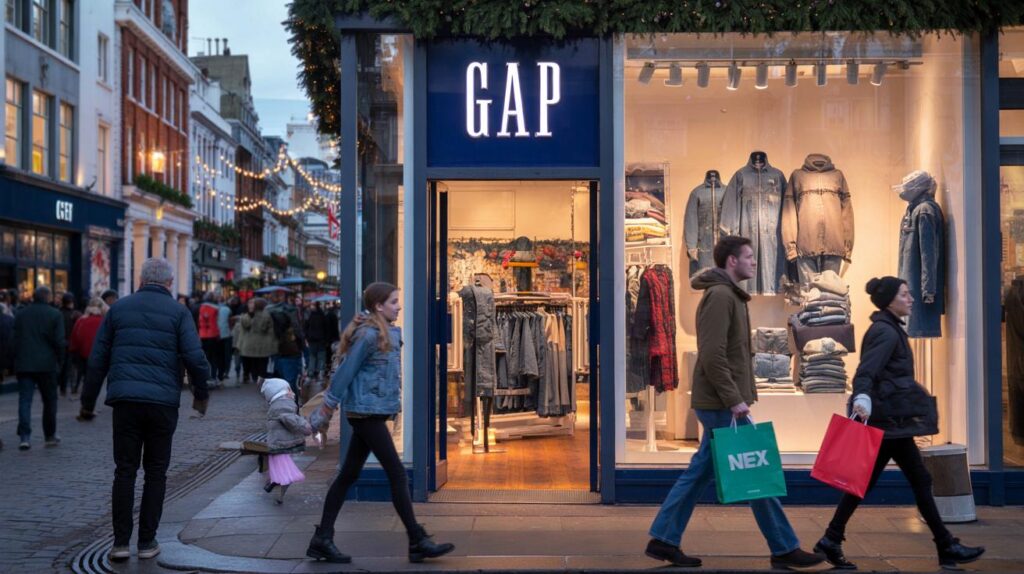
A familiar blue logo will soon reappear on busy streets, just as shoppers weigh budgets, gifts and winter layers before Christmas.
After a four‑year absence from bricks and mortar, Gap is stepping back onto the UK high street with a three‑store rollout and a sharpened strategy built around its joint venture with Next. The timing targets peak seasonal footfall while testing whether loyal customers — and a new generation — still want Gap’s stripped‑back denim, basics and kidswear in physical stores.
Where and when the doors open
Three openings in five weeks: Covent Garden (6 November), Westfield London (4 December), Wembley Park London Designer Outlet (12 December).
| Location | Opening date | Format | What shoppers can expect |
|---|---|---|---|
| Covent Garden, London | 6 November | Flagship | Full apparel range, spotlight on denim and kids, high‑visibility seasonal edits |
| Westfield London | 4 December | Mall store | Core collections, gifting displays and winter basics for late‑season shoppers |
| Wembley Park London Designer Outlet | 12 December | Outlet | Value‑led assortment, end‑of‑line buys and price‑sensitive bundles |
Trade publication Drapers reports the assortment across the trio will cover the brand’s main collections rather than limited capsule lines, signalling a confident return rather than a cautious trial kiosk.
Why the brand is coming back
Gap first entered the UK in 1987 and closed its final company‑operated store in September 2021, keeping only its website live. The decision at the time reflected rising costs, changing shopping habits, and a pandemic‑era reset of store portfolios. What has changed since then is the structure behind its UK presence: a joint venture with Next that brings local buying, logistics and retail expertise to a brand with global recognition.
Next holds 51% of the UK joint venture, with Gap retaining 49% — a model designed to pair brand equity with local retail muscle.
That partnership is already visible through more than 40 Gap concessions inside Next stores across England and Ireland, plus four larger shop‑in‑shops in high‑traffic sites such as Oxford Street in London, Braehead in Glasgow and the Trafford and Arndale centres in Manchester. Standalone stores are the logical next step, adding theatre, windows and street‑level presence that concessions can’t fully replicate.
What it means for shoppers
- Choice returns to city centres, with a flagship for the full range and an outlet for sharper prices.
- Try‑before‑you‑buy becomes easier after years of online‑only ordering and returns.
- Gift‑season timing brings fresh kidswear, logo sweats and winter denim into easy reach.
- Concessions in Next stay open, so many towns retain local access even without a standalone Gap.
For families, the comeback widens options for uniform‑adjacent basics, durable jeans and multipack tees. For budget‑watchers, the Wembley outlet’s December opening lands just as shoppers hunt value in the final fortnight before Christmas. Expect strong entry‑price offers and bundle deals aimed at driving basket size without painful sticker shock.
The strategy behind the shopfronts
Three stores in London — one flagship, one premium mall site, one outlet — create a compact test bed. Each format serves a different shopper mission: brand statement, convenience, and value. Running them within a five‑week window concentrates marketing spend and builds momentum across social feeds and gift guides.
The site choices also plug gaps in the existing concession map. Covent Garden brings tourists and locals; Westfield London channels weekend families; Wembley’s outlet skews to price‑led missions and coach‑trip traffic. If the formula works, expect selective expansion to strong regional centres rather than a rapid nationwide spree.
How this fits the wider high street picture
Big names continue to shuffle their estates. Marks & Spencer is pushing ahead with a programme of new or refitted stores while closing older sites that no longer fit its format. Landlords are keener on mix — fashion, food, leisure — and on flexible deals that share risk and reward. Gap’s return, underpinned by Next’s supply chain and store operations, aligns with that mood: fewer but better stores, clearer roles, tighter cost control.
Key facts at a glance
- First UK entry: 1987
- Final store closure wave: August–September 2021
- Standalone comeback: three London openings across November–December
- Ongoing presence: 40+ concessions in Next; four larger shop‑in‑shops
- Ownership split: Next 51%, Gap 49%
What to watch in the first 90 days
Pricing: Shoppers will watch whether London flagship prices track online tags and outlet markdowns. Consistency builds trust when switching between channels. Assortment depth: Denim fits, kids’ sizing and inclusive ranges will matter more than limited‑run logos. Service: Queue management and stock availability decide whether this return feels like a comeback or a cameo.
Digital integration will be another test. The brand kept its online shop live through its store hiatus, and many customers use a hybrid path: check stock on phone, try in store, buy later online. Smooth click‑and‑collect and easy returns across channels can turn footfall spikes into loyal habits.
Practical tips if you plan to visit
- Go early on opening weekends; capsule drops and best‑selling fits go first.
- Check size guides online before you travel; it speeds up try‑on and minimises queues.
- For value buys, target the Wembley outlet from mid‑December when winter promotions deepen.
- Keep receipts across channels; joint‑venture brands sometimes apply specific return windows by format.
Beyond the headlines: why a joint venture can work for shoppers
Joint ventures blend brand identity with local know‑how. Next’s UK distribution, warehousing and e‑commerce tools shorten lead times and can stabilise stock levels for core lines such as straight‑leg denim and kids’ basics. That reduces size gaps on rails, the bane of many shoppers who find the right style but not the right fit. The cost savings from shared operations can also support sharper entry‑price points without sacrificing fabric quality.
If you juggle convenience and cost, the new trio of stores, the network of concessions, and the still‑active website give you three lanes to the same wardrobe. Try the flagship for full choice, use concessions for quick pick‑ups, and tap the outlet for budget‑friendly hauls. As retailers reshape their estates, that mix — rather than wall‑to‑wall stores — is becoming the new normal on Britain’s high streets.



Finally! After 4 years, I can try jeans in person again. Ill swing by Covent Garden on 6 Nov—please stock longer inseams and inclusve kids’ sizing. Been waiting for this, definitley.
Is this a real comeback or a seasonal splash? How will prices compaire between the flaghsip, online, and the Wembley outlet, especially on denim fits. If tags don’t match, I’m out.