
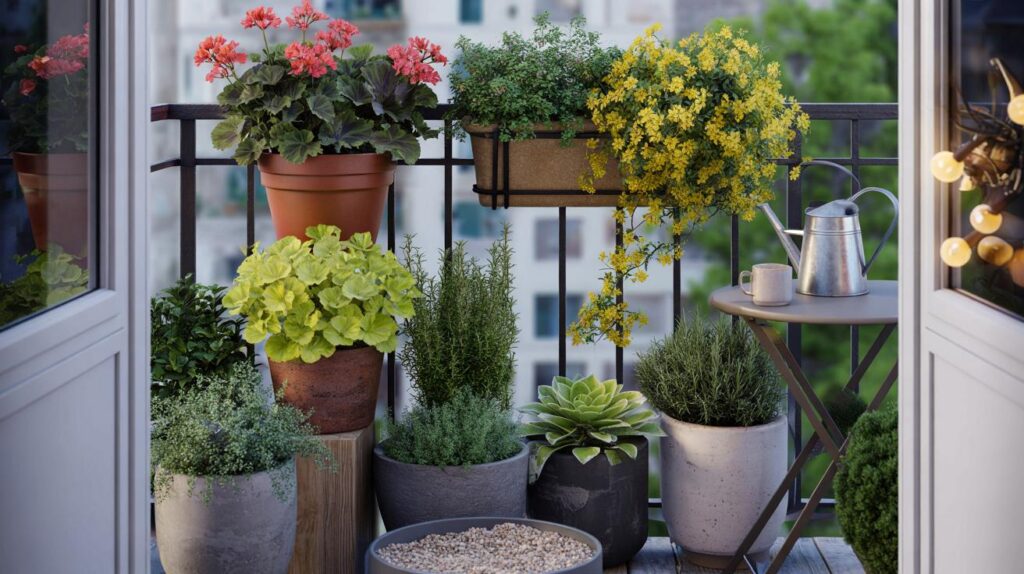
City balconies are tiny, windy, and always on show. You want cheer, not chores. The trick is choosing plants that forgive busy weeks and still burst into colour when you slide the door open.
At 7.12am in a quiet London side street, the kettle clicked and a balcony woke. A neighbour coughed, a bus sighed at the lights, and in three mismatched pots a small chorus of colour warmed the cool air. A pelargonium flashed scarlet next to a pot of thyme that smelled like a hillside, while a trailing calibrachoa spilled soft trumpets over the rail. The city didn’t go silent; the plants just changed how it felt. A blackbird landed on the TV aerial and sent down two notes like a dare. We’ve all had that moment when a scrap of green lifts the whole day. I sipped once, watered twice, and realised the balcony wasn’t asking for much at all. The secret sat quietly in the pots.
Plants that thrive on near-neglect and bring colour anyway
Small urban spaces ask a lot of their plants. Heat radiates off the wall, wind whips through the gap, and the shade moves like a clock. That’s why **low-maintenance** heroes earn their keep. Pelargoniums (zonals or ivy types) flower for months with modest watering. Calibrachoa drapes colour without sulking. Hardy sedums and sempervivums hold their shape through drought and drizzle. For foliage that pops, heucheras paint caramel, lime, or burgundy under soft light. If you want evergreen structure, dwarf rosemary and carex add calm lines and scent. It’s a tiny stage, but the cast matters.
On a third-floor balcony in Bristol, Priya turned a bare ledge into a pocket festival. She chose two 30cm pots for pelargoniums, one long trough for thyme and rosemary, and a hanging basket for trailing calibrachoa. By week three the bees knew her postcode. By week six she had a routine: water on Saturday morning, sweep on Wednesday evening. That was it. The thyme shrugged when she forgot a week. The calibrachoa kept laughing into October. Neighbours started bringing mugs to the rail.
Why these choices work is simple. Bigger containers dry out slower, so you water less and stress less. A gritty, peat-free container mix with added perlite keeps roots airy, which stops rot when rain goes hard for two days. Self-watering pots buy you time if the train runs late. A thin layer of gravel or bark mulch cuts evaporation and stops soil splashing the glass. Place sun-lovers like lavender, santolina, or sedum on the hottest edge. Slide shade-lovers like heuchera, ferns, and ivy toward the wall. Light is half the battle; pot size is the other half.
Care that fits real life
Set a balcony routine that you can do with a cuppa in hand. I call it the 10-minute loop: water slowly until you see the first drips in the saucer, pinch any spent blooms with your thumb and forefinger, and nudge straggly stems back into the pot. Rotate the containers a quarter turn to keep growth even. Add a teaspoon of slow-release fertiliser at the start of the season, then forget it for weeks. If you can, group pots by thirst so you can water the greedy ones, then walk away. Small habit, big calm.
Tiny containers look cute but turn needy fast. Give plants room and they pay you back with steadier moisture and cleaner roots. Overwatering is the other big pothole. Feel the soil first; if the top 2cm is dry and the pot feels light, water deeply. If it’s cool and damp, skip a day. Let’s be honest: nobody does that every day. That’s why choosing plants that tolerate a missed watering is smarter than downloading another app. Browning edges happen on balconies. Snip, smile, move on.
There’s a quiet confidence in doing less but doing it on repeat. A London horticulturist told me on a rooftop shoot,
“Plants don’t crave fuss. They crave consistency you can actually live with.”
Think of it like a friendly kitchen: the tools you reach for are the ones that stay out. Pick plants that match your light and your week, then build a small palette you love. Here’s a pocket list to get started:
- Pelargonium ‘City Red’ (sun) — multi-month colour, forgiving roots.
- Calibrachoa ‘Lemon Slice’ (sun) — tumbling trumpets without deadheading marathons.
- Rosemary ‘Blue Lagoon’ (sun) — evergreen scent, vertical calm.
- Heuchera ‘Lime Rickey’ (shade/part shade) — lime pop under grey skies.
- Carex oshimensis ‘Evergold’ (any light) — tidy arching texture, year-round.
Design tricks that make small feel generous
Colour loves a rhythm. Pick one hot tone and one cool foil, then repeat them so the eye reads coherence, not clutter. Scarlet pelargoniums with lime heuchera is a lively pair. Soft apricot calibrachoa with smoky purple heuchera hushes the palette. Lift the view with a tall accent — a dwarf olive, a bamboo stake with sweet peas — and keep the floor clear so your feet feel free. One mirror on the wall doubles the green. A jute rug softens the grid of the city. Suddenly the space feels like a room.
Height is your friend on a balcony. Use rails, shelves, and hangers to stack layers: eye-level blooms, mid-level herbs, ground-level grasses. Stagger pot sizes in odd numbers. Tuck a plug-in outdoor light under the rail and the plants glow even when the sky sulks. In windier spots, choose squat pots and add a handful of gravel to the base for ballast. If privacy is the game, thread climbers like star jasmine along a simple wire. It smells like summer lanes. Your neighbours will lean in kindly.
Think seasons, not a single weekend. Spring gives you violas and tulips in pots, then the baton passes to pelargoniums and calibrachoa through summer. Autumn belongs to dwarf grasses, heuchera, and sedum heads catching low light. Winter asks for structure: rosemary, carex, ivy. Swap two or three pieces per season, not the whole stage. That keeps costs steady and joy high. The real magic is daily: a leaf unfurls, rain beads on sedum, the city blurs behind a flower. It feels small, then it doesn’t. That’s the point.
There’s a lovely thing that happens when a balcony becomes a habit, not a project. Your senses click into local weather; you can smell rain on rosemary and hear the soft traffic hum as background, not noise. A friend texted me a photo of her calibrachoa at 9pm, little trumpets lit by fairy lights, and wrote, “Didn’t think a metre of space could be this kind.” That’s the invitation. Plant what forgives you. Water when you can. Share cuttings with the next flat. Inside the container walls, you can still grow a street-long story. It’s yours to write, pot by pot.
| Point clé | Détail | Intérêt pour le lecteur |
|---|---|---|
| Bigger pots, calmer care | Use 25–35cm containers with peat-free, airy mix and mulch | Less watering, fewer plant dramas, more weekend freedom |
| Right plant, right light | Sun: pelargonium, calibrachoa, rosemary, sedum. Shade: heuchera, fern, ivy, carex | Plants thrive without fuss and keep colour in place |
| Simple weekly loop | Deep water, quick pinch, quarter-turn, slow-release feed at season start | **Watering routine you can keep** that delivers steady, joyful growth |
FAQ :
- How do I stop wind from wrecking my balcony plants?Pick squat, heavier pots and group them in clusters for shelter. Add discrete windbreaks like mesh screens or a row of carex to slow the gusts, not fight them.
- What low-maintenance plants love shade?Heuchera, ivy, ferns like Asplenium, carex, and small hydrangeas in larger tubs. They keep form and colour when the sun ducks behind the building.
- How often should I water in a heatwave?Check daily, water deeply every second day for big pots, and move small ones into a tray to catch run-off. Early morning beats evening for cooler roots.
- Can I grow food on a low-care balcony?Yes — rosemary, thyme, chives, and dwarf chillies do well. Cherry tomatoes thrive in a 30cm pot with a wick or self-watering base. Feed lightly and let the sun do its job.
- What if I travel often?Choose drought-tolerant sets (sedum, rosemary, pelargonium), use a self-watering planter, and ask a neighbour to water once a week. Offer them a sprig of rosemary and a thank-you brew.



Loved the 10-minute loop idea — it makes balcony care feel doable. I always overwater; the “top 2cm” touch test is gold. Any tips for pairing heuchera with spring bulbs in a tiny trough?