
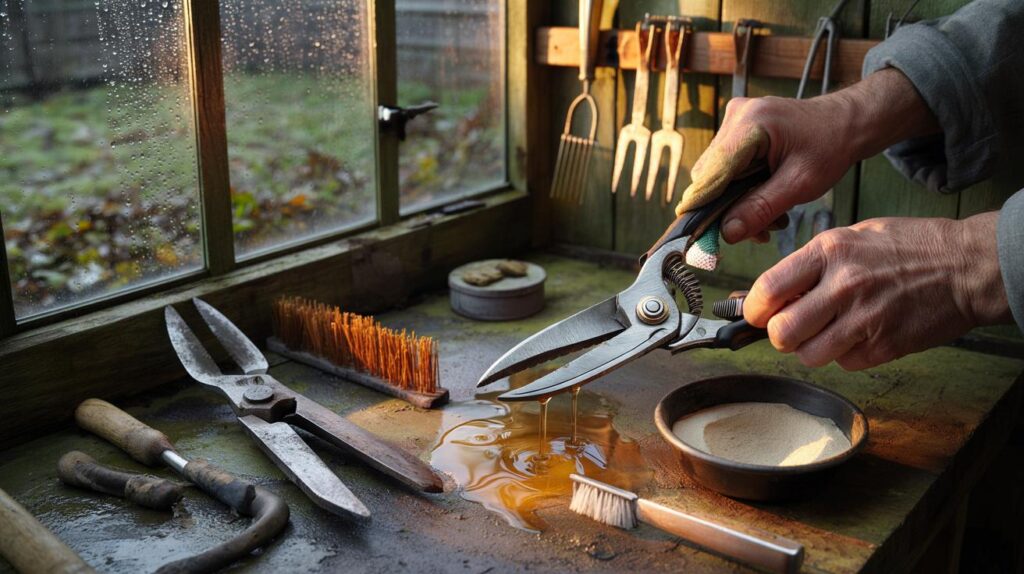
The damp rolls in, the shed door sticks, and metal starts to whisper its first complaints. Your spring depends on this.
Across Britain, a wetter, milder autumn has settled in. That means longer dew cycles, clingy soil, and a slow, grinding attack on steel. Many gardeners still focus on lawns and leaves while the real threat builds quietly on blades, hinges and tines. A tiny, cheap ritual now can spare you seized loppers, blunted shears and a shopping bill you did not plan for in March.
Why autumn damp destroys metal faster than you think
The science behind red rust in 12 weeks
Steel hates moisture plus oxygen. Add a film of soil salts or plant sap and you create a perfect electrolyte. Once relative humidity sits above roughly 70%, corrosion accelerates. In October and November, nightly temperature drops push surfaces below the dew point, so condensation forms on cold metal. Morning sun lifts it, then dusk resets the cycle. Those wet–dry swings drive micro‑pits that trap more moisture the next day.
Chlorides from coastal air, fertiliser residues and even concrete dust increase conductivity on tool surfaces. The result: orange freckles by week two, rough edges by week four, stubborn brown scaling by week eight. Leave it, and rivets loosen, springs stiffen, and cutting edges lose their bite.
Four minutes, three moves, one pound: clean, dry, oil. That quiet ritual prevents months of creeping damage.
Early warnings you can spot this weekend
- A grating sound when closing secateurs or snips.
- Orange specks at the base of rake tines and spade shoulders.
- Stiff telescopic locks on pruners and loppers.
- Grey staining on blades after cutting damp grass or brambles.
The expert move most gardeners still skip
Clean, dry, oil: the 4‑minute routine
This sequence works because each step removes a failure point. Soil holds water. Water catalyses rust. Oil seals pores and keeps joints moving. Do it immediately after use while residues are still soft.
- Clean: scrape off clods, then use a stiff brush or an old toothbrush on joints. For sappy resin, wipe with a splash of white vinegar, then rinse quickly.
- Dry: towel every metal surface and any bare wood. Leave tools in moving air for 60–90 minutes if you can.
- Oil: add 3–5 drops of vegetable oil (rapeseed or linseed) on pivots and a thin film on blades. Wipe off the excess.
Aim for a shed humidity of 50–60%. Above 70%, rust rates jump and oily films break down faster.
When to do it: the October window
Pick a dry hour after your last big trim or mow. Temperatures still sit high enough for quick drying, and daylight lets you see nicks and burrs. Repeat after any wet session. If frost arrives early where you live, bring forward the routine and give an extra oiling before the first freeze.
Mistakes that cost you money
Habits to bin now
- Leaving tools “to dry” outside overnight after washing.
- Piling damp gear into a non‑ventilated plastic box.
- Stowing muddy spades in a corner where rain blows in.
- Skipping lubrication after cutting wet hedges or sodden grass.
These shortcuts trap moisture against metal. By spring, you meet seized bolts, pitted edges and handles that loosen at the socket. Replacement costs mount fast.
Storage that actually protects
- Hang tools on hooks to keep edges off concrete floors.
- Place a shallow bucket of sand mixed with a cup of linseed oil for spades and hoes; dip, wipe, store.
- Add two hand‑sized desiccant packs or a kilo of clay cat litter in a tray to lower humidity.
- Use a simple £8 digital hygrometer to monitor relative humidity.
Where the money goes if you ignore the rust
| Tool | Common rust point | 1‑minute fix | Typical replacement (£) | Time saved in spring |
|---|---|---|---|---|
| Bypass secateurs | Pivot bolt, inside faces | Brush, 4 drops oil, 10 blade strokes | 25–60 | 10–15 minutes per pruning session |
| Loppers | Hinge, telescopic locks | Oil hinge, wipe locks, light tighten | 35–90 | 5–10 minutes |
| Spade | Blade shoulders, socket | Sand‑and‑oil dip, wipe dry | 30–70 | 10% less effort digging |
| Hand fork | Tine tips, ferrule | Brush, thin oil coat | 8–20 | Faster weeding in compact soil |
Sharpen once, glide all season
The quick edge that beats brute force
Rust dulls edges by micro‑chipping. A five‑minute sharpen resets performance. Hold a file or medium‑grit whetstone at roughly 20–25 degrees to the bevel. Work from heel to tip in smooth strokes. Knock off the burr with a single flat pass on the back. Oil immediately. You cut cleaner, stress joints less, and avoid crushing stems that invite disease.
Safety, sustainability and the quiet win
Small effort, lower risk
Stiff joints make you over‑grip and over‑reach. That invites slips. Smooth pivots and sharp edges need less force. Your wrists and shoulders notice the difference. So does the hedge you shape.
Stretching tool life by just two years across five core items can keep £100–£200 in your pocket. Fewer replacements mean less waste and fewer miles of shipping. A bottle of linseed oil lasts a season and costs under a tenner.
Most people spend under £1 per month on oil and desiccant, yet avoid £150 of avoidable replacements over three years.
Make the routine automatic
A simple kit and a standing date
- Kit: stiff brush, old toothbrush, cotton rag, small file, vinegar, linseed or rapeseed oil.
- Place the kit by your shed door so you use it before you hang up tools.
- Set a repeating phone reminder for Saturday afternoons in October and November.
Hang a laminated checklist by the hooks. You will follow it when you are tired because it sits at eye level. Children can help brush and wipe while you file and oil. The job finishes in minutes when everyone knows their bit.
Extra gains to consider before the first frost
Moisture control without rewiring the shed
Seal gaps that drive rain in, but keep vents clear. Lift boxes on pallets to avoid cold‑floor condensation. Store petrol kit with tanks near empty and wipe external metal before you cover it. If your shed drips, a small rechargeable dehumidifier block can pull 150–200 ml per day; rotate two blocks weekly.
How to judge the dew point at home
On a cold night, place a mirror in the shed. If it fogs before midnight, your metal will too. If your hygrometer reads 8°C and 85% RH, you sit near the dew point. Add airflow, remove wet mats, and oil any exposed steel that evening.
Try a one‑week experiment: clean, dry and oil half your tools; leave the rest as usual. Check feel and appearance next weekend. The difference sells the habit better than any guide. Spring you will thank autumn you for acting while the damage stayed reversible.



Brilliant explainer. The dew‑point bit and the 70% RH threshold finally clicked for me. Just ordered a cheap £8 hygrometer and I’m setting up the sand + linseed bucket for spades. Thanks for the clean–dry–oil checklist — four minutes is do‑able.
Vegetable oil though? Doesn’t it go sticky/rancid over winter and attract grit. My grandad swore by light machine oil or 3‑in‑1. Any reason you reccomend rapeseed/linseed instead of mineral oils?