
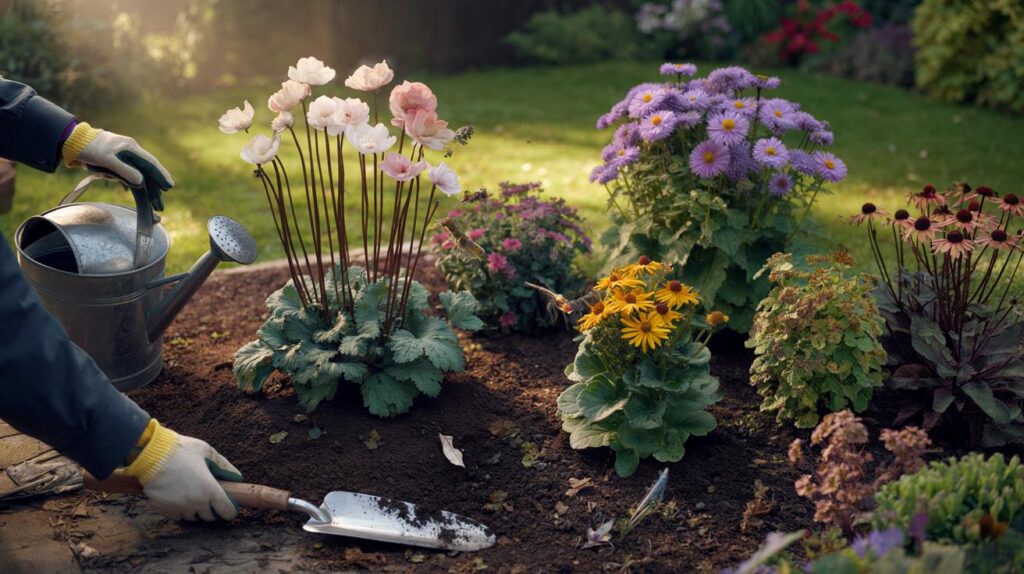
Cold nights, calm borders, and warmer soil open a quiet window that savvy gardeners seize before winter presses down hard.
As clocks change and borders thin, a small group of perennials quietly turn late October into prime time. The soil holds heat, the air carries moisture, and roots move fast while the rest of the garden rests. Plant now and you bank growth that bursts forward at the first hint of spring light.
Why all saints’ week changes the odds for perennials
Late October to early November brings a rare blend of warm soil and cool air. That contrast reduces plant stress. Roots keep working while top growth pauses. Rain does most of the watering. Slugs slow down. Weeds ease off. You gain weeks of root building with very little effort.
Moist soil, gentle light, fast roots
After summer heat, most UK soils stay around 8–12°C into early November. That range suits new root growth. Gentle light prevents scorch on fresh leaves. Autumn rain settles soil around roots and removes air pockets. By the time frost bites, perennials have already knitted in and can ride out winter.
Plant between late October and early November when the soil holds 8–12°C; roots establish in 6–8 weeks and spring lift arrives sooner.
Five proven choices the trade rates, and neighbours notice
Not every plant rewards autumn planting in the same way. These five perennial stalwarts tolerate winter, root fast, and pay back with colour, structure and pollinator action from spring through late season.
Japanese anemone
Elegant and tough, Japanese anemones carry airy stems that float above foliage from late summer into November. They relish moist but drained soil and dappled light. Once settled, they cope with brief dry spells. White and soft-pink forms brighten shade and frame steps, paths and north-facing beds.
Autumn aster
Asters bring dense clouds of daisy blooms in September and October, with colour holding until the first frosts. Dwarf selections sit well in pots and front-of-border edges. Taller types fill the back with clean lines and bee traffic. Choose mildew-resistant modern cultivars and remove old stems in late winter.
Sedum (stonecrop)
The modern stonecrop, often labelled Hylotelephium, stores water in its fleshy stems and sails through dry spells. Umbels start pale and deepen to wine-red, feeding late hoverflies and bees. It looks crisp even after frost, so many gardeners keep deadheads until February for winter shape.
Helenium
Warm discs of yellow, copper and russet carry beds into autumn. Helenium loves an open, sunny patch with decent moisture. It partners well with grasses, asters and stonecrop. Cut back spent stems in late winter and it will return strong and upright.
Heuchera
Heuchera offers colour without demanding constant flower. Evergreen leaves range from lime to near-black, adding contrast against gravel, timber and brick. It edges paths, softens steps and fills planters. In mild winters the foliage holds, delivering colour when little else performs.
| Plant | Height × spread | Best position | Key months | Spacing |
|---|---|---|---|---|
| Japanese anemone | 90–120 cm × 60 cm | Light shade, moist but drained soil | Aug–Nov flowers | 50 cm |
| Autumn aster | 40–120 cm × 40–60 cm | Sun to light shade, average soil | Sep–Nov flowers | 40 cm |
| Sedum (stonecrop) | 40–60 cm × 40 cm | Full sun, poor to average soil | Aug–Oct heads | 35–40 cm |
| Helenium | 80–120 cm × 50 cm | Full sun, moisture-retentive soil | Jul–Oct flowers | 45–50 cm |
| Heuchera | 25–40 cm × 35 cm | Shade to part sun, drained soil | Year-round foliage | 30–35 cm |
Planting like a pro at the turn of november
Success comes from simple, repeatable steps. Keep them short, and you cut failures to near zero.
Prep, spacing and water
- Weed thoroughly, then loosen soil to a spade’s depth and mix in 3–5 cm of garden compost.
- Soak pots for 10 minutes so root-balls are fully moist before planting.
- Set crowns level with the soil surface; do not bury stems or buds.
- Space plants 30–50 cm, depending on mature width, to reduce disease and give air flow.
- Water once, slowly, with 5–10 litres per plant; then let the weather keep them ticking.
- Mulch 5 cm deep with leafmould, composted bark or fine gravel, keeping mulch off crowns.
Space generously (30–50 cm), water once to settle, then let autumn rain do the heavy lifting while roots knit in.
Site selection that saves work
Map sun and shade across a day. Put asters and heleniums where light lasts six hours or more. Keep anemones and heucheras in dappled light. Place stonecrop in the brightest, driest spot. Avoid basins where water sits after rain; winter wet causes more losses than frost.
Design moves that make the border look expensive
Layering and repetition give a polished feel. Use a limited palette and repeat it along a path or terrace. Contrast textures: the sheen of heuchera leaves against the matte plates of stonecrop, the daisy faces of asters against the discs of helenium.
Easy mixes for three seasons of colour
Front a bed with heuchera in a single colour for rhythm. Drop in clumps of dwarf asters at 40 cm intervals. Back them with Japanese anemones for height and lightness. Thread two or three stonecrops through the middle as anchors. Add a helenium drift to warm the picture from July.
Low-maintenance care across the year
Deadhead asters and heleniums to extend bloom. Leave stonecrop seedheads standing for winter interest, then clip in February. Shear back anemones in late winter to reset growth. Refresh mulch each autumn to keep moisture even and weeds weak.
What could trip you up
Waterlogging rots crowns. If your site puddles, build a 10–15 cm raised strip using gravel and compost. Slugs nibble young heuchera and anemone shoots; lay down wool pellets or set beer traps before warm spells. Powdery mildew can mark asters in cramped beds; space them, water at the base, and clear old stems promptly.
Winter loss is usually about wet roots, not cold air. Drainage and mulch beat fleece for most hardy perennials.
Extra gains you can bank this season
Time and money often decide projects. A 12 m² border planted on a 40 cm grid takes roughly 24 plants. At £4–£8 each in autumn sales, the spend lands near £96–£192. Two hours to prepare, two hours to plant, and you are done. Water use can drop by 30–40% next summer versus annual bedding because roots dug in early go deeper.
No garden? Use containers. Aster ‘Little Carlow’ in a 30 cm pot, a mid-sized stonecrop in a 35 cm bowl, and a pair of heucheras under a bench will carry colour for months. Use peat-free compost blended 3:1 with fine grit for drainage. Raise pots on feet to clear winter puddles.
If you enjoy wildlife, these picks feed pollinators late in the year when nectar is scarce. Stonecrop and asters brim with late bees. Helenium draws butterflies in warm spells. Leave some stems standing to shelter insects. If you fear spreading roots, choose clump-forming cultivars and divide every three years to keep order and share spares with neighbours.



Brilliant timing guide—never thought to plant when soil’s still warm but air is cool. My stonecrop sulked in summer; I’ll split and replant now. Thanks! 🙂