
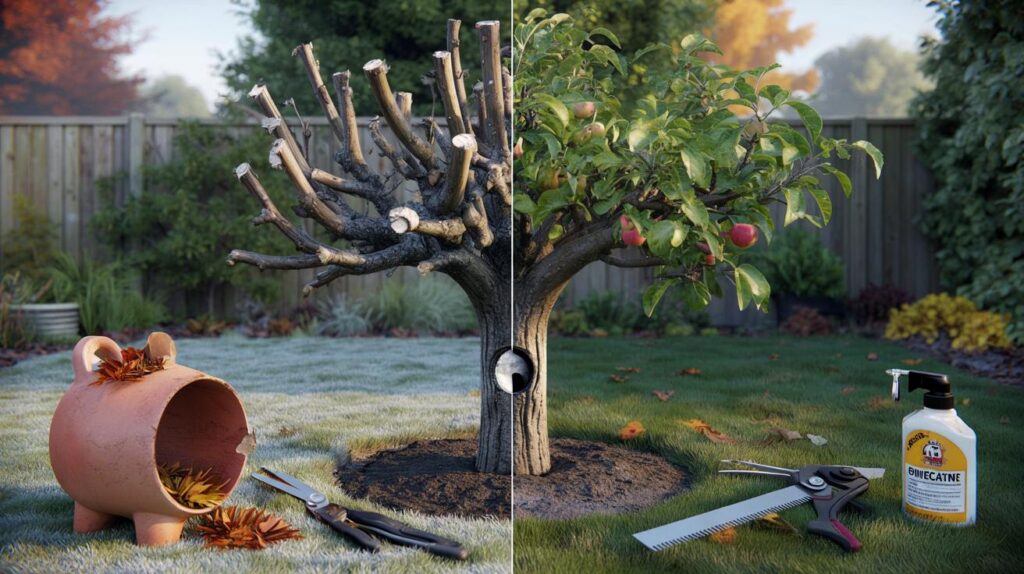
Across the UK, gardeners whisper about a new way to handle shears. The shift promises healthier trees and calmer weekends.
A single piece of professional advice is rippling through sheds and allotments. The message is blunt: prune less, prune smarter, and stop fighting a tree’s natural architecture. As nights draw in, people are asking whether routine cuts are draining money, time and resilience from their gardens.
How one quiet tip reset the pruning rulebook
A veteran landscaper’s guidance has landed with force: if you cut the wrong wood at the wrong time, you don’t tidy a tree, you tax it. Across suburban streets and rural lanes, householders are shelving the annual “short back and sides” and trading it for selective cuts guided by biology, not habit. Local arborists say enquiries now centre on timing, wound size and canopy balance, rather than how to shrink a crown by half.
The hidden costs of a tidy look
That neat silhouette can mask stress. Heavy cuts trigger a flush of weak, upright shoots that demand repeat work. Deep stubs invite fungi. Cuts during sap ascent bleed energy. The bill arrives later through extra call-outs, dieback, and storm failures.
Cut less than a fifth of the live canopy in one season, target dead or crossing wood first, and keep every cut clean.
Seven mistakes that drain growth and cash
- Topping the crown, forcing weak regrowth that snaps in wind and needs repeat cutting.
- Cutting flush to the trunk and removing the branch collar, slowing natural sealing and inviting rot.
- Pruning in the first hard frost or during sap rush, stressing tissues and disrupting stored energy.
- Leaving long stubs that dry out, die back and become entry points for decay.
- Removing more than 20% of live canopy in one go, forcing stress responses and starvation.
- Using blunt, dirty blades that tear wood and spread disease.
- Shaping to a rigid outline that fights the tree’s form, unbalancing weight and light distribution.
Right cut, right place, right month: timing, tool care and respect for the branch collar do most of the work.
The biology gardeners can use today
Reading what the tree is telling you
Buds reveal intent. Fat, rounded buds signal flowers; slim spear-like buds mean leaf and shoot. Bark colour and sheen point to age: pale new growth seals poorly if cut hard; older wood tolerates selective thinning. Where two branches rub, sapwood scars appear; remove the weaker one. Wood that snaps crisply and looks grey is often dead and safe to remove now.
Why small wounds beat big cuts
Trees wall off injury rather than “heal” it. The smaller the wound, the shorter the path for defence tissues to seal over. Cuts just outside the branch collar — the slight swelling at a branch base — let this protective ridge close. Flush cuts slice away those defences. Wound paint sounds reassuring, yet it can trap moisture and slow sealing. Clean, angled, collar-respecting cuts beat coatings.
When to reach for the secateurs
Britain’s mixed climate rewards restraint. Many species welcome light work after leaf fall, while some bleed or sulk if cut now. A simple calendar helps.
| Tree type | Best window (UK) | Max live canopy to remove | Notes |
|---|---|---|---|
| Apple, pear | Late winter to early spring | 15–20% | Favour fruiting spurs, keep an open “goblet” for light and air. |
| Plum, cherry | Midsummer, dry spell | 10–15% | Reduce risk of silver leaf; avoid cold, wet periods. |
| Maple, birch | Mid to late summer | 10–15% | Prone to bleeding if cut in late winter. |
| Evergreen hedges (yew, holly) | Late summer light trim | 10–20% | Avoid hard cuts before frost; keep tops narrower than bases. |
| Mediterranean shrubs (olive, bay) | Late spring to early summer | 10–15% | Light, selective work; shield from post-cut cold snaps. |
Aim for light penetration and airflow, not a smaller tree. Sunlight inside the crown drives sturdy shoots and fewer pests.
Tools and techniques that pay for themselves
Sharpen once, cut once
Sharp, clean blades slice fibres instead of crushing them. A pocket sharpener and a spray of disinfectant reduce frayed wounds and disease spread. A by-pass secateur handles live wood; a pruning saw tackles limbs thicker than your thumb. Use the three-cut method on larger branches to stop bark tearing: an undercut, a relief cut, then a final collar-respecting cut.
Structure beats struggle
Favour a strong leader with well-spaced laterals. Remove one of any pair of crossing branches. Keep lower limbs where they help thicken the trunk on young trees. Train early, prune lightly, and you avoid heavy surgery later. The result is a tree that holds itself in storms and needs fewer interventions.
What this means for your wallet and your trees
Householders often pay for fixes that a lighter hand would avoid. A modest plan saves both canopy and cash.
- One emergency call-out after a storm-damaged limb: £150–£300.
- Repeat topping every 12–18 months due to weak regrowth: £120–£250 a visit.
- Fungus treatment and deadwood removal after poor cuts: £100–£200.
A year with two avoidable visits and a minor storm fix can clear £500 from a household budget. Spend instead on two decent tools and an hour of advice, and the saving compounds over five years.
Prune with a plan: target dead, diseased and dangerous first; thin for light; leave size control as the smallest step.
A 15-minute garden check before you cut
Scan, mark, pause
- Walk around each tree. Mark dead and rubbing branches with ribbon or chalk.
- Stand back. Can you see daylight through the canopy? If not, target minor thinning, not height reduction.
- Find the branch collar before every cut. If you can’t see it, don’t cut yet.
- Count planned cuts. If you’ll remove more than one branch in five, split work across seasons.
Risks to manage and benefits you can bank
What to watch for as temperatures drop
Frost-tinged mornings slow sealing. Keep cuts small and avoid big wounds before a cold snap. Wet weeks favour spores; choose dry days. Windy forecasts are a warning to leave overextended limbs in place until you can stage safe work.
Gains you can measure by spring
Expect steadier growth, fewer water sprouts, and tighter leaf colour. Birds feed in calmer, better-structured crowns. Lawns beneath benefit from dappled light rather than dense shade. With less stress, summer watering demands ease, and a tree holds its foliage longer in hot spells.
Extra angles worth your time
Training young trees beats repairing old ones
Formative pruning in the first three years sets a lifetime framework. A single straight leader, four to five well-spaced laterals, and clear trunk height agreed for the site reduce future chainsaw work. A five-minute winter check on a sapling prevents a £300 crown lift a decade later.
A simple pruning plan for mixed gardens
Assign months to groups: fruit trees late winter, stone fruit midsummer, hedges late summer, ornamentals on species cues. Note storm damage as it happens and clear only what is unsafe. Keep a log of cuts and responses. Over two seasons you build a local playbook that beats generic calendars.



I topped a silver birch last winter (I know, I know). What’s the least-bad way to correct it now that nights are drawing in? Wait till mid–late summer to avoid bleeding, or can I selectively reduce to the branch collar this autumn? Definately keeping under 15%.