
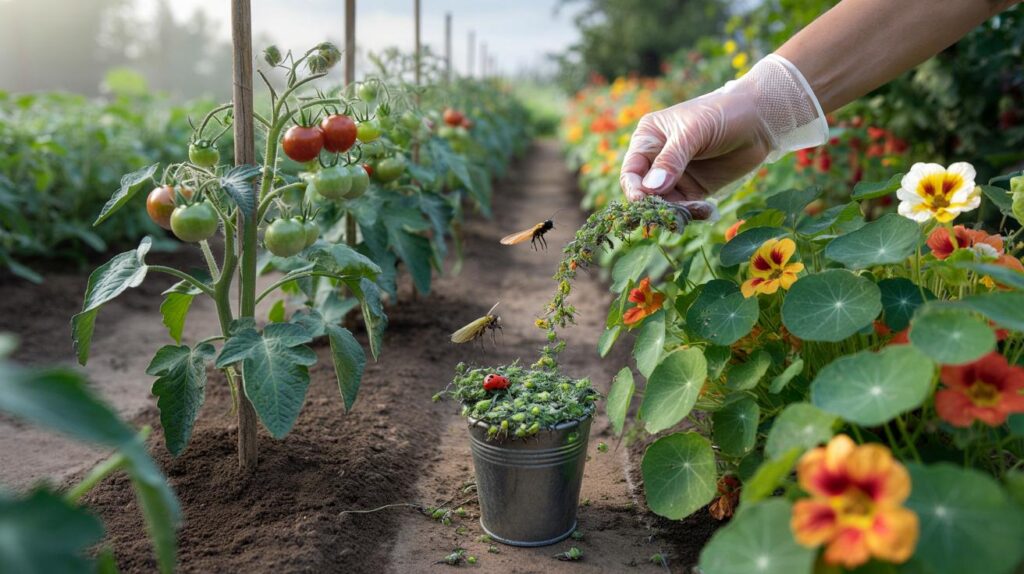
Spring planting brings a surprise twist for home growers, with a simple flower turning the tide in garden pest battles.
Across allotments and back gardens, a thrifty, pesticide-free tactic is being credited with calmer tomato beds this year. The move hinges on nasturtiums acting as a lure, drawing trouble away before it bites into young growth.
Why nasturtiums pull aphids off your tomatoes
Nasturtiums behave like a trap crop. Their lush, tender foliage and peppery scent prove more tempting to sap-sucking aphids than tomato tips. Instead of spreading across your main crop, colonies pile onto the sacrificial border where you can see them and act early.
Set a living “buffer” that aphids hit first, then manage the pressure at the edge before it reaches your tomatoes.
Gardeners report fewer curled tomato leaves, stronger early growth and a steadier fruit set when they ring or flank beds with nasturtiums. The method doesn’t poison anything. It nudges pest behaviour, which makes timing and placement critical.
Placement and spacing that steer the swarm
Put nasturtiums on the routes aphids usually take: bed edges, path-side borders and the windward side. Keep a 50 cm gap from tomato stems. That spacing avoids root competition but keeps the lure close enough to intercept incoming flights.
Keep a 50 cm buffer between nasturtiums and tomatoes to divert aphids without starving your crop.
When to sow and how to get fast coverage
Sow two weeks before you plant tomatoes. In most areas that means April to May, with dates sliding earlier in the South and later in cooler districts. The aim is simple: have leafy decoys ready before aphids arrive in force.
Step-by-step sowing guide
- Make 2 cm-deep drills, 30 cm apart, along the bed edge.
- Sow a seed every 15 cm, cover lightly, and firm the surface.
- Water with a fine spray daily for the first 7–10 days; expect germination in 7–14 days.
- Add around 2 litres of mature compost per square metre to the row, keeping it light and open.
- Mulch to hold moisture, then water regularly to avoid drought stress.
- Pinch back the most heavily colonised tips to refresh growth and keep the trap active.
| Timing | Action | Measure |
|---|---|---|
| Two weeks pre-planting | Sow nasturtium border | 2 cm depth, 15 cm within row, 30 cm between drills |
| Week 1–2 | Establish seedlings | Fine spray daily; mulch once settled |
| Early June | Begin pinch-and-remove | Take the worst tips; leave enough growth to keep luring |
| All season | Maintain 50 cm gap | Check weekly; avoid heavy nitrogen on tomatoes |
Does it really work? The numbers and what to watch
Where borders go in on time and stay tidy, growers commonly see a 70–80% reduction in aphids on tomatoes. Think of it as moving three out of four pests off your crop and onto the decoys. That margin often prevents leaf curl, blossom drop and virus spread during spring flushes.
Target around 75% fewer aphids on tomatoes when nasturtium borders lead the season by a fortnight and stay vigorous.
Track the ratio each week: if nasturtiums are crawling and tomatoes stay clean, you are winning. If tomatoes begin to host colonies, lengthen the border, refresh pinched plants, or add a second line of traps where flights enter the plot.
Common mistakes that blunt the effect
- Feeding tomatoes too hard with nitrogen, which makes new tips irresistible to aphids.
- Poor watering on the border, which slows nasturtium growth and weakens the lure.
- Letting infested tips knit together, giving aphids a bridge to your crop.
- Planting nasturtiums too close, leading to root competition and shaded tomato stems.
Managing the trap so it stays a trap
Think like a shepherd: you’re herding pests, not trying to wipe them out overnight. Remove the worst clusters with a fingertip pinch or a quick snip into a bucket. Do not strip plants bare. You want continuous tender growth that keeps calling aphids away from the tomatoes.
If a clump is overwhelmed, cut it back and let fresh shoots return. When pressure builds after a warm spell, oversow gaps to thicken the border. A small extra packet of seed can rescue coverage in days.
Trim, don’t raze: maintain enough young growth on nasturtiums to keep aphids choosing the border, not the crop.
Costs, quantities and a quick plan for a 3 m bed
A packet of seed typically costs £1.50–£3 and covers several metres of edge. For a 3 m tomato bed with 10 plants, aim for 12–16 nasturtiums along the two long sides, 50 cm off the stems. That footprint gives wide coverage and clear access for watering and picking.
Budget for one packet per bed, plus a light mulch and a couple of litres of compost for the border. You won’t need insecticides, and you will spend more time pinching than spraying, which suits pollinators and predators.
Side benefits and what to monitor
Nasturtiums feed hoverflies and bring in ladybirds, which tackle aphids that stray onto tomatoes. Flowers are edible, adding peppery colour to salads all summer. This soft control also avoids residues that can upset beneficial insects.
Watch for signs of virus on the border plants—mottled leaves or distorted growth. Remove and replace any suspect clump so the border continues to intercept pests without becoming a reservoir of infection.
Greenhouses, patios and mixed borders
In a greenhouse, grow nasturtiums in pots near vents and doors where winged aphids enter, still keeping that 50 cm gap. On patios, edge large containers with trailing nasturtiums so the lure sits lower than tomato foliage. In mixed beds, use the windward edge and path sides as your first line.
What to combine, and what to skip
Reflective mulches can confuse incoming aphids during peaks, and they pair well with trap crops. A weekly blast with a plain water spray dislodges stragglers on tomato tips. Avoid heavy fertiliser spikes that undo the behavioural edge you’ve built with the border.
Make the crop less tempting, make the border more tempting—behavioural control works when those two dials move together.
If the pressure spikes
Warm, still weeks can trigger sudden flights. Respond by thickening the nasturtium line with an extra drill, pinching more often, and reinforcing natural enemies by leaving a few aphid patches on the border as “feeders”. If you must intervene on tomatoes, use a targeted soap spray on affected clusters, then return to border management the same day.
A fast checklist for the weekend
- Sow or top up nasturtium borders two weeks before tomatoes go in.
- Hold a 50 cm gap and water borders well; keep tomatoes on the lean side.
- Pinch worst aphid clusters every few days; never strip the traps bare.
- Extend the border where aphids first land; oversow after hot spells.
- Track results weekly: aim for crowded borders and clean tomato tips.



I did this last season on a 3 m bed—nasturtiums sown two weeks early, 50 cm off the stems. Result: barely any curled tomato tips and far fewer sprays. Pinching the worst infested shoots kept the trap “alive.” Also saw loads of hoverflies and a couple of ladybirds. Cheap, cheerful, and it worked better than I expected.
75% reduction sounds optimistic. Any data beyond anecdotes? Which aphid species were observed? I wonder if reflective mulch plus a soap spot-spray on outbreaks would deliver similar results without dedicating space to trap crops.