
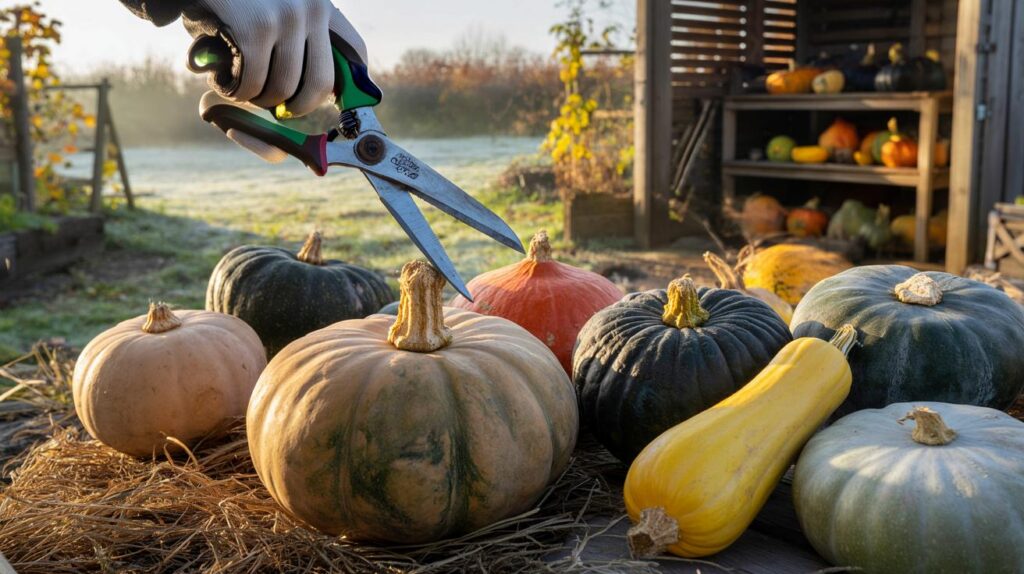
Across allotments this October, a quiet rule separates bumper harvests from mushy disappointments. Your kitchen plans may depend on it.
As nights cool and daylight thins, a simple plant signal decides whether your squash ends up silky and sweet or watery and short‑lived. Horticulturists watch one overlooked feature, time their cut, and store with care. The result is weeks, even months, of reliable meals when fresh produce is scarce.
Why timing shifts flavour and longevity
Squash ripens in stages. Sugars rise, starches settle, and the rind hardens against moisture and microbes. Cut too early and the flesh tastes bland and stores poorly. Leave it too long and cold nights bruise cells, opening the door to rot. The harvest window narrows fast once temperatures dip below 2°c and ground frosts threaten.
Day length and variety matter. Butternut and kabocha often reach peak ripeness later than smaller acorn types. In most gardens, that window falls between late September and early November. Your best guide sits on the plant itself.
Visible cues that actually help
- Colour deepens to the variety’s mature shade and turns matt rather than glossy.
- The rind resists a firm thumbnail press without leaving a mark.
- Fruits feel heavy for their size and sound dull, not hollow, when tapped.
The stem signal growers rely on
The most reliable cue hides in plain sight: the stem. As the fruit reaches full maturity, the peduncle turns straw‑coloured, corky and slightly cracked where it meets the fruit. This “lignified” look means the fruit has shifted from growth to storage mode.
Check the stem: straw‑coloured, corky, and finely cracked near the fruit. That is your green light to harvest.
If the stem is still green, juicy or pliable, give it time unless a frost warning looms. A few dry days often complete the finish without risk. Once the stem shows that corky ring, waiting much longer adds little and can invite damage from slugs, rain splash and cold snaps.
How frost spoils texture and taste
A light air frost can leave the rind looking normal while the flesh turns watery within days. Ice crystals rupture cells; flavour and storage life collapse. One frozen night can cut potential storage from months to mere days. Watch local forecasts. If ground frost is likely, prioritise cutting the fruits that already show the corky stem cue.
Beat the first frost. After tissues freeze, shelf life can fall from 120 days to a single week.
Cutting without losses
Tools that make a clean job
Use sharp, clean secateurs or a pruning knife. Disinfect blades with methylated spirits or soapy water. Dull tools crush tissues and create wounds that invite rot. Wear gloves for grip and to avoid slipping on slick rinds.
The 5 cm rule and the carry
Make one clean cut and leave a 5–7 cm stem “handle”. That dry cap acts as a natural bung against moisture and microbes. Avoid twisting or snapping. Never lift fruits by the stem; it can tear and create a perfect entry point for decay. Set each fruit on a dry surface rather than wet soil.
- Cut away from the fruit to avoid nicking the rind.
- Leave 5–7 cm of stem; a slight angle helps shed any rain.
- Lay fruits stalk‑up on boards, trays or dry straw to prevent wicking moisture.
Storage that works through winter
Curing for tougher skin
After cutting, cure fruits for 10–14 days in a warm, airy space at roughly 20–25°c. Good airflow dries the stem and hardens the rind. Wipe off soil with a dry cloth; do not wash. Turn fruits every few days so surfaces dry evenly.
Target a 10–14 day cure around 20–25°c with free airflow. The rind hardens and flavours deepen.
Where to keep them afterwards
Move cured fruits to a cool, dry site. Aim for 10–15°c with moderate humidity. Use shelves or slats so air circulates. Keep fruits from touching to stop rot jumping from one to another. Check weekly and remove any with soft spots.
| variety | harvest cue | storage length | extra tip |
|---|---|---|---|
| butternut | corky stem, matt beige rind | 3–6 months | responds well to a full 14‑day cure |
| kabocha (red or green) | dry stem, faint surface bloom | 2–4 months | flavour improves after 2–3 weeks post‑harvest |
| acorn | distinct ridges, rind hard but thin | 1–3 months | short, light cure; eat sooner |
| spaghetti | hard, pale rind; stem dry | 1–3 months | avoid chilling below 10°c |
| crown prince | firm slate rind, corky stem | 4–8 months | excellent keeper in a cool pantry |
Mistakes that quietly ruin your harvest
- Leaving fruits on wet soil, which wicks moisture into the rind. Slip a tile, board or dry straw underneath.
- Harvesting when wet. Wait for a dry window to limit surface moulds.
- Washing fruits. Free water on the rind speeds decay; a dry cloth is enough.
- Stacking or dropping. Bruises become soft spots within days.
- Storing near apples and pears. Ethylene can push some squash past their peak.
Keep it simple: dry cut, dry cure, dry store. Moisture is the quiet thief of shelf life.
If frost has already nipped your patch
All is not lost. Sort fruits the same day. Any with soft, translucent patches should be cooked within 24–48 hours. Peel, dice and roast, or make purée for the freezer. Sound fruits with unbroken rinds can still store, but expect a shorter window. Mark them to use first.
Trim minor skin scuffs back to healthy tissue and dab dry. Do not seal wounds with wax; it can trap moisture. Instead, cure as usual and monitor weekly.
Numbers that help you plan winter meals
- One medium butternut (1.2–1.5 kg) yields about 900 g of usable flesh, enough for four bowls of soup.
- Ten similar fruits can cover roughly 40 portions, spread over three months.
- Roasted seeds from one large squash give 40–60 g of snackable kernels rich in fibre and minerals.
Small tweaks that lift results next year
Reduce irrigation during the final fortnight before harvest to encourage rind hardening. Slip a dry spacer under fruits once they reach mature size. Trim a few shading leaves late in the season so sunlight hits the rind and speeds the matt finish. These tweaks work with the stem cue to tighten your harvest window.
Varieties differ in how they handle storage. If your home runs warm, favour keepers such as crown prince or butternut. If your storage space sits cooler and drier, kabocha often shines. Mix types so you have early, mid and late keepers rather than facing a glut that spoils.
The takeaway gardeners share at the gate
Watch the stem first, the sky second. The corky, cracked ring tells you the fruit is ready. The frost forecast tells you when to act. Cut with a 5 cm handle, cure for 10–14 days in warmth and air, then store cool and dry. That simple routine turns a row of vines into reliable meals well past Christmas.



Brilliant breakdown. The ‘straw‑coloured, corky, slightly cracked’ stem description finally clicked—way clearer than vague “ripe when color deepens” tips. I’ll cut with a 5–7 cm handle and try the 10–14 day cure this week. Thanks!
Quick question: if I can only maintain about 18–19°C during curing, does it just take longer, or will flavour/skin strength suffer? My shed has good airflow but the tempertaure swings.