
Cold mornings creep in, beds look bare, and yet a small October habit could turn winter waiting into spring bragging rights.
Across Britain, many plots wind down after Halloween. A quiet sowing now can reset your calendar, shift your energy, and put real food on your table when others still clean their seed trays.
The overlooked crop that jumps the queue
Broad beans, also called fava beans, rarely top wish-lists. They should. The plant shrugs off poor light, anchors a garden through winter, and teams up with soil bacteria to fix nitrogen. That makes the bed richer for whatever follows in June. Pick them young and you get tender, sweet kernels that cook in minutes and taste like spring itself.
Sow broad beans in late October to mid-November and you can pick pods in April or early May, weeks before spring sowers.
Autumn sowing gives the plant time to root, sit tight through the cold, then surge as days lengthen. The early root system resists wind, hunts moisture, and feeds rapid spring growth. You gain calendar days without adding gadgets or gimmicks.
Why autumn broad beans beat the rush
The crop uses winter as a waiting room. Short days keep foliage compact. Roots keep growing whenever soil temperatures hover above 5–7°C. Come March, day length triggers flowering. You catch the cool, damp weather beans love, long before heat or drought clip yields. You also dodge crowded spring schedules.
How to sow in October for a head start
Pick the right variety and place
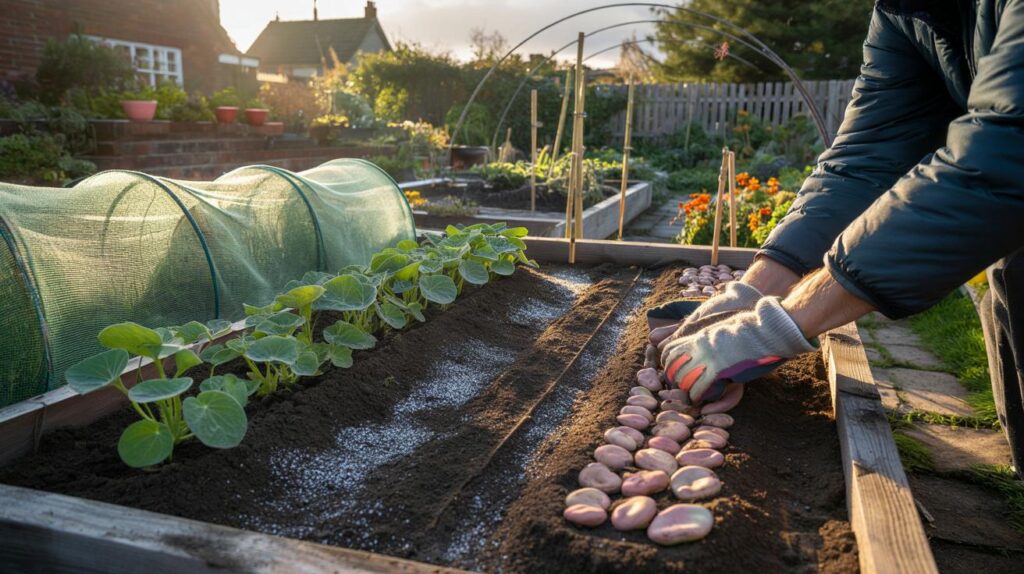
Choose hardy, early lines. Reliable names across the UK include ‘Aquadulce Claudia’, ‘Super Aquadulce’, ‘Express’, and dwarf ‘The Sutton’ for windy or small sites. Use beds with sun, drainage, and shelter from northerlies. Raised beds or ridges keep crowns above winter wet. Work in well-rotted compost. Skip high-nitrogen fertiliser; the roots do that job.
Spacing, depth and timing that work
- Window: late October to mid-November in milder districts; early November under cloches in cooler spots.
- Depth: sow each seed 5 cm deep. Firm the surface to deter mice and birds.
- Layout: 15–20 cm between plants. Rows 40–50 cm apart, or plant in double rows 25 cm apart with a 60 cm path.
- Target density: 12–20 plants per square metre, depending on variety and wind exposure.
- Water once at sowing if soil is dry. Then let autumn rain do the rest.
Use double rows for strength in winter winds, and push seeds 5 cm deep to resist frost heave and rooks.
Weather, pests and quick fixes
Frost, wind and waterlogging
Broad beans tolerate brief dips to around −5°C in the open and lower under fleece. In cold snaps, drape horticultural fleece or a clear cloche. Anchor it well. Avoid puddled clays; winter wet kills more plants than frost. If your soil sits heavy, plant on 10–15 cm ridges or switch to pots under cover, then plant out in March.
Blackfly, slugs and other nibblers
Black bean aphid often turns up as buds form. Plant nasturtiums as a trap, and marigolds or mint to pull in hoverflies and lacewings. The simplest move works best: when the first trusses set, pinch out 3–5 cm of the soft tips. You steer energy to pods and remove a magnet for pests. Patrol for slugs after rain and mulch with rough compost to blunt their advance.
Who can sow now across the UK
Plenty of regions can bank the advantage this week. Coastal air, urban warmth, and shelter tip the odds in your favour. Inland frost pockets can still join in with cover and timing tweaks.
| Region | Sow window | Protection | Likely harvest |
|---|---|---|---|
| South-west & south coast | 20 Oct – 15 Nov | Fleece below −3°C, windbreaks | Mid April – early May |
| London & urban south-east | Late Oct – mid Nov | Fleece in cold snaps | Late April – mid May |
| Midlands & Welsh borders | Late Oct – early Nov | Cloches for freezes, raised beds | Early – late May |
| Northern England & coastal west | Early – mid Nov | Cloches and fleece in January | Mid – late May |
| Scotland & frost hollows | Under cover in Nov, plant out March | Cold frame or tunnel | Late May – June |
What you gain besides early pods
Legume roots store nitrogen for the plant and feed soil life. After your April–May pick, chop spent stems and leave the roots in place. Follow with hungry crops: brassicas, sweetcorn, squash or tomatoes. The bed starts the season charged, and you save on fertiliser. Flowers in March also bring bees at a lean time, which lifts pollination across your plot.
At the table you get protein, fibre, folate and a delicate, nutty taste. Young beans need only a quick blanch and a slick of olive oil and lemon. Older pods shell well and suit soups, mash, or a minty purée.
Pro moves to turn days into weeks of advantage
Pinch, feed and support
Push in low canes and string as plants reach 20–30 cm. You cut wind-rock and help roots stay anchored. Side-dress with compost in March. Wood ash adds potash if your soil tests low. Keep water steady as flowers open; drought at that stage drops pods. Pinch tips after the first truss sets to focus energy and dodge blackfly.
Succession and backups
Split your bet. Sow half in late October and half in mid November. In chillier spots, sow a tray under cover in November and grow on in a cold frame. Plant out sturdy plugs in March at the same spacings. That hedge keeps your timetable safe if a hard winter hits.
Sow on 28 October in Brighton and you could pick around 18 April; a neighbour sowing 25 March may wait until late May.
Your October checklist that outpaces the street
- Choose ‘Aquadulce Claudia’, ‘Super Aquadulce’, ‘Express’ or ‘The Sutton’ for reliable overwintering.
- Sow 5 cm deep, 15–20 cm apart, in rows 40–50 cm apart or as double rows.
- Site in sun with drainage and shelter; raise beds where soil holds water.
- Lay fleece under hard frost and secure windbreak netting on exposed plots.
- Pinch tips after the first truss sets and use trap crops for blackfly.
- Harvest young for the best texture, and keep picking to extend the flush.
If you want to push the advantage further
Round-seeded peas, spinach, garlic and onion sets also handle autumn planting and pay you back early. Slot peas along the same bed edge as broad beans; they share supports and shelter. Mix in a narrow strip of early lettuce between double rows to maximise space while beans grow taller.
Watch the risks. Deep cold on saturated ground harms crowns, so lean on ridges and cover. Mice take seeds, so firm the surface and consider a quick seed soak to speed germination. If you garden on chalk, ease back on lime and aim for a pH near neutral. You can add a light dusting of seaweed meal for trace elements in winter soils.
The pay-off stacks up. A two-hour session now, a few squares of fleece, and shrewd variety choices shift your first harvest by 30–40 days. You also build better soil and free your spring diary. That is how you sit down to plates of bright green beans while the rest of the street still rummages for seed packets.



Brilliant piece! I sowed ‘Aquadulce Claudia’ last year and beat my allotment pals by a fortnight. Pinching tips really cut blackfly, and double rows stood up to wind-rock. Definately repeating the October habit—tastes like spring in May!
Isn’t November sowing a gamble in the Midlands on heavy clay? Mine waterlogs—would ridges and fleece really be enough, or should I do modules under cover and plant in March?