
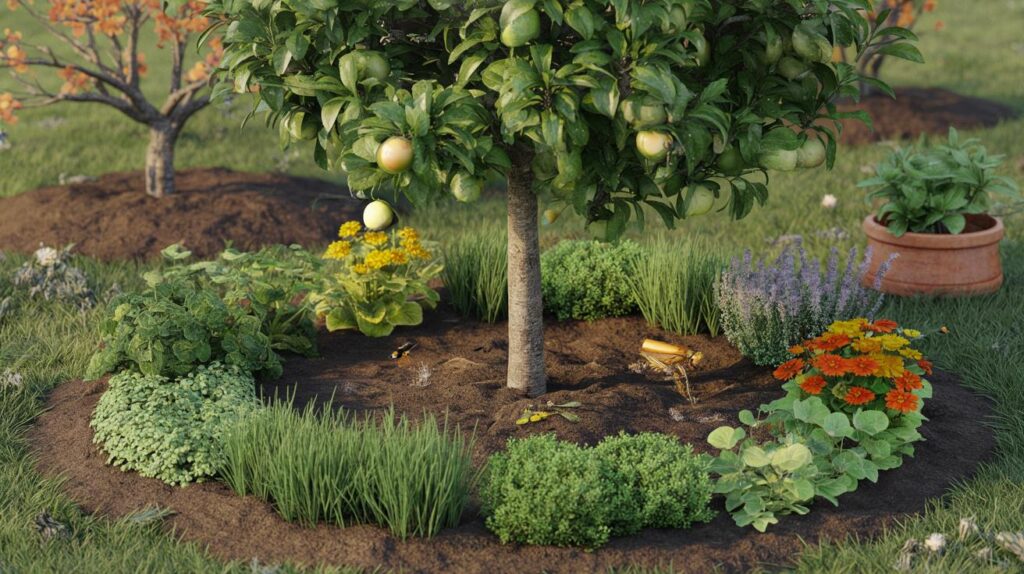
As leaves fall and nights draw in, a quiet garden tactic is gathering pace across allotments and back gardens.
Across the country, growers are slipping flowers and aromatic herbs beneath fruit trees before the first hard frost. The aim is simple: turn bare soil into a living, protective understory that steadies moisture, draws in pollinators, and nudges disease pressures down before spring. The cost is modest. The impact can be striking.
Why companion flowers and herbs change your fruit trees’ fortunes
Planting companions under fruit trees does more than dress the base with colour. It builds a small ecosystem that counterbalances pests, breaks disease cycles, and keeps the soil working year‑round. Diversity blunts outbreaks. Mixed roots stitch the soil and lift nutrients. Fragrance deters sap‑suckers. Nectar feeds allies that patrol for trouble.
Microclimates that shield roots and conserve moisture
A living carpet softens wind, slows evaporation, and pads the ground against heavy rain. This reduces drought stress after summer heat and cushions roots against winter chill. Fine roots push between soil particles and open tiny channels. Water sinks in, rather than running off. Worms thrive. Fungal networks reconnect. Trees respond with steadier growth and stronger buds.
Think of companions as a breathable blanket: they cool hot soil, warm cold pockets, and keep life moving underground.
Natural alliances that suppress disease cycles
Strong scent plants mask host cues and baffle roaming pests. Chives and thyme release compounds that discourage common fungal pathogens on apples and pears. French marigold roots disrupt some nematodes around the drip line. Nasturtiums lure sap‑sucking insects away from young growth. Mixed planting prevents any single pathogen or insect from finding an easy, continuous corridor.
October’s window: plant now for a stronger spring
Late October offers moist soil, mild temperatures, and frequent showers. New roots settle fast and knit in before deep cold. Spring then arrives to an understory already working. That saves time when pruning and grafting compete for attention.
Autumn roots build spring energy
Perennial companions push roots while the top fades. Stored sugars fuel quick regrowth the moment light levels rise. Trees benefit from early leaf hover by pollinators moving through the bloom. Weed pressure drops as the ground fills with intentional plants instead of gaps.
What to plant and where for maximum effect
Choose resilient, region‑hardy perennials and self‑seeders. Mix flowers and herbs. Keep mint contained in a pot sunk to the rim to prevent creep. Aim for a ring that reaches from half the trunk radius to just short of the drip line, leaving a clear collar around the bark.
| Companion | Main benefit | Best spot |
|---|---|---|
| French marigold (Tagetes) | Root exudates that unsettle nematodes; bright nectar for hoverflies | Inner ring, sunny side |
| Calendula (pot marigold) | Pollen for early pollinators; decoy for sap‑suckers | Outer ring, gaps between herbs |
| Nasturtium | Trap plant for aphids and flea beetles | Outer ring, trailing over edging |
| Chives | Fungal pressure reduced on apples and pears; edible leaves | Evenly spaced clumps around the ring |
| Thyme | Aromatic oils that discourage mildew; tight groundcover | Sunny, dry patches nearest the trunk collar |
| Mint (contained) | Scent deters ants; soft groundcover for cool edges | In a sunken pot at the perimeter |
| Garlic or lavender | Helpful with apple scab risk; nectar for bees | Outer arc facing prevailing wind |
| Basil (sheltered sites) | Useful near apricot in warm spots; soft pest deterrence | Warm, south‑facing edge in containers |
Use 20–30 cm spacing between companion plants, and keep a weed‑free collar around the trunk to prevent damp damage.
How to install and maintain the living understory
Spacing, pairing and what to avoid
Set plants 20–30 cm apart in a loose checkerboard. Alternate a flower with an herb to limit direct competition. Avoid unchecked spreaders such as uncontained mint or nettles. Keep strong growers to the perimeter. Plant smaller rosettes closer to the trunk collar, while leaving a hand’s width of bare air around the bark to prevent rot.
Use young, healthy plugs that establish quickly in cool soil. Press in firmly to remove air pockets. Water once to settle the soil. Then let autumn rain take over. Protect bare patches with leaf mould to suppress opportunistic weeds.
Simple seasonal care that pays back
- Lay a light mulch of shredded leaves or well‑rotted compost between plants to stabilise temperature.
- Deadhead calendula and marigolds to extend bloom and feeding for pollinators.
- Divide chives and thyme every two to three years to keep clumps vigorous.
- Hand‑pick spent nasturtiums if aphids colonise, moving the pests away from young tree growth.
- Hold irrigation in winter; most Mediterranean herbs dislike soggy roots.
What gardeners report: fewer spots, steadier crops, more bees
Allotment groups and community orchards report fewer scabbed leaves, less premature fruit drop, and steadier set after a single season of undersowing. The change is visible. Pollinators arrive earlier. Ground stays moist longer into dry spells. Trees push clean growth near the base where wind and splash were more of a problem before.
Garden budgets also stretch further. A six‑pack of calendula, a few thyme plugs, and a pot of chives often cost less than a single proprietary spray. The flowers feed beneficial insects over months rather than days. The soil builds long‑term structure that reduces future inputs.
A practical action plan you can finish in 90 minutes
Block out a weekend hour while the soil is still workable. Gather a bucket of leaf mould, a hand fork, and your chosen companions. Weed the base gently, then mark a simple ring with twine and canes. Plant in a zigzag at 20–30 cm. Add a light mulch between plants. Sink a pot of mint on the outer edge if ants or aphids are regulars. Label clumps to track which pairings do best under each tree.
Targeted mixes for specific fruit trees
Match the mix to the tree’s weak spots
Apples prone to scab respond well to chives, garlic, and lavender. Pears that attract aphids benefit from a belt of nasturtiums as decoys and marigolds for beneficial hoverflies. Plums with a history of mildew sit well over thyme and lemon balm. Apricots in warm corners pair with basil and low, airy flowers to keep air moving around the stem. Change two plants each year to adjust the blend without disturbing the whole ring.
What to watch for before you start
Risks, limits and quick fixes
Slugs can move into lush cover in mild winters. Add rough mulch or copper rings around young trunks. Do not heap mulch against bark, as constant damp invites canker. Avoid deep digging near the trunk; use a hand fork to tease soil gently. Keep the first 10–15 cm from the bark clear to let air flow and to watch for pests.
Newly planted fruit trees still need a weed‑free circle for one to two years. In that case, start companions just outside the clear zone and expand the ring as the tree strengthens. Check that chosen plants are non‑invasive in your area. Move containers through cold snaps if your site is exposed.
Costs, yields and a simple yardstick for success
What you spend and what you stand to gain
Budget £12–£25 per tree for plugs and seed, plus a bag of compost or leaf mould you can produce yourself. Expect to invest about 90 minutes per tree in year one, then 20–30 minutes each spring and autumn for tidying and dividing. A fair yardstick is blossom set and leaf condition by late May. If you see cleaner leaves and stronger spur growth, your understory is doing its job. If you do not, try shifting the mix or opening gaps for air.
For small plots, consider a rotating test. Undersow one half of a tree’s drip line this autumn, and leave the other half bare. Compare leaf health, moisture retention, and insect activity through spring. Keep notes on which combinations draw bees earliest. Repeat on the other side next year with the winning blend.



Loved this—finally a step‑by‑step that isn’t just “mulch and pray.” The 20–30 cm spacing tip explains why my thyme kept smothering the chives. Going to try the chive + garlic arc for my scab‑prone apples this weekend. Definately bookmarking.