
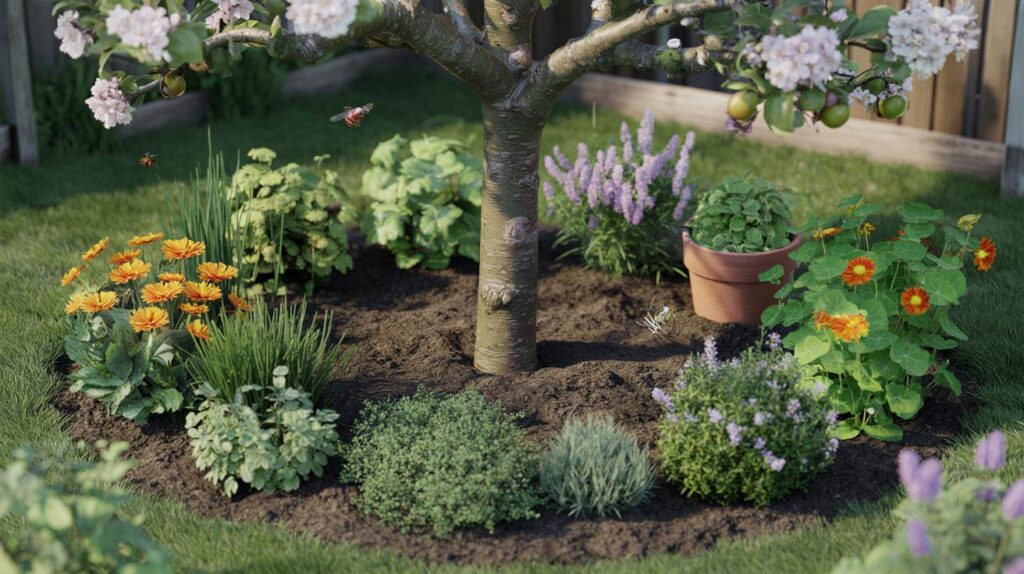
As evenings cool and leaves begin to fall, a quiet shift is taking root beneath Britain’s fruit trees.
Across allotments and back gardens, growers are tucking rings of flowers and aromatic herbs around trunks. The goal is simple: build a living shield that steadies soil, lures helpful insects and nudges disease back into the margins before spring growth surges.
Why companion flowers and herbs are gaining ground in orchards
Mixing flowers and herbs under fruit trees does more than decorate a border. It stacks small advantages that add up over a season: steadier moisture at the surface, cooler summer soil, a thicker web of beneficial insects, and fewer gateways for fungal disease. The understorey behaves like an insurance policy, especially during dry spells and disease-prone springs.
Microclimates at ground level
A green carpet slows evaporation and blunts wind at the base of the tree. It feeds the soil as leaves and petals drop, and it creates nooks for ladybirds, hoverflies and ground beetles. All three eat pests that stress fruit trees during bud-break and early fruit set.
Cover the soil around young fruit trees with low, mixed planting and you can cut surface evaporation, buffer temperature swings by several degrees and reduce water runs that expose roots.
Shallow-rooted companions also stitch crumb structure back into compacted soil. That means better infiltration during autumn rain and fewer waterlogged spells that favour root disease.
Natural disease pressure downshift
Diversity breaks the cycle that thrives in bare, tidy circles. French marigolds and calendula release root exudates that unsettle soil-borne pests. Chives and thyme carry aromatic oils that deter fungal spores drifting in cool, damp air. Predators find nectar in bloom gaps and repay the favour on aphids, caterpillars and mites. Apples facing scab, pears courting rust, and stone fruit flirting with brown rot all benefit when pest numbers never reach a tipping point.
October timing: plant now for stronger trees in spring
Autumn planting gives roots a head start while the canopy rests. Soil stays warm long after the first chill, and rain does most of the watering. By the time sap rises, companion plants are settled and working for you.
Rooting before the cold
Set plants into moist, friable ground in late October or early November. Roots spread quietly through winter, drawing on stored energy, then push growth as light returns. You also dodge spring clashes with vegetable beds and avoid summer transplant stress.
What to plant where
Choose hardy perennials and self-seeders that suit your region and stay low beneath branches. Mix them, rather than block-planting, so each species supports the others.
| Plant | Main role | Works well with | Spacing | Tip |
|---|---|---|---|---|
| French marigold (Tagetes) | Disrupts nematodes, distracts pests | Apples, pears | 20–25 cm | Replant annually for best effect |
| Calendula (pot marigold) | Pollinator feed, soft pest trap | Most pome fruit | 25–30 cm | Deadhead to keep flowers coming |
| Nasturtium | Aphid magnet, ground cover | Young apples and plums | 30–40 cm | Train away from trunks to prevent collar damp |
| Chives | Fungal check around scab and rust | Apples, pears | 20 cm clumps | Divide every 2–3 years to refresh |
| Thyme | Aromatic barrier, dry mulch | Apricot, peach, cherry | 20–25 cm | Needs sharp drainage to thrive |
| Mint (in pots sunk in) | Repels ants and slugs | Perimeter of all fruit trees | 30 cm (contained) | Keep roots caged to stop spread |
| Lavender | Pollinator draw, dry shelter | Apples, quince | 40–50 cm | Trim lightly after flowering |
| Lemon balm | Ground cover, beneficial insect refuge | Plums, gages | 30 cm | Cut back hard to contain |
Stars of the understorey
Flower shields: marigold, nasturtium and calendula
French marigold roots tangle with soil pests and throw scent that masks softer growth nearby. Nasturtiums behave like safety valves, luring aphids away from fruit spurs while carpeting bare soil. Calendula keeps nectar flowing when little else blooms, giving hoverflies the energy to patrol for aphids and caterpillars. Their combined effect shortens the window when disease gains a foothold.
Aromatic allies: chives, thyme and mint
Chives tuck neatly into gaps and throw up spring flowers that bees adore. Their leaves carry sulphurous compounds that garden lore credits with steadying scab. Thyme spreads in a thin mat, making a living mulch that dries quickly after rain, which matters where late frost and damp meet. Mint is strong-willed; confine it. Around the outer ring it harasses ants, helps deter slugs and takes a thrice-yearly haircut without complaint.
Keep the trunk collar clear. A bare ring of 8–10 cm around the bark prevents rot, keeps pests from hiding, and makes inspection easy.
How to install and keep it thriving
Spacing, mixes and pitfalls
Resist the urge to cram. A ring 60–100 cm from the trunk gives roots breathing room and space for hand weeding. Alternate flowers with herbs to spread risk and keep competition down.
- Plant at 20–30 cm spacing, staggering plants so foliage knits without smothering.
- Sink pots to contain thugs like mint; avoid nettles near trunks.
- Lay a light mulch of leaf mould or fine compost between plants, not over crowns.
- Water in once, then only when the top few centimetres dry; herbs dislike soggy feet.
- Remove spent flower stems to reduce self-seeding where you do not want it.
- Divide clumps every two or three years to refresh growth and maintain airflow.
Season-by-season care
In late winter, tidy dead stems but leave some hollow stalks until mild spells for overwintering insects. In spring, top up mulch lightly after heavy rain. Summer needs little more than a watchful eye for overcrowding; trim back to let light reach fruiting wood. In autumn, plant replacements and move self-seeders that landed too close to the trunk.
Many small British plots report fewer sprays bought, 4–6 fewer watering rounds per tree in dry spells and stronger spring blossom where understorey planting is well established.
What gardeners report: healthier canopies, fewer sprays, more pollinators
Growers who adopt this layered planting talk about cleaner leaves through the scab season, fewer brown rot flare-ups near harvest and steadier growth on young trees. Bees, bumblebees and butterflies return early, step between thyme and chive flowers, then work the blossom when it opens. Better pollination often shows as more even fruit set and fewer misshapen apples or pears.
Costs shift as well. A single season of mixed understorey plants typically replaces a basket of bottled fixes. For a small garden with three to five trees, gardeners often cut £50–£80 from spring purchases by leaning on living defences and home-made mulches. Water bills ease too when foliage shades the soil and mulch slows evaporation.
Tailoring the mix to each tree
Not every fruit tree wants the same allies. Apples carry scab risk, so chives, calendula and thyme make sense. Apricots prefer warmer, drier collars, so thyme and lavender fit. Plums favour deeper shade at ground level; lemon balm and nasturtiums oblige while letting in enough air. The best results come when you watch which pests actually turn up and adjust the planting ring after a season.
Safety checks and small risks to watch
Dense skirts can hide slugs and rodents if left untouched. Keep that small bare collar, lift mulch off bark, and use light rather than heavy mulches. Avoid piling compost against graft unions on young trees. Where slugs are a menace, choose tougher-leaved companions and place beer traps at the edge of the ring rather than near trunks.
If space is tight: containers and patios
Dwarf apples and pears in half-barrels benefit from the same principle. Plant a fringe of thyme and chives around the inner rim and let a nasturtium trail over the edge. A 20–25 cm gap around the stem remains bare. Containers dry quickly, so choose free-draining compost and water in the morning to discourage fungal growth overnight.
Quick planning numbers you can use today
- Target ring width: 60–100 cm from the trunk on mature trees; 40–60 cm for young stock.
- Spacing between plants: 20–30 cm; aim for 6–10 plants per square metre.
- Mulch depth: 2–3 cm, kept clear of crowns and bark.
- Trim cycle: little-and-often through summer; one stronger tidy in late winter.
- Budget: £18–£30 to plant a basic ring if you buy small plugs; far less if you divide clumps.
A mixed understorey does not replace pruning, hygiene and variety choice. It supports them, nudging the balance towards health with simple, repeatable habits.
For those curious about pushing the idea further, consider “guilds” that extend beyond herbs and flowers. Creeping strawberries can fill light gaps as a living mulch on larger trees, while early bulbs such as crocus provide nectar before fruit blossom, keeping pollinators on site for the main show. Trial one tree this autumn, take notes, then scale to the rest once you see which companions thrive in your soil and climate.



Brilliant explainer! I’ve been battling scab on my Bramley—do chives really make a noticeable dent, or is that more garden lore? Also, spacing: if my ring is only 45 cm from the trunk on a young tree, should I skip lavender until it matures? Thanks!