
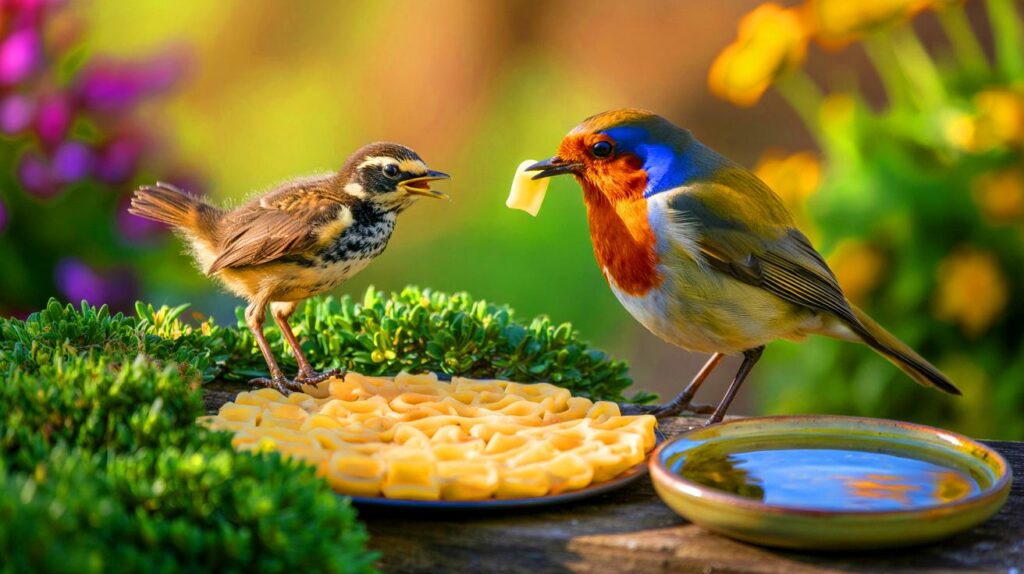
As garden insects dwindle and fledglings scatter, a budget staple from your cupboard could bridge a risky late‑summer gap.
Many people think feeding birds means pricey mixes and special kit. Yet a simple plate of correctly prepared kitchen scraps can keep young robins fuelled while they learn to fend for themselves.
Why one cheap food could keep robins going this month
Wildlife charities say garden birds face tighter pickings as dry spells harden soil and insect numbers dip. Robins, which often raise a late brood, rely on soft, easy food while their young build strength. One option stands out for cost and convenience: plain cooked pasta.
Served in small, soft pieces, pasta offers quick energy. It mimics the texture of invertebrates and suits ground-feeding birds like robins. You can cook a handful in minutes, leave it to cool, and put it out before work or after tea.
Key rule: only put out plain pasta that’s fully cooked, cooled and unsalted. Never offer it raw, seasoned or sauced.
Raw pasta can draw in moisture and swell after ingestion. That can cause discomfort and, in severe cases, internal harm. Cooked pieces avoid this risk and are easier to swallow, especially for newly fledged birds that are still clumsy at feeding.
What to put out and what to avoid
- Cooked pasta: chop into pea‑sized pieces; serve plain and cool.
- Cooked rice and boiled potatoes: soft, unseasoned and cooled.
- Mild cheese: a light sprinkle of grated, low‑salt cheese.
- Fruit: small cubes of apple or pear; a few raisins soaked to soften.
- Seeds and grains: sunflower hearts, oats, millet and nyjer.
- Peanuts: only unsalted and fresh; use a fine‑mesh feeder so chicks can’t take whole nuts.
- Avoid raw pasta; anything salty; oily sauces; mouldy food; stale or flavoured peanuts.
- Use bacon rind only if plain and unsalted, cut into tiny strips, and offer sparingly.
- Limit bread; it fills birds without much nutrition.
Remove leftovers at dusk. Clean the feeding spot often. Fresh food in, old food out—every day.
Health and hygiene: cutting disease risks
Recent retail pauses on flat bird tables by a national bird charity underline a real concern: disease spreads quickly on dirty, exposed surfaces. The safest approach is strict hygiene and modest portions that get eaten fast.
- Rotate where you feed to prevent a build‑up of droppings.
- Wash tables and feeders with hot, soapy water twice a week, then rinse and dry.
- Disinfect weekly with a pet‑safe product and allow to air‑dry fully.
- Wear gloves, and wash hands thoroughly afterwards.
Watch for signs of illness—fluffed feathers, lethargy, drooling or swollen eyes. If several sick birds appear, pause feeding for a fortnight and deep‑clean all equipment before restarting. This break helps stop transmission of common garden bird diseases.
Why now matters for robins
Fledgling robins leave the nest before they are expert foragers. They rely on parents, quick calories and easy‑to‑grab mouthfuls while they learn. Late summer can be tough: heat and hard ground reduce access to worms, while flying insects can be patchy.
Small plates of soft food close to cover help robins dip in and out without staying exposed. Place low trays near shrubs, not in the open lawn. Add a shallow dish of fresh water for drinking and bathing, topping it up daily in hot weather.
A palmful of cooled, plain pasta—about 30 g—can feed a pair of robins and their brood for a day, for roughly 5p.
Quick method: 10‑minute robin pasta prep
- Boil water; add a small handful of dry pasta shapes.
- Cook until soft all the way through. Drain and cool under cold water.
- Chop into pea‑sized bits; pat dry on kitchen paper.
- Serve a thin layer on a low tray; keep a second portion in the fridge for the evening.
- At dusk, remove what’s left and clean the tray.
How much and how often
Offer two small feeds, morning and late afternoon. Start with a tablespoon. If it’s gone within 15 minutes, add a little more next time. If scraps linger, reduce the portion. The aim is swift turnover, not a permanent buffet that draws pests.
If one million gardens did this for two weeks, that would share out roughly 420 tonnes of extra food to help young birds through a lean spell. Scale matters, and small plates add up quickly when spread across the country.
Beyond pasta: building a bird‑friendly routine
Pasta is a stop‑gap, not a complete diet. Protein remains vital. When you can, add mealworms—live or soaked dried ones—for a boost. Mix in sunflower hearts and a little suet during cool snaps. Keep fruit on offer for thrushes and blackbirds, which will also take some of the pressure off the robin table.
Support natural food by gardening for insects. Leave a corner a bit untidy. Plant late‑flowering nectar sources. Avoid broad‑spectrum pesticides. A water feature, even a simple washing‑up bowl sunk into the ground with pebbles, creates drinking and bathing spots that birds use daily.
Simple reference: safe foods and prep
| Food | Preparation | Notes for robins |
|---|---|---|
| Pasta (cooked) | Plain, cooled, chopped | Energy boost; easy texture for fledglings |
| Rice, potatoes (cooked) | Unseasoned, soft, cooled | Small portions, remove leftovers nightly |
| Mild cheese | Finely grated | Use lightly; watch salt content |
| Fruit | Small cubes; soak dried fruit | Place on the ground, near cover |
| Seeds and grains | Sunflower hearts, oats, millet | Good mix with soft foods |
| Peanuts | Unsalted only; fine‑mesh feeder | Never offer whole nuts to chicks |
Final pointers and useful extras
Peanut safety matters. Aflatoxin, a toxin from certain moulds, can contaminate poor‑quality stocks. Buy from reputable sources, store in a dry place, and discard anything that smells musty. If in doubt, bin it.
At ground level, defend food from cats by positioning trays near dense shrubs but away from spots where predators can ambush. Avoid feeding late at night to deter rodents. If rats appear, switch to hanging feeders and tidy thoroughly.
If you want to transition away from pasta, try a two‑week plan: gradually reduce pasta while increasing mealworms and sunflower hearts. Robins learn fast and will start to take the more nutritious options once they trust the feeding spot.
This month is all about quick, clean, soft mouthfuls that keep young birds going. A saucepan, a chopping board and five minutes are enough to make that happen today.



5p pasta for robins? I’m in—will test tomorrow!