
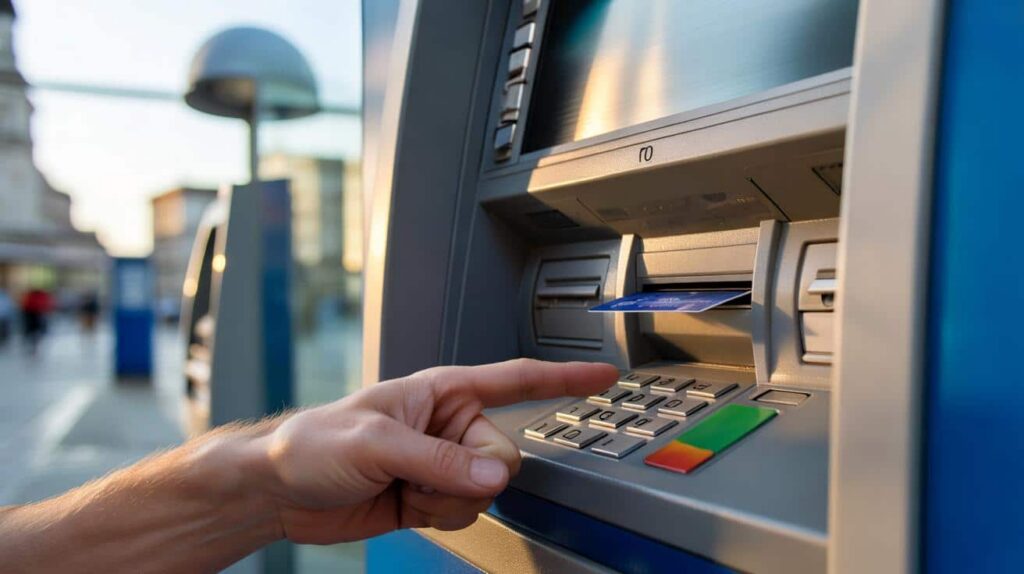
When withdrawing cash, few people think about fraud — and that’s exactly what criminals rely on. A quick hand movement before inserting your card can stop many scams before they even start.
Cash machines are rarely attacked with brute force. Instead, thieves attach thin overlays to the card slot, slip microscopic “shims” inside the reader, or fit fake covers over the keypad. To the eye, everything looks clean and normal — but your hand will often detect something wrong before you see it.
A genuine machine has a solid, fixed front. Nothing rattles, nothing wobbles, nothing sticks out. If the slot feels loose, the edge flexes, or the keypad sounds hollow, something’s off. These subtle signs often reveal a skimmer or a freshly fitted fake keypad.
Many victims describe the same pattern: a slight resistance, a millimetre of movement, a thin edge of glue noticeable to the touch. One quick tug on the card slot, a faint click — then stepping back and walking away. That small gut instinct saves real money.
Remember: touch beats sight. Tug lightly, twist gently, listen for sounds — and if anything feels odd, move on.
The so-called “10-second check” fits any routine. It takes almost no time and removes the stage from under the fraudsters’ feet.
Check the slot: look at the alignment, run your fingers along the edges, tug lightly with thumb and forefinger and twist against the front.
Tap the keypad: press a few buttons. If it feels hollow or uneven, stop immediately.
Cover your PIN: hold your other hand like a roof over the keypad, angle your body slightly to block side views.
Change location: if anything seems suspicious, use a cash machine inside a branch or in a well-lit area.
Refuse “help”: keep strangers at a distance; cancel the process if anyone insists on assisting.
Activate push alerts: enable instant notifications in your banking app to spot withdrawals in real time.
Before inserting your card, pull lightly on the slot. If anything moves, walk away. Always shield your PIN with your other hand.
Skimming devices read magnetic-strip data. Shims are ultra-thin layers inserted between the card and reader to steal chip information. Mini-cameras or fake keypads record PINs. Because these attachments are only glued or clipped on, touch usually gives them away. By pulling, twisting and tapping, you test the solid factory construction against fragile add-ons — a difference your fingers can detect in seconds.
In Germany, EMV chip technology has made traditional skimming harder. Criminals have shifted to shimming, keypad overlays and social-engineering tricks at ATMs. The 10-second check directly counters these methods. It’s not high-tech — just habit.
| Signal | Action | Why It Helps |
|---|---|---|
| Card slot wobbles or protrudes slightly | Stop, choose another machine | Prevents data theft via skimmer/shim |
| Keypad sounds hollow or feels doubled | Don’t type, leave immediately | Foils PIN harvesters |
| Strange add-ons, loose panels, fake signage | Be cautious, prefer branch ATMs | Reduces manipulation risk instantly |
| Someone offers “help” at the ATM | Keep distance, cancel transaction | Blocks distraction and shoulder-surfing scams |
Once you’ve withdrawn your cash, the protection continues. Open your banking app to check for immediate activity, and monitor again later in the day. If you rarely withdraw money, temporarily lower your cash-withdrawal limit. The sooner you spot unauthorised transactions, the quicker you can block your card and stop losses.
Most banking apps now let you disable magnetic-strip payments and overseas withdrawals. Adjusting these settings adds another security layer. Setting a daily withdrawal limit acts like an airbag — small constraints that prevent big damage.
Common questions:
Is contactless withdrawal safer? When available, yes — it avoids the card slot entirely, though you should still shield your PIN.
What if my card gets stuck? Stay by the machine, block the card immediately using your bank’s hotline (the number is on the back of the card), and don’t accept help from strangers.
Will the bank refund stolen money? Often yes, provided you report it quickly and haven’t shared your PIN. Fast action speeds up the investigation.
For everyday safety in Germany, indoor ATMs beat outdoor ones — especially those near supermarkets, car parks or nightlife areas. Good lighting, visible cameras and regular maintenance reduce risk. If you need cash late at night, go to a familiar location or wait until morning.
Check your app settings: can you block foreign withdrawals, disable magnetic-strip use, adjust limits, and activate push alerts? Many banks now offer these options. Using them adds layers of defence.
A small personal safety kit helps too. A tissue works if you prefer not to touch the slot directly. Keep a backup card and split your limits. Once a month, review your limits and alert settings.
The 10-second check fits even on busy days. It needs no technology, just your hand. It stops the most common ATM scams in Europe — and restores your sense of control. It sounds trivial but works remarkably well.
A single doubt is enough to change machines. That switch takes two minutes. A fraud case costs hours — and plenty of nerves.
Frequent card users can reduce risk further by withdrawing cash less often and using contactless payments with small limits. Fewer ATM visits mean fewer opportunities for tampering. Before travelling, do a quick home test: set limits, plan geoblocking, save your card-blocking numbers. A small effort with a big effect.


