
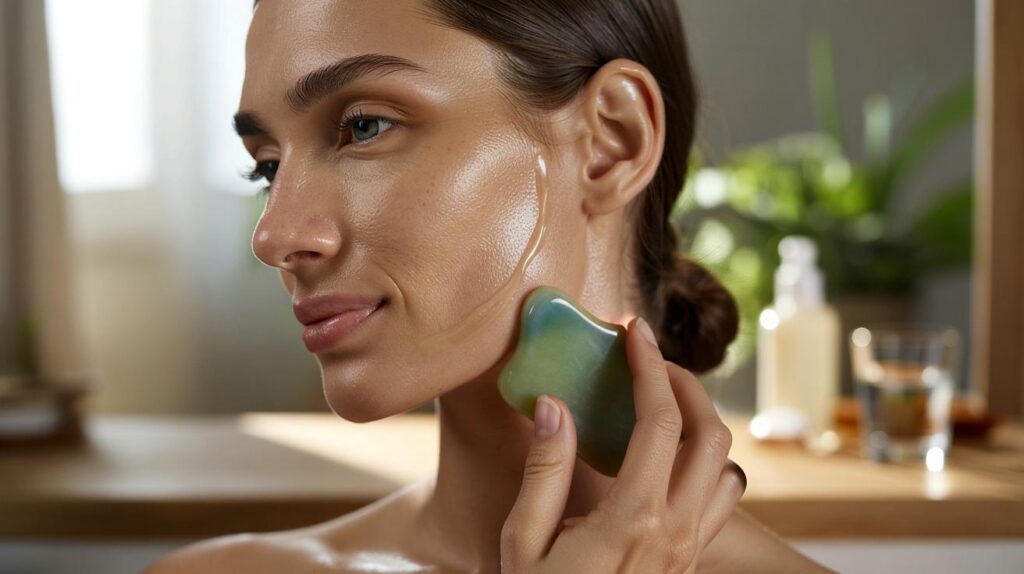
A flat morning face can feel like a little betrayal. You sleep, you hydrate, and still the mirror hands you puffiness, a heavy jawline, and that dull, post-screen tone. Gua sha and facial massage keep appearing on feeds, half ancient ritual, half glossy trend. The question humming underneath is simple: can two hands and a small stone really wake the skin from the inside?
The first time I watched a face change in real time, it was in a crowded London kitchen, with half-drunk tea and a fogged window. A friend placed a tiny jade tool to her cheek and started slow, purposeful strokes, drawing towards the ear like she knew a secret map. The room was noisy. The movement was quiet. Within minutes her under-eyes softened, the jaw looked lighter, the skin had a calm brightness that wasn’t shiny or forced.
We’ve all had that moment when the face feels like it’s wearing a winter coat. What I saw that morning felt like someone unbuttoning it. The glow wasn’t makeup.
The quiet power of lymphatic flow
If blood is the city’s traffic, lymph is the tide moving litter and lost keys towards the harbour. It doesn’t have a heart to push it; it relies on breath, muscle, and gentle pressure. When it lingers, puffiness pools around the eyelids, jawline and mouth, and the skin can look a touch grey after long days at a desk. Gua sha and facial massage act like soft pumps, encouraging that tide to move again.
You see it on certain mornings. Jaw clenched from a bad dream, neck tucked forward from scrolling, face holding last night’s salt. A makeup artist in Manchester told me she does five slow minutes between clients on heavy days: oil, tool, mirror, sink. Her words stuck with me because they weren’t lofty. She said it like brushing teeth, a rhythm that resets the face without drama. Lymph loves rhythm, not force.
There’s logic underneath the glow. The lymph pathways sit just under the skin, draining towards nodes tucked under the ears and along the sides of the neck and collarbones. Light, directional strokes help guide fluid to those junctions. As puffiness drops, the features don’t change shape so much as they reappear. Cheekbones reflect a bit more light. The corners of the mouth lift because the heaviness has moved on. When you add breath, it’s a circuit, not a trick.
Your at-home routine: gua sha + massage, step by step
Start with clean skin and a few drops of a slip-giving oil or rich serum. Warm your hands, place them flat on the sides of your neck, and take two slow breaths, releasing the shoulders down. With the pads of your fingers, make small circles at the base of the neck, then sweep down towards the collarbones. Now bring your gua sha tool to your face: glide from the centre of the chin to just before the ear, hold for a breath, then move behind the ear and sweep down the side of the neck to that same collarbone pocket. Repeat 5–7 times per section.
Work in a simple map: chin to ear, mouth corner to ear, nose to ear, then under-eye towards the temple with feather-light pressure. Finish with the forehead, from brow to hairline, then out to the temple and down. Keep the tool at a 15-degree angle so it hugs the skin, not pokes. If you don’t have a tool, use knuckles and fingertips to glide along the same routes. Go lighter than you think; the lymph sits just under the skin, not in the muscle.
Most people press too hard, skip the neck, or work only upwards because that’s what posters in gyms say. The neck is the gateway; miss it and you’re moving water into a closed door. Another common trap is dry skin: no slip means drag, and drag annoys your skin barrier. I get the rush. Morning is a blur, kids are loud, the kettle is yelling. Let’s be honest: no one does that every day. Aim for often, not perfect. Your hands are already a professional-grade tool.
When in doubt, think of your face as a landscape where gravity and breath are your partners. Sweep from puffy zones into easy exits, pause over the hollows under the ear, and end at the collarbones. That end point matters, like returning a library book to the right shelf.
“Touch is information,” says a London facialist who blends traditional Chinese techniques with clinical training. “Lymphatic drainage is not scraping. It’s coaxing. If you feel soreness in your jaw ease and your breath deepen, you’re in the right lane.”
- Keep strokes slow and even, counting to three per glide.
- Use just enough oil to slide without slipping off the face.
- Stop at active breakouts, fresh filler sites, or if you feel unwell.
- Two to five minutes per side is plenty on busy days.
- Store the tool at room temperature; a chilled spoon under eyes is optional calm.
Beyond the tool: habits that keep you luminous
The prettiest thing about lymphatic work is that it invites a wider reset. Drink a glass of water after you finish; the system rides hydration. Tilt the phone higher so your neck isn’t permanently folded into itself. Swap one late-night snack of salty crisps for something less clingy to the face. Sleep a touch higher if mornings greet you with balloon eyes. Gentle walking helps move lymph almost as well as a spa facial, and it’s free.
Think of this as stacking small levers. Three minutes of neck sweeps. Two deep breaths before email. A quieter jaw at the red light. The glow shows up, yes, but the real win is how your face feels on the inside — less tight, more available. Share the routine with a housemate or partner and you’ll remember it more often. Consistency beats intensity. The tool is simply a reminder to move the tide that was always there.
| Point clé | Détail | Intérêt pour le lecteur |
|---|---|---|
| Map the flow | Sweep from centre of face to ear, behind ear to neck, and down to collarbones | Clearer jawline and de-puffed eyes without guesswork |
| Pressure matters | Feather-light touch; tool at 15-degree angle with oil or serum | Results without redness or irritation |
| Finish the circuit | Always prep and drain the neck before and after face work | Faster, longer-lasting glow that feels calmer |
FAQ :
- How often should I do gua sha for lymphatic drainage?Two to four sessions a week is a sweet spot for most faces. Quick daily neck sweeps are a nice bonus on puffy mornings.
- Will facial massage slim my face?It won’t change bone structure, but moving fluid can reduce temporary puffiness, revealing natural contours around the jaw and cheekbones.
- What oil works best, especially if I’m acne-prone?Light, non-comedogenic options like squalane, grapeseed or hemp seed oil give slip without clogging. Patch-test, and avoid heavy fragrance.
- Are there times I should avoid lymphatic massage?Skip if you have active skin infections, fresh injectables, severe rosacea flare-ups, or if you’re feeling feverish. Speak to a clinician if you’re under medical care for lymphatic issues.
- Is morning or evening better for de-puffing?Morning helps with swelling from sleep; evening melts jaw tension from the day. Pick the moment you’ll actually stick with — that’s the magic.


