
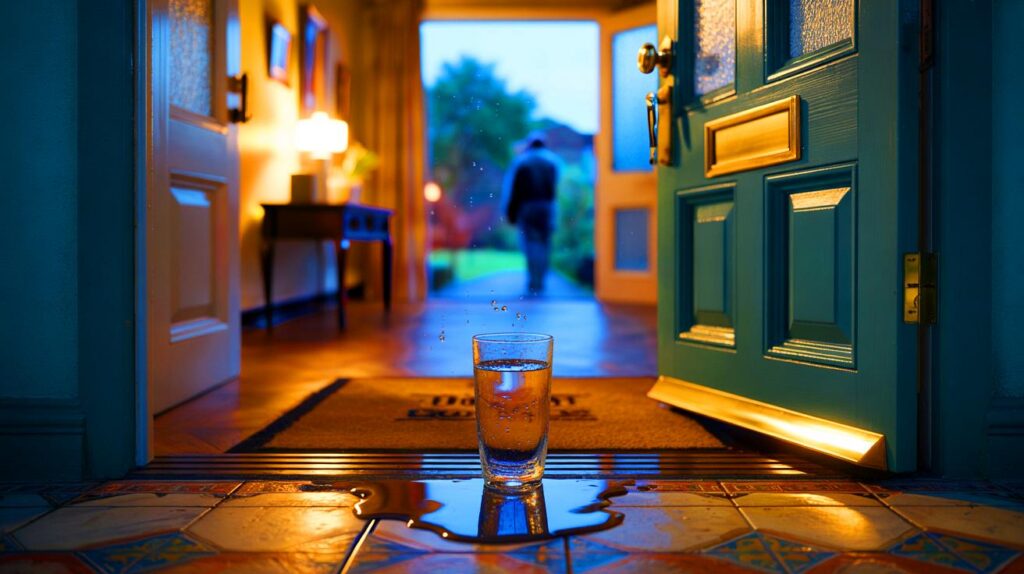
As thieves turn to tiny cameras and drones, a zero-cost tactic is spreading among worried households keen to spot covert visits.
Police across Europe report thieves testing locks, tracking routines and probing weak points long before a break-in. People want something quiet, cheap and hard to see from the street. A simple glass of water, placed in the right spot, now sits at the heart of an emerging low-tech defence.
What is pushing people towards simple home defences
Reports of domestic burglary rise in school holidays and long weekends. Homes left empty for 48 to 72 hours get special attention. Offenders watch patterns, from lights and blinds to parcels and bins. They mark targets using stickers, chalk, or subtle scuffs on gates.
Some crews use miniature cameras to log comings and goings. Others try glue or weak acid on locks to test whether a cylinder has been touched. A quiet method that flags an attempt without advertising itself has become attractive to many residents.
How the glass of water trick works
The idea is basic. Fill a plain drinking glass close to the rim. Place it just behind the inward-opening front door, usually on the doormat. Any attempt to open the door, even a gentle push, nudges the mat and tips the glass. Water spills in a visible pattern across the threshold.
Place a full glass just behind the door. If the door moves, the glass tips. The spill signals a visit while you were away.
The method produces evidence you can see the moment you return. It works without electricity, Wi‑Fi or subscriptions. From the pavement, no one knows the trap is set. That invisibility reduces tampering and avoids tipping off a curious passer-by.
Where to place it, and what to avoid
Use the inside of the door so the glass cannot be spotted from the street. Choose a flat, stable spot on the mat. Avoid wooden floors that stain easily, or put an old towel under the mat to contain the spill. A tall, narrow glass tips more readily than a heavy tumbler.
Keep pets, children and carers in mind. If someone checks the property, brief them. For a back door or side gate, repeat the method where movement will tip the glass. For windows, rest a light object on an ajar handle, or dust a pinch of flour under a small rug as an indicator.
Cost: £0. Setup time: 30 seconds. Visibility from outside: near zero. Evidence on return: clear and immediate.
Limits you should accept
This is a detection tactic. It does not stop an intruder. If someone forces the door, they may leave before you return. There is also a small risk of a false trigger if a neighbour opens the door with a spare key, or if a caretaker enters.
It reveals a visit. It does not prevent one.
Water can mark timber floors. In flats, shared corridor rules may restrict any obstruction outside your own door, so keep everything inside. Some insurers expect signs of forced entry for certain claims. Treat the glass as one layer in a broader plan.
How to build a stronger layered setup
- Ask a neighbour to move bins, open and close curtains, and collect post every 48 hours.
- Use a plug-in timer for lights to simulate evening use in at least two rooms.
- Reinforce the door with a British Standard night latch and a 3‑star euro cylinder.
- Fit hinge bolts and a strike plate with long screws that bite the stud.
- Keep travel plans off public social feeds until you return.
- Mark valuables and record serial numbers for quick reporting.
- Install a battery door wedge alarm for audible shock if the door opens.
- Position any camera legally so it does not capture public areas or neighbours’ property.
What the method adds to a modern toolkit
The glass creates a time marker. You can narrow a window of exposure to a few hours. That helps when matching to delivery logs, camera clips or neighbours’ observations. It also prevents uncertainty after a trip: you know at a glance whether someone tested the door.
| Method | Approx. cost | Main purpose | Evidence produced | Visible from outside |
|---|---|---|---|---|
| Glass of water behind door | £0 | Covert detection | Water spill pattern | No |
| Door wedge alarm | £10–£20 | Noise deterrent | Sound event, possible scuffs | No |
| Smart camera | £40–£200 | Recording and alerts | Clips, timestamps | Usually yes |
| Timed lights | £8–£25 | Presence simulation | Usage pattern | Lights visible |
How to run a quick home test
Stand outside and push the door a centimetre. The mat should shift and the glass should wobble. If it does not, change the mat angle or pick a taller glass. Test again until a minimal push produces a tip. Photograph the setup so you can replicate it before every trip.
Check spill behaviour on your floor. If water pools away from the threshold, add a thin tray under the mat to hold it in place. If you use a draught stopper, set the glass in front of it so any movement is amplified.
What to do if you return to a spill
Do not rush inside. Call a neighbour or the police non-emergency line and wait. Photograph the spill and any marks on the lock or frame. Check whether parcels went missing. If you have a camera, bookmark the time window and export clips. Keep the area untouched until you have reported the incident.
Risks, workarounds and small upgrades
Households with pets or home care visits should use a dry indicator: a folded paper tent by the hinge line, a light bottle cap balanced on the handle, or a strip of tape across the inside gap that tears when the door opens. These create the same signal without water.
For longer trips, combine the glass with a lamp timer, a radio on a smart plug, and recorded footsteps at random intervals. Keep the front approach tidy. Overfilled post boxes and untouched bins broadcast absence more loudly than any high-tech gadget.
The biggest gain from the £0 trick is clarity. It removes guesswork after a weekend away and helps you act quickly. Paired with good locks, a friendly neighbour and a few smart habits, it shifts the odds back toward the resident without advertising that you have set a trap.



Genius idea. Costs £0, no apps, no faff—defintely adding this to my pre-trip routine.
Isn’t this just evidence after the fact? If someone forces the door, you’re still out of luck. Feels more like a tripwire for anxiety than security tbh. What’s the actual deterence here?