
Small rooms swallow surfaces fast and floor space vanishes overnight; Britain’s bedrooms are crying out for calmer, smarter layouts.
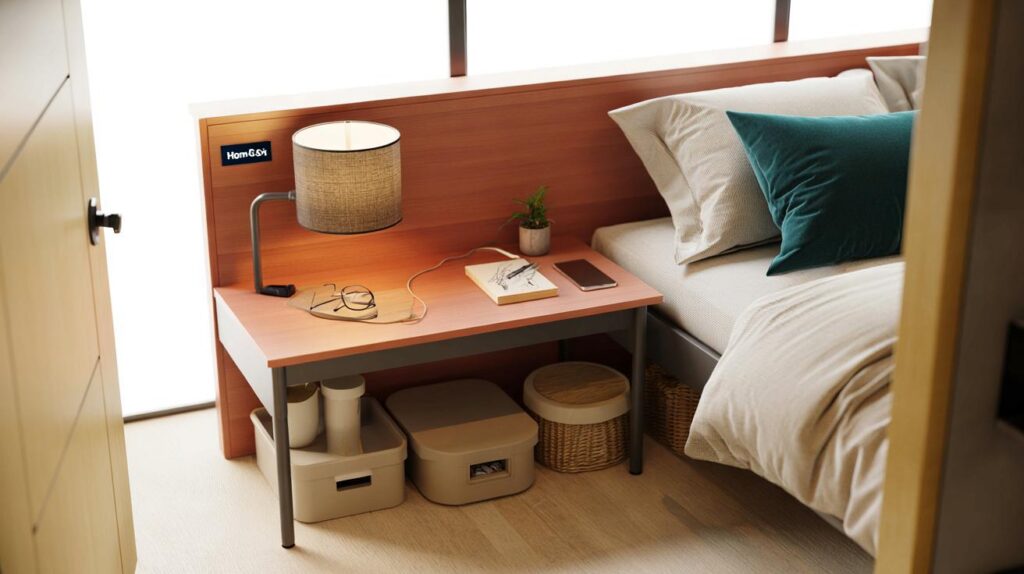
B&Q is backing a simple fix for cramped rooms: trade the bedside table for a double frame with storage where you actually need it. The HOMCOM 4.8ft bed brings a shelf into the headboard and a clear span under the mattress, turning wasted edges into working space.
Why people are ditching the bedside table
Traditional bedside tables eat floorspace and invite clutter. A lamp, a glass, a charging cable, a paperback and a toy car soon cover the top. Drawers stick. Corners bruise shins. In small bedrooms, every centimetre counts. That is why multi-tasking furniture has moved from nice-to-have to smart priority.
B&Q’s alternative arrives at the bed itself. HOMCOM’s 4.8ft double frame puts a bookshelf into a warm, wood-effect headboard and sets that on a sturdy metal base. You reach glasses, the alarm and tonight’s read without stretching. Underneath, a clean gap takes storage boxes or baskets of your choice.
One frame, three jobs: sleep platform, headboard shelf for nightly essentials, and adaptable under-bed storage.
The B&Q alternative in plain terms
The headboard earns its keep. Shelving turns dead wall into a neat rail for lamps, photos and phones. The metal frame resists squeaks and wobbles and copes with daily use. Because the space below is open, you decide the system: slim boxes for bedding, low baskets for toys, or seasonal clothing in vacuum bags.
- Keep night-time essentials at eye level without extra furniture.
- Slide labelled boxes under the frame for shoes, sheets or craft kits.
- Run cables cleanly through the headboard zone to tame chargers.
- Use baskets to rotate children’s books so only favourites stay out.
Swap two floor-hogging tables for a headboard shelf that keeps everything within reach while clearing walkways.
Does it actually save space? We ran the numbers
A typical bedside table measures around 45cm by 35cm. That footprint is roughly 0.16m². Two of them take about 0.32m². Remove both and your circulation area widens. On narrow rooms, that extra edge can turn a sideways shuffle into a clear step.
Now factor the “halo” around tables. You usually leave a few centimetres to avoid knocking them. Reclaim that margin and the gain grows. No storage unit is magic, and layouts vary, yet a practical range runs from a third to over half a square metre in usable space, especially in small doubles.
Realistic gain: around 0.3–0.6m² freed on the floor, plus a full shelf’s worth of storage introduced at head height.
How it changes daily use
The headboard shelf cuts the 3am fumble. Glasses sit where your hand expects them. The lamp switch is within a relaxed reach, not a risky lean. For families, a Lego tray or a bedtime story stack can live up high and tidy. In teen rooms, headphones, a Bluetooth speaker and revision cards find a home without multiplying boxes.
Because it looks like furniture, not storage kit, the room stays calm. You avoid the cold, showroom vibe by keeping texture on show: wood-effect grain, fabric baskets, a soft lampshade. Function remains, but the eye reads a single piece rather than three separate items along the wall.
Build quality and assembly
The frame uses metal supports for a rigid base and a durable feel. That brings a firmer, quieter sleep surface than tired timber slats. Assembly follows the familiar flat-pack route, with clearly marked parts. Solo builders report a straightforward, few-hour build with basic tools and no drama.
Once up, the platform sits square and resists creaks when you turn. The headboard shelf carries the normal small-load mix of books, a lamp and a water glass comfortably. It suits guest rooms, teenagers’ spaces and compact doubles where floor space must stretch.
Sturdy metal frame, wood-effect headboard, and an open under-bed span: a practical mix built for daily life.
Safety and small-room tips
- Choose a lamp with a fabric or shatter-resistant shade to soften bumps near the shelf.
- Route charging leads through a cable clip fixed behind the headboard to prevent snags.
- Leave at least 60cm walkway on one side of the bed where possible for safe movement.
- Use rounded-edge storage boxes under the bed to protect toes in tight clearances.
What to store where
| Item | Headboard shelf | Under-bed storage | Tip |
|---|---|---|---|
| Glasses, phone, alarm | Yes | No | Add a non-slip mat so items stay put. |
| Books and tablets | Yes | Yes | Rotate current reads on the shelf, archive the rest below. |
| Spare bedding | No | Yes | Vacuum bags reduce bulk and keep dust off. |
| Children’s toys | Yes (selected) | Yes | Use colour-coded baskets to speed tidy-up time. |
| Cables and chargers | Yes | No | Attach a small cable rail to the back of the headboard. |
Who should buy, who should skip
- Best for renters who cannot add built-in joinery but need order and extra storage.
- Handy for teen rooms where floor area doubles as study and hangout space.
- Smart for guest rooms that must flip from “spare” to “sleep-ready” in minutes.
- Consider a different setup if you rely on bulky medical devices that need a wide, fixed surface beside the bed.
- Very thick mattresses may sit higher; check the shelf height so switches and books still sit comfortably.
How to style it without losing function
Clip-on lamps free even more shelf room and aim light precisely at the page. A narrow tray corrals small items so the shelf stays tidy. Keep a single framed photo or a plant to avoid visual noise. Choose two or three storage boxes in the same finish under the bed so the view looks intentional when you walk in.
Colours matter in small rooms. Mid-tone wood effects add warmth without closing the space. Pair with off-white bedding and one accent cushion. Heavy throws can live in a low under-bed box, saving the foot of the bed from a messy pile.
The small-print that makes a big difference
Measure before you commit. Note the mattress thickness, headboard height and skirting depth. Check the distance from the shelf front to your pillow line; you want reach, not forehead bumps. If you share the bed, test reach from both sides so the layout suits two routines, not one.
Plan the under-bed zone to suit the floor. Hard floors love felt pads on box corners. Deep carpets prefer boxes with wider feet or small castors to stop ruts. Keep a low-profile duster or a long vacuum attachment nearby. Clear spans collect dust; a quick weekly pass keeps allergies down and the room fresher.
Five-minute simulation: tape out two 45×35cm bedside tables on the floor, then remove the tape and walk the room. Feel the difference.
Extra gains you can bank this week
Create a “lights out” shelf rule: only items used every night live on the headboard. Everything else drops to a labelled under-bed box. Time a tidy-up: most families report under ten minutes to reset the room when everything has a place within arm’s reach. That small routine pays back in calmer evenings and faster morning exits.
Pair the bed with a single floating shelf above the headboard if wall fixings are allowed. That extra ledge handles display pieces, so the built-in shelf stays practical. Add a slim laundry basket at the foot to stop clothes landing on the floor. Each tweak compounds the feeling of order without buying extra furniture.



Built the HOMCOM 4.8ft last weekend after spotting it at B&Q. Took ~2 hours solo; instructions were clear and the metal frame feels solid and wobble‑free. Headboard shelf is deeper than I expected and definitley cuts my 3am fumble. Under‑bed boxes slide easily on laminate. Worth it.