
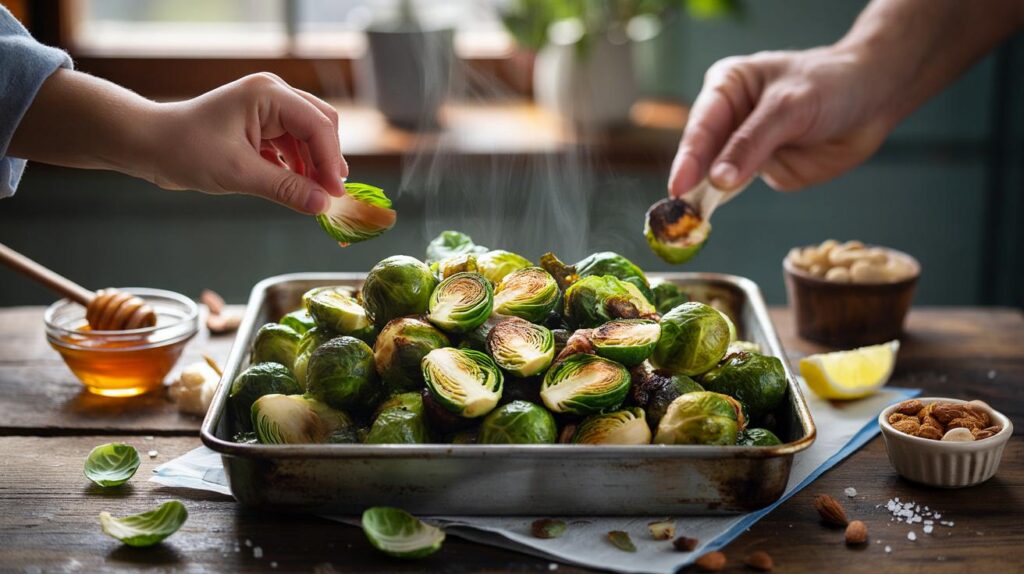
Brussels sprouts have a PR problem born of the school-dinner era: grey, sulphurous, and grim. The fix is disarmingly simple — roast them hard, glaze with honey, tumble with nuts — and watch faces change around the table.
The tray slid from the oven in a hiss of heat, and the kitchen filled with the crisp-sweet smell of caramelised brassicas. My friend’s two kids hovered, suspicious as cats, peering at the blistered, emerald halves freckled with toasted almonds. We said nothing. We just nudged the bowl towards them with a nudge and a grin.
One boy speared a sprout, then another. His sister crunched through a ragged leaf like a crisp and said, “Wait, this is… good?” The adults tried not to look shocked. There was a quiet clatter of forks and the kind of silence that means everyone is secretly eating fast.
I blinked, and the bowl was empty. And then came the line every cook dreams of hearing from a child about a green vegetable. “Can we have more?” A small miracle, plated.
From mush to magic: why roasting flips the Brussels sprout story
Sprouts get a bad rap because so many of us met them boiled into submission. That murky smell? That’s sulphur compounds released when they’re overcooked in water. Roasting changes the rules. High, dry heat sears the cut surface, browning the natural sugars, and turning the outer leaves into lacey crisps.
That browning — the Maillard reaction — creates flavours you never find in a pan of water. Think toasted, nutty, a whisper of sweetness. Add honey and you amplify the caramel notes. Add nuts and you give the whole thing crunch and contrast. The result isn’t “vegetable side dish”. It’s snackable.
We’ve all had that moment when a childhood food gets reintroduced and your brain goes, “Oh, hang on.” Sprouts can do that. They carry bitterness, yes, but also sugar, vitamin C brightness, and a cabbagey depth that loves fat and heat. Roast them, and the bitterness softens into something adult, interesting, even cheerful.
The proof on a plate: a mini-conversion story and a few numbers
At a Sunday roast in Leeds, James served honey-roasted sprouts with hazelnuts alongside the beef. His seven-year-old had previously staged dramatic protests at anything green. That day, she tried one, then pocketed a second for later like contraband. James swears he didn’t change the vegetable. Just the method.
And the ripple effect is real. Supermarkets report a seasonal surge in sprout sales when winter recipes trend and traybakes go viral. Families share videos of “sprout chips” devoured straight from the pan. It’s not fine dining. It’s finger food with vitamins, riding the same wave that made kale crisps a thing — only warmer and more generous.
I’ve watched grown adults hover by the oven for the last five minutes just to nab the extra-crispy leaves. Those leaves, by the way, are gold. They’re the edible evidence that high heat is doing the hard work for you. Sprinkle with salt, and they ring like bells.
How to roast sprouts with honey and nuts like you actually mean it
Start hot. A 220°C oven (200°C fan) and a preheated tray are your secret weapons. Halve medium sprouts top to bottom, pull off any tired outer leaves, and toss in oil with a good pinch of salt. Place cut-side down on the hot tray for maximum browning. Roast 12 minutes, stir, then roast 6–10 more.
Glaze and finish. Warm a spoon of honey with a squeeze of lemon and a short splash of vinegar so it’s pourable. Toss the hot sprouts with the honey mix, then add toasted nuts — hazelnuts for earthy crunch, almonds for clean snap, pecans for buttery warmth. A final grind of black pepper and, if you like, a flutter of chilli flakes.
Little moves matter. Don’t overcrowd the tray. Dry sprouts roast; wet sprouts steam. If you want smoky notes, add a rasher of chopped streaky bacon, crisped first. For plant-forward richness, use a knob of butter right at the end to glaze and gloss.
“Bitter needs sweet. Soft needs crunch. Heat needs a little acid,” says chef-friend Lorna, who treats sprouts like a salad disguised as a roast.
- Swap honey for maple to make it vegan.
- Try walnuts plus orange zest for a festive crowd.
- Add a spoon of miso for umami and a deeper glaze.
- Finish with pomegranate seeds for pops of juice.
Common missteps and gentle fixes, because life is busy
Too pale, too soft? Your oven’s not hot enough, or the tray is crowded. Use two trays rather than stacking mountains. Get that contact between the cut face and the metal; it’s where the magic happens. Salt earlier than you think so it draws moisture to the surface for better browning.
Burnt edges, raw centres? Lower the rack, and give the sprouts an extra five minutes cut-side down before you stir. If your nuts are scorching, toast them separately on the hob, then fold in at the end. Let’s be honest: nobody really does that every day. If you’re rushing, buy pre-trimmed sprouts, and you’re laughing.
Worried about the honey? It won’t turn the dish into dessert. It rounds the edges and binds the crispy leaves so they eat like a proper side. Balance sweet with acid — lemon, cider vinegar, or a dash of balsamic. If you like heat, a touch of smoked paprika or Aleppo pepper flips the flavour from cosy to lively.
“Think of honey as seasoning, not syrup. You’re painting, not pouring,” says Lorna.
- Honey: 1–2 tsp per 500g sprouts.
- Nuts: a loose handful, roughly chopped.
- Oil: enough to give every sprout a sheen.
- Time: 18–22 minutes, total.
A small winter ritual worth keeping
There’s a reason this tray comes back empty. It’s warm, sweet-savoury, and generous with texture. It invites hands as much as forks. Your table can be loud with conversation and still make room for a bowl that turns scepticism into second helpings. That kind of shift changes how a family eats through the cold months.
Kids latch onto the crispy leaves and the shiny glaze. Adults taste memory upgraded: Sunday lunch without the soggy compromise. You can make it on a Tuesday, or elevate a Christmas spread without adding stress. There’s no ceremony beyond a hot oven and a splash of honey. And that’s the point.
Sprouts stop being a dare and start being dinner. If you cook them this way, you might even find yourself making extras for the inevitable kitchen pickers. One tray, a handful of nuts, a little char, and the vegetable with the worst reputation gets a second life. Share a bowl, then share the trick.
| Key points | Details | Interest for reader |
|---|---|---|
| High heat transforms sprouts | Preheated tray, 220°C, cut-side down for deep browning | Delivers flavour and texture kids actually eat |
| Honey and nuts add balance | Light glaze, lemon or vinegar, toasted hazelnuts/almonds/pecans | Sweet, crunchy, satisfying without fuss |
| Small tweaks, big payoff | Avoid crowding, toast nuts separately, finish with spice or zest | Reliable results on busy weeknights or big lunches |
FAQ :
- How do I stop sprouts from tasting bitter?Roast them hot to caramelise natural sugars, then balance with a little honey and acid like lemon or cider vinegar.
- Can I make this vegan?Yes. Use maple syrup instead of honey and finish with olive oil or vegan butter for gloss.
- What nuts work best?Hazelnuts for earthy crunch, almonds for clean snap, pecans for buttery richness. Chop roughly for texture.
- Do I need to parboil first?No. Halved sprouts roast through in about 20 minutes. Parboiling risks waterlogging and dull flavours.
- How far ahead can I prep?Trim and halve in the morning, keep chilled and dry. Roast just before serving, then glaze and add nuts right at the end.



Ok, I’m sold—sprouts tonight.