
Small homes face big demands. Schoolwork, hybrid jobs and hobbies squeeze the same square metres. Flexible furniture now sets the tone.
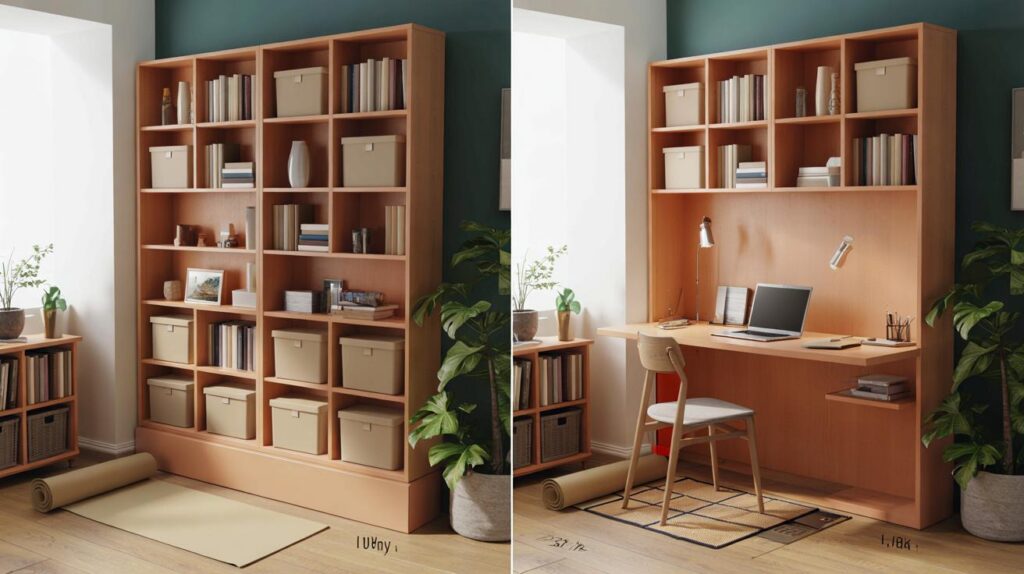
The latest twist on IKEA’s Billy turns a familiar bookcase into a tidy, pull‑out workstation that hides in plain sight. It mixes storage with a desk you can vanish in seconds, which suits busy families and renters who count every centimetre.
A bookcase that moonlights as a desk
IKEA has reworked its best-selling Billy into a storage-and-work hub for tight rooms. When closed, it looks like a standard bookcase. Slide the lower section and you reveal a generous work surface that supports homework, crafts, bills or laptop duties. Push it back and the floor clears again for play, yoga or a pram.
From 33cm deep when parked to 112cm when in action, the Billy-with-table shifts modes without swallowing your room.
The concept answers a growing reality: the kitchen table cannot carry every task. Children need a spot for projects. Adults need a screen set-up that doesn’t dominate a lounge. This hybrid unit lets one corner do double duty without the clumsy compromise of a permanent desk.
Key numbers at a glance
| Width | 80cm |
| Height | 106cm |
| Depth (closed) | 33cm |
| Depth (open) | 112cm |
| Shelf load | Up to 18kg per shelf |
Each shelf carries real weight. Books sit alongside board games and toy bins without sagging. The lower section rolls forward and locks, so the worktop feels steady. The mechanism glides smoothly, which helps kids pull it out and tuck it away on their own.
Why families are eyeing it
The magic lies in switching modes in under a minute. A child can finish homework, stash pens in a tray, and slide the table shut before dinner. A parent can open it again after bedtime for emails without clearing a dining table.
- One footprint serves storage by day and a workstation by night.
- Vertical space pulls more weight, which frees precious floor area.
- Less visual clutter helps children focus and keeps sitting rooms calm.
Storage up top, a work zone below, and a footprint that shrinks on demand: it’s a simple recipe that works in tight homes.
Does it really save space?
Let’s run the numbers. Closed, the unit occupies 0.80m × 0.33m, or roughly 0.26m². Open, it uses about 0.90m². Compare that with a separate compact desk (say 1.00m × 0.55m = 0.55m²) plus a slim bookcase (0.80m × 0.33m = 0.26m²). Together, that duo takes around 0.81m² all the time. With the Billy hybrid, you only use the larger footprint when you actually work. The rest of the day, you reclaim roughly half a square metre of floor. In many bedsits and box rooms, that feels like a whole extra step of space.
Depending on what you replace, the switch can free up to about 1m² of daily living area when the table is closed.
Set-up, stability and daily use
Assembly follows IKEA’s familiar pattern with clear diagrams and bagged hardware. A confident DIY fan can handle it, yet a second pair of hands makes lining up the moving parts easier. Plan the build where the unit will live, because moving a partially assembled piece around narrow landings is no fun.
Check the lock engages every time you open the worktop. Keep heavier items on lower shelves to improve stability. If anti-tip fittings come in the box, use them on a solid wall. That reduces wobble and gives peace of mind in children’s rooms or busy hallways.
Ergonomics without the faff
Grab a chair that matches the worktop height. Your elbows should bend at roughly 90 degrees with shoulders relaxed. If a laptop sits too low, add a stand and use a separate keyboard. Store both on an upper shelf and slide the table shut in seconds. Good posture matters even for short sessions.
Real-world scenarios that fit
- Kids’ box room: shelves hold schoolbooks; the pull‑out becomes a homework hub from 4–6pm, then disappears for bedtime play.
- Open‑plan lounge: keep it closed most of the day; open at 8pm for a tidy, laptop‑only desk that doesn’t swallow the sofa zone.
- Craft corner: thread organisers and fabric cubes sit above; the slide-out protects the dining table from glue and glitter.
- Guest space: open for a weekend visitor’s workstation; close to make room for a fold‑out bed.
Care, cleaning and longevity
Wipe high‑touch areas with a soft cloth. Avoid soaking the moving runner with sprays; mist onto the cloth first. Keep grit out of the sliding path to preserve the smooth feel. Don’t overload a single shelf; spread heavy books over two or more. If a shelf bows, flip it and rotate occasionally to even the stress.
What could trip you up
- Cables: route laptop chargers to a nearby socket to prevent snagging when you slide the table.
- Chair storage: pick a lightweight chair that tucks under or parks beside the unit without blocking the glide path.
- Lighting: plan a wall light or a clip‑on lamp so the surface stays bright without a bulky desk lamp.
How it compares with a traditional desk
A fixed desk wins if you need monitors, speakers and a printer permanently wired. The Billy hybrid suits light to medium tasks, rotating users and shared rooms. You gain flexibility and a small footprint. You trade away some depth for peripherals and knee room. For many households, that swap pays off daily.
Extra tips to stretch the value
Use shallow trays on upper shelves to corral pens, chargers and paper. Label the spines for fast resets after school. Mount a slim cork sheet or magnetic strip at eye level inside the unit for timetables and to‑do lists. Add felt pads under the front feet if your floors are uneven; that keeps the lock engaging cleanly.
Think about a weekly “reset” routine. On Friday evening, clear the worktop, bin scrap paper and return tools to their trays. That small habit keeps the mechanism free and turns Monday setup into a 30‑second task. If you share the unit, assign a shelf to each person so supplies don’t mix.



This is exactly what my box room needs! 80cm width and 33cm closed depth is tiny—then 112cm only when I’m working. If the runners really glide and lock, I’m sold 🙂
112cm open plus a chair is still alot; where does the chair park when you slide it shut? Also, how’s knee clearence—do my shins smack into the lower section? The ergonimics sound a bit optimistic.