
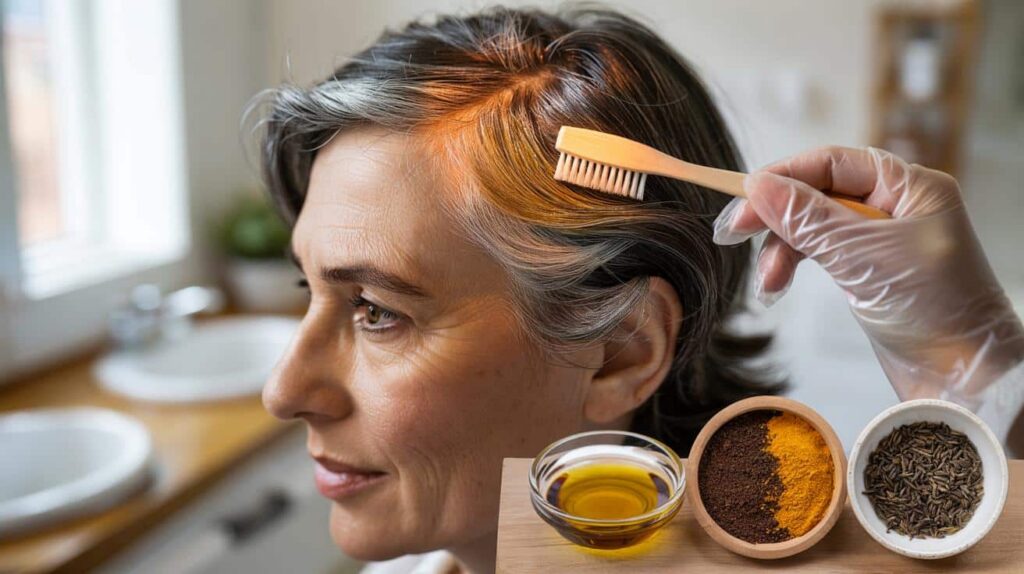
Genes drive the shift to gray, with stress and time playing backup. A gentler path exists for those avoiding harsh dyes.
What causes gray hair
Hair color fades when pigment-making cells, called melanocytes, slow down or drop off. The change often starts at the temples and spreads. Oxidative stress in the follicle can speed this process. Lifestyle factors like smoking, nutrient gaps, and chronic stress add pressure, though heredity sets the baseline.
Some people see temporary darkening when they reduce stress and improve nutrition. That typically affects only new growth and scattered strands. Permanent repigmentation across the whole head is rare. Most home fixes deposit a surface tint that helps blend silver without changing the biology of the follicle.
Think of natural blends as a stain for gray strands. They soften contrast and add warmth rather than fully covering white hair.
The kitchen blend making the rounds
This at-home mix relies on plant pigments and a fatty carrier. The goal is a subtle tint that clings to coarse grays without ammonia or peroxide.
Ingredients and basic ratios
- 200 ml extra-virgin olive oil (carrier and shine)
- 1 teaspoon ground coffee (brown tint and light acidity)
- 1 teaspoon ground turmeric (golden warmth; use sparingly on light hair)
- 1 teaspoon ground black cumin or nigella powder (earthy tone; antioxidant oils)
Use fresh, finely ground spices. Coarse particles stick poorly and can look gritty on hair.
Why these ingredients work together
Olive oil helps pigments spread and cling to the hair cuticle. Coffee brings a soft brown cast that looks natural on dark bases. Turmeric adds warmth, which keeps grays from flashing blue or ashy under indoor light. Black cumin contributes a deeper, earthy note and a smoothing oil profile that eases frizz.
This blend suits dark brown to black hair with scattered silver. On very light hair, turmeric can flash yellow. Adjust proportions to your base color and test before a full application.
Step-by-step application
- Warm the olive oil over low heat in a small pan. Do not let it smoke.
- Whisk in coffee, turmeric, and black cumin. Keep on low heat for up to 2 minutes.
- Remove from heat and cool until the mix feels warm but comfortable on skin.
- Apply to dry hair, focusing on visible gray zones at the part, hairline, and temples.
- Use a clean toothbrush or a fine-tail comb to work pigment into resistant strands.
- Leave on for 15 to 30 minutes. The longer end gives a deeper stain.
- Rinse thoroughly, then shampoo once with your usual cleanser. Condition as needed.
Wear gloves, protect the hairline with a thin film of balm, and patch-test behind the ear for 24 hours before first use.
How it compares to other options
| Option | Coverage | Durability | Best for | Notes |
|---|---|---|---|---|
| Salon permanent dye | High | 4–6 weeks | Dense gray | Strong coverage; requires maintenance; risk of sensitivity |
| Henna or henna/indigo | Medium to high | 3–8 weeks | Warm browns to near-black | Naturally derived; warm tones; strand test for color shift |
| Coffee–turmeric–cumin oil mix | Low to medium | Up to 1 week | Scattered gray on dark bases | Subtle stain; repeat layers build tone; minimal chemical load |
Who will see the best results
People with dark hair and sprinkles of silver get the most lift. The blend mutes contrast around the part and hairline, where grays stand out. Coarse strands benefit from the oil’s slip and shine. Those with dense, uniform gray may prefer henna mixes or salon coverage for a more even result.
Blondes should skip turmeric or cut it to a pinch to avoid yellowing. Redheads may see a ginger-caramel cast, which can look flattering, yet test first. If your scalp runs oily or acne-prone, limit contact time on skin and focus on mid-lengths and ends.
Care tips that extend the tint
- Switch to a gentle, sulfate-free shampoo to reduce fade.
- Rinse with cool water to help the cuticle lie flat.
- Use a UV-filter spray or hat on bright days; sun lifts natural stains fast.
- Add a tinted root touch-up powder on busy mornings for extra camouflage.
- Repeat the blend weekly or before events to build a richer tone.
Risks, limits, and smart tweaks
Spices can stain towels and pillowcases. Use dark textiles for the first wash. Turmeric may tint nails and skin; gloves help. Coffee’s acidity can dry ends if overused. Balance with a light conditioner on mid-lengths. If you wear blonde highlights, keep the mix off those sections or mask them with clips and foil.
For a cooler brown, swap turmeric for a pinch of cocoa powder. For extra slip on curly textures, blend in a teaspoon of aloe gel once the oil cools. If fragrance matters, a drop of rosemary or sage essential oil adds a fresher scent; keep essential oils away from eyes and use very sparingly.
What experts say about expectations
Colorists view natural stains as a bridge between salon visits. Dermatologists advise patch tests for anyone with sensitive skin. The technique works by depositing surface pigments; it does not alter internal hair structure. Lasting coverage demands oxidative dyes or lawsone-based plants like henna. A layered routine often works best: quick staining at home, strategic highlights or glosses at the chair when needed.
No home blend will erase gray roots completely. Aim for softer contrast and healthier shine, not a dramatic color flip.
Extra context that helps you decide
Budget check: one batch uses pantry items and covers several applications. The per-use cost often lands below a dollar, especially if you buy spices in small bags. Compare that with a root touch-up every four weeks and the savings add up fast.
Time math: mixing and warming takes 5 minutes. Application and wait time adds 20 to 30 minutes. That fits into a Sunday reset or a post-work routine. If you multitask, protect clothing with an old tee and keep a damp cloth nearby for drips.
Quick strand test protocol
- Clip a small section under the occipital area.
- Apply the blend for 20 minutes, then rinse and dry.
- Check color in natural light and indoor light.
- Adjust spice ratios based on the result before a full application.
For those curious about longer-lasting natural methods, pure henna mixed with indigo can reach medium browns and deeper shades with solid gray blending. It takes more prep and gives warmer results, yet it holds well and avoids ammonia. Keep both approaches in your toolkit: a fast pantry stain for quick tune-ups, and a plant dye session when you need stronger coverage.


