
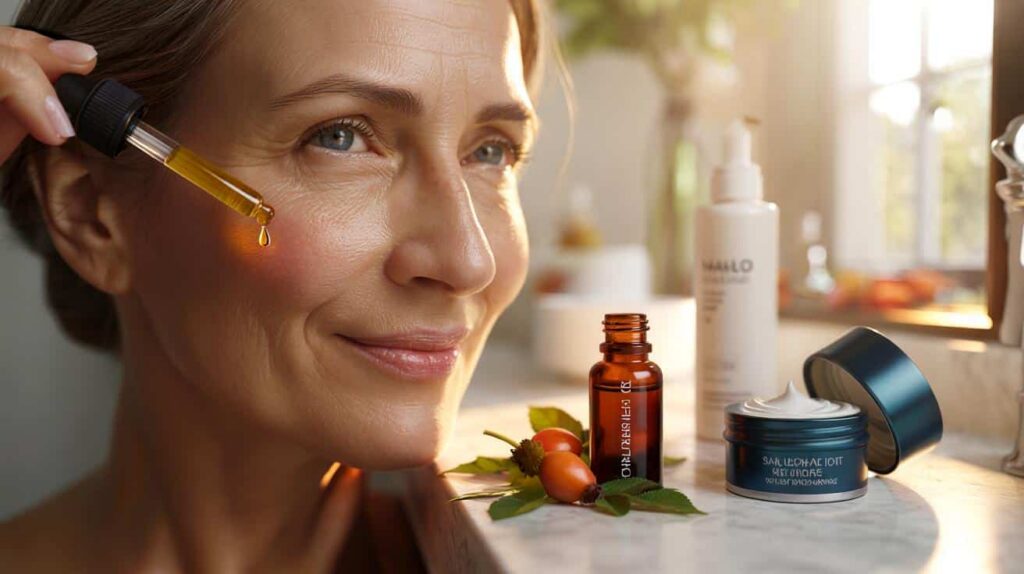
Fewer jars on the shelf. Better science under the cap.
Many classics still work. Yet a single plant oil is drawing serious attention for firmness, glow, and texture. It slots into a routine without drama, plays nicely with sunscreen, and goes easy on sensitive skin.
What the buzz is really about
The oil in question is rosehip seed oil, pressed from the fruit of wild roses. It shows up in facial oils, serums, and even eye treatments. People call it an essential oil. It is not. It is a cold-pressed seed oil, naturally rich in vitamins and fatty acids that support the skin barrier and collagen network.
Collagen doesn’t sit in the bottle. Your skin makes it. Rosehip oil helps the process with vitamin A, vitamin C, and protective lipids.
Not collagen inside, but collagen support
Rosehip oil does not contain collagen. Oils cannot deliver intact collagen into the skin. The win comes from precursors and antioxidants that nudge fibroblasts to work better. Rosehip provides provitamin A (retinoid precursors), vitamin C, vitamin E, and essential fatty acids. These inputs help defend existing collagen from oxidative stress and aid new collagen synthesis.
Why it matters after 50
From midlife onward, estrogen declines and collagen drops. Texture changes. Fine lines deepen around the eyes and mouth. The barrier also weakens, which raises water loss and sensitivity. A daily dose of lipids and antioxidants can slow that slide without the weight of a waxy cream.
Dermatology data suggests elasticity, pigmentation, and scar appearance respond to long-chain polyunsaturated fatty acids plus vitamins A, C, and E.
Rosehip oil versus a classic occlusive cream
| Point | Nivea-style cream | Rosehip seed oil |
|---|---|---|
| Main job | Locks in moisture with occlusives | Feeds the barrier and supports collagen |
| Skin feel | Rich, heavier film | Light, fast-absorbing |
| Key ingredients | Mineral oil, petrolatum, glycerin | Linoleic acid, alpha-linolenic acid, vitamins A/C/E |
| Targets | Dryness and tightness | Tone, texture, fine lines, post-acne marks |
| Day use | Good under makeup | Best at night, SPF by day |
What makes rosehip effective
- Linoleic acid (omega‑6) replenishes barrier lipids and lowers transepidermal water loss.
- Alpha-linolenic acid (omega‑3) calms redness linked to micro-inflammation.
- Provitamin A supports gentle cell turnover for smoother texture.
- Vitamin C scavenges free radicals and supports new collagen assembly.
- Vitamin E stabilizes the oil and protects lipids from oxidation on the skin.
Many users notice a brighter tone and softer crow’s feet within 8 to 12 weeks. Pigmentation from past sun exposure tends to fade more slowly. Deep static lines respond, but not as fast as fine dehydration lines.
How to choose a bottle that actually works
Read the label with care
- Look for “Rosa canina” or “Rosa rubiginosa” seed oil as the first ingredient.
- Pick cold-pressed or CO₂-extracted oil in dark glass to limit oxidation.
- Buy small sizes. Fresh oil outperforms a large bottle that sits for months.
- Avoid added fragrance if your skin runs sensitive.
If the bottle lists “fragrance” or “parfum,” you’re not getting pure rosehip seed oil.
Essential oil or carrier oil?
Rosehip seed oil is a carrier oil, not an essential oil. Some brands blend it with true essential oils like rose or geranium. Those blends can smell pleasant but raise the risk of irritation. If your skin flushes easily, stick to the pure seed oil.
How to use it for visible payoff
- Night: Apply 2–4 drops on slightly damp skin after a water-based serum.
- Seal: If very dry, add a thin layer of a ceramide cream on top.
- Day: Use sunscreen. Rosehip’s gentle turnover can raise sun sensitivity.
- Patch test: Try it behind the ear for two nights if your skin is reactive.
- Timing: Give it 8–12 weeks for texture and tone changes.
Sunscreen remains the anti-wrinkle workhorse. Pair it with rosehip at night for a smart, two-step plan.
Who should adjust or avoid
Acne-prone skin can benefit. Linoleic-rich oils often reduce microcomedones. If you have fungal acne tendencies, rotate use and watch for congestion. People with severe rosacea should start slow and keep the formula fragrance-free. Seed allergies are rare on skin, yet caution makes sense. For those on prescription retinoids, alternate nights to limit dryness.
What results to expect and when
Week 2: Skin feels softer, less tight after cleansing. Glow improves. Week 4: Fine lines at the outer eye look less sharp. Makeup sits better. Week 8–12: Tone looks more even, old marks begin to lift, crepiness on the cheeks softens. Deeper nasolabial folds need more time and often a combined plan with peptides or professional treatments.
Smart pairings that boost outcomes
Friends
- Niacinamide 3–5% in the morning for barrier strength and less redness.
- Peptide serums at night for added firmness signaling.
- Gentle lactic acid once weekly to keep flakes in check.
Frenemies
- Strong exfoliants on the same night can stack irritation.
- Heavily fragranced blends can mask early signs of sensitivity.
Cost check and shelf life
A quality 30 ml bottle lands between low and mid price points and lasts 10–12 weeks. Store it cool and closed. The scent should be light and nutty, not fishy. If the color turns muddy or the smell goes off, it’s time to replace.
If you want more lift
Rosehip can be the anchor, not the entire toolbox. Add a gentle retinal serum two nights a week for faster collagen support. Space it from rosehip by 15 minutes or alternate nights. Try a weekly LED red light panel for an extra collagen nudge. None of these steps cancel the need for daily SPF.
Risks, myths, and a quick reality check
Products that claim “micro-collagen” in a jar sound tempting. Collagen molecules are too large to pass through intact. Peptides may still help by signaling, yet their effect depends on formula and routine. Rosehip’s strength lies in feeding the skin the raw materials to build and protect its own scaffold. That approach tends to age well and keeps maintenance low.
For anyone who loves a classic cream, you don’t need to throw it out. Use it as a final seal when winter bites or the heater runs nonstop. Keep rosehip as the active step. That small switch often brings smoother mornings, calmer redness, and a healthier-looking canvas after 50.


