
Perfect rice is the kitchen riddle we keep trying to solve. One day it’s fluffy and fragrant, the next it’s gummy, watery or welded to the pan. You don’t need a gadget or a degree. You need a small, old-fashioned trick that refuses to fail.
I’m in a tiny kitchen with a kettle humming and a window cracked open to a rainy street. My neighbour’s nan trees through the cupboard, taps a dented saucepan, then measures water with her fingertip like a watchmaker setting a spring. She folds a tea towel over the lid, tucks the edges upwards, and leaves everything to whisper on the hob. We talk about buses and tomatoes while the rice steams in peace, not stirred, not fussed over, as if calm were an ingredient. When she finally lifts the lid, each grain stands apart, not a clump in sight. I swear I heard the rice sigh. The secret wasn’t a recipe.
The tiny kitchen trick that turns rice from meh to magic
Good rice begins before the heat ever touches the pan. It starts with a rinse and a short soak that take the edge off excess starch. Then comes the oddest bit: the fingertip rule that ignores measuring cups and still nails the water ratio.
We’ve all had that moment when the pot burps up starchy foam and you panic-stir like it owes you money. I once shadowed a community cookout where every auntie used a different cup, yet everyone used the same finger. Their results were eerily consistent, bowl after bowl, even on clattery gas rings outdoors.
There’s a reason it works. Most long-grain rice swells predictably, absorbing roughly the same volume of water per depth in the pot. Your finger doesn’t measure litres; it reads distance from the grain’s surface to the waterline. That depth stays true whether you’re cooking one mug or five, which is why the knuckle test shrugs at batch size.
The grandmother’s method: simple moves, perfect grains
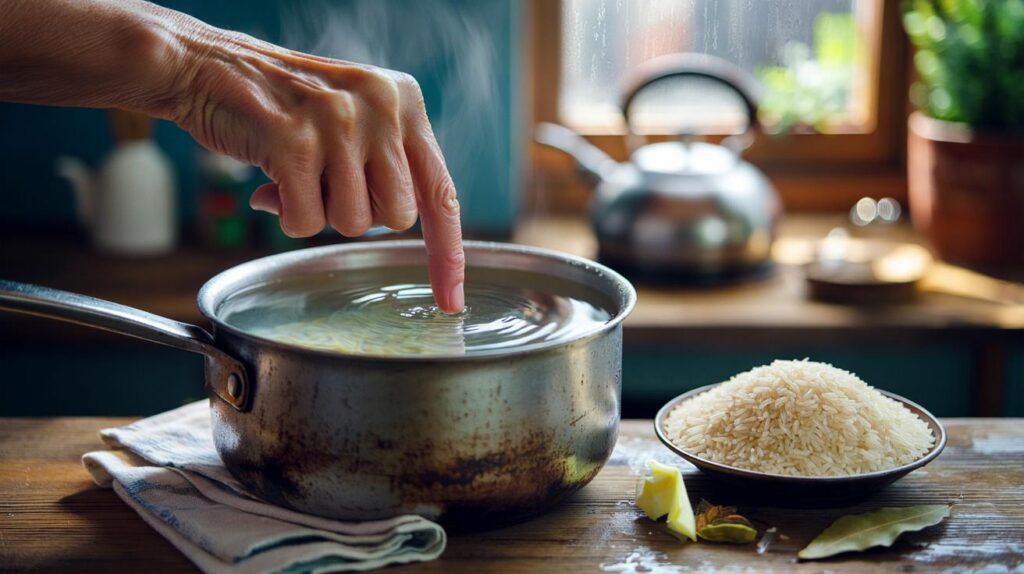
Here’s the move set. Rinse your rice in a sieve until the water runs mostly clear, then soak it 10–15 minutes while you tidy the counter. Drain, tip into a pot, and add cold water until it sits at **the knuckle rule**: the waterline reaches your first fingertip joint when your finger touches the rice surface.
Bring the pot to a gentle simmer with a pinch of salt and a thumbnail of butter or oil. When you see tiny steam holes and the surface looks glossy, lid on, heat low, and walk away for 10–12 minutes. This is where **no peeking** does the real work, and the tea towel trick keeps steam in and droplets off the grain.
Most mishaps come from impatience or overcorrecting. Stirring breaks grains and wakes up starch, lifting the lid vents heat, cranking the flame boils hard and shocks the pan. Let it be. And then finish with **fluff, then rest**: fork it lightly, lid back on, 5 minutes to settle.
“Rice doesn’t like drama. It likes predictability.”
- Rinse and soak: calmer starch, cleaner flavour.
- Fingertip water: consistent depth, consistent cook.
- Low heat + tea towel: steady steam, no soggy lids.
- Fluff and rest: grains relax, textures separate.
What sticks with you after the pot is empty
Once you’ve lived with this rhythm, you stop measuring panic and start measuring feel. The rice cooks while you plate the salad or dress the fish, not while you hover with a spoon. Let the grains be the quiet backbone of the meal.
I’ve tried it across basmati, jasmine and plain long-grain and the habit holds. Ratio-correct rice tastes of what you cook it with—stock, lemon peel, a smashed cardamom pod—without turning soupy or stiff. Let’s be honest: nobody really does that every day.
Some nights you’ll skip the rinse, or use the wrong pot, or forget the rest. The trick forgives more than it should. It’s not about perfection on command; it’s about a small system that stays kind to you when the day has been loud.
The fingertip rule that never fails
Place your rice in the pot and level the surface with a shake. Touch the top with a clean index finger, then add water until it reaches that first knuckle line—about 1.5–2 cm above the grain. That depth, not the volume, is the point.
If you like firmer grains, sit a fingertip shy of the line; for softer rice, go a fingertip over. Start on medium heat until bubbles lace the edge, then drop to low and lid it with the tea-towel-wrapped lid. Keep edges of the towel folded upward, away from the flame, so it acts like a tiny sauna for the pot.
Season simply at first—salt, a dab of butter, maybe a bay leaf—so you can learn the baseline. Add aromas later: a clove for warmth, lemon zest for lift, a smashed garlic clove for comfort. Your nose will tell you when it’s right.
Small rituals, big results
People often skip the rinse because life is busy. Rinsing calms surface starch and helps the grains slip free later. If you’re in a rush, a fast swish under the tap is still better than nothing.
Another common wobble is using a pot that’s too wide. A wide pan creates a thin layer of rice that cooks unevenly and dries fast. Go for a snug saucepan with a tight lid so the steam builds and the heat travels evenly.
A word on the tea towel method. It absorbs condensation so water doesn’t rain back onto the grains. If that feels fussy, park a paper towel under the lid instead for a similar effect, edges tucked up.
“I’ve cooked rice in dozens of kitchens. The quietest pots always win.”
- Too wet? Next time, water a shade below the knuckle.
- Too firm? Add a spoon of hot water and steam 2 minutes more.
- Burning smell? Heat’s too high; finish off-heat with the lid on.
- Sticky clumps? Rinse longer, stir less, rest longer.
Make it yours and pass it on
What I love about this old trick is how it travels. You can take it to a tiny flat in Manchester or a campsite by the sea and it behaves the same. It frees your head to think about flavours, not fractions.
Try it with coconut milk and a pinch of sugar for fragrant jasmine, or with chicken stock and a fennel frond for basmati that leans towards supper. Swap the butter for olive oil, drop in a cardamom pod, or crumble a pinch of saffron for a celebratory glow. The method doesn’t flinch.
Keep the ritual, tweak the notes, and watch how often your rice stops being a side and starts anchoring the plate. You’ll find that the pot teaches you if you listen. The fingertip remembers.
| Point clé | Détail | Intérêt pour le lecteur |
|---|---|---|
| Rinse + short soak | Calms surface starch, evens hydration | Fluffier grains, less stickiness |
| Fingertip water depth | First knuckle above rice surface | Works at any batch size without measuring cups |
| Steam, then rest | Low heat, tea towel lid, 5‑minute settle | Separate grains, better texture and flavour |
FAQ :
- Does the fingertip method work for all rice?It’s brilliant for basmati, jasmine and most long‑grain. For short‑grain or sushi rice, use the same approach but lean slightly below the knuckle and keep the rest time gentle.
- Do I still need to rinse?Rinsing helps, especially for long‑grain. If you skip it, expect a touch more cling. Balance that with a lighter water depth and a longer post‑cook rest.
- Can I use a rice cooker with this trick?Yes. Rinse, then use the fingertip depth directly in the cooker bowl. Select the standard white rice setting and let the built‑in rest do its thing.
- What if I don’t have a tight lid?Cover with foil and set any lid on top. Add a tea towel layer on the lid side to catch drips, edges folded away from the heat so steam stays soft and steady.
- How do I reheat rice safely and keep it fluffy?Cool it fast, fridge it quickly, then reheat hot and quick with a splash of water in a lidded pan or microwave. Fluff after heating and serve straightaway.



Merçi pour l’astuce du torchon sur le couvercle : riz aéré et pas d’eau qui goutte, première fois que ça marche chez moi 🙂