
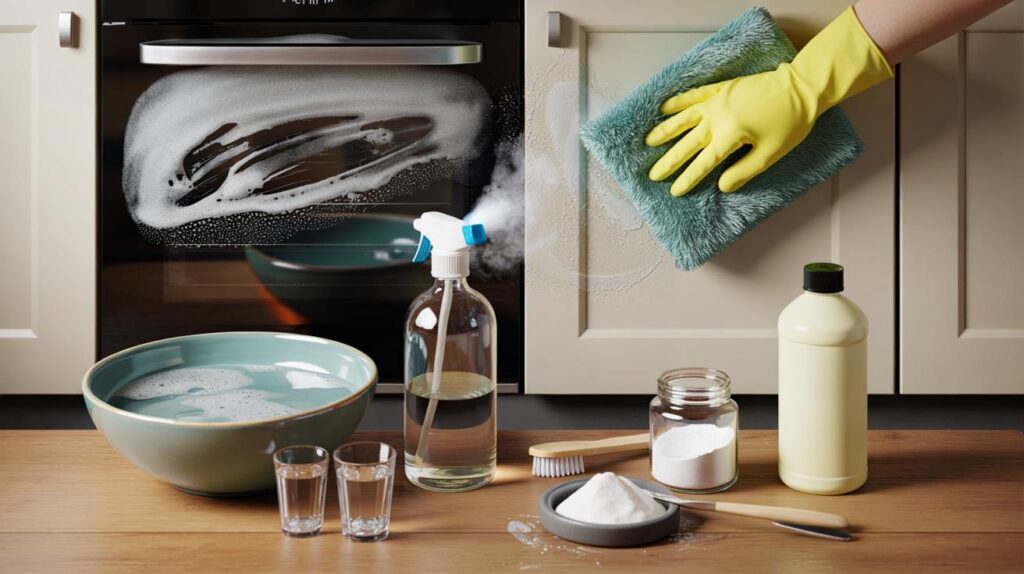
Sticky cupboards can sour a spotless kitchen. Many households face fresh splatter build‑up as winter cooking ramps up and vents stay shut.
That tacky film rarely arrives in one go; it creeps on after steamy roasts, sizzling pans and late‑night frying. Act early and you’ll save the paint, protect timber, and avoid elbow‑aching scrubs later. Here’s how to cut through grease fast with four proven methods, clear ratios, and budget‑friendly choices.
Before you start
A short setup prevents damage and speeds up the clean.
- Open a window or run the extractor on high while you work.
- Pull on gloves if you have sensitive skin.
- Test every solution on a hidden corner and wait five minutes.
- Work in small zones so liquids don’t sit on seams and edges.
Always test cleaners on a discreet patch first. If colour transfers to your cloth, stop and reassess.
Never flood solid wood or MDF. Moisture at joints can swell boards and lift paint.
What you’ll need
- Washing‑up liquid and warm water
- White vinegar (distilled)
- Bicarbonate of soda
- Microfibre cloths and a soft sponge
- Soft‑bristle brush or old toothbrush
- Spray bottle
- Dry lint‑free towel
- Shop‑bought degreaser (optional)
The 4 methods that work
Method 1: washing‑up liquid and warm water
Use this for fresh film and day‑to‑day splashes. The surfactants in washing‑up liquid lift oils without harshness.
Fresh grease wipes away in under two minutes if you catch it the same day.
Method 2: vinegar and water (1:1)
Pick this for clingy patches and a faint greasy sheen around handles. Vinegar helps cut oils and neutralises odours.
Avoid prolonged contact with natural stone splashbacks or unfinished metal trims nearby; shield them with a dry cloth while you spray.
Method 3: bicarbonate of soda paste (2:1)
Use for stuck‑on rings near the hob, glossy varnish haze, or old spatters.
Keep pressure light on matt or high‑gloss paint. The grit can dull fragile finishes if you scrub hard.
Method 4: shop‑bought degreasers
Reach for a bottled degreaser when DIY mixes stall. Choose a formula suited to your surface:
- Painted or lacquered doors: water‑based, pH‑neutral or mildly alkaline.
- Laminate and melamine: most household degreasers labelled “kitchen” work well.
- Solid wood: gentle, solvent‑free products; avoid caustic or oven‑strength sprays.
Supermarket options often cost £4–£8 and last months. Read the small print for compatibility with painted, oiled, or varnished finishes.
Which method suits your cabinets?
| Method | Best for | Dwell time | Abrasiveness | Approx. cost per clean |
|---|---|---|---|---|
| Washing‑up liquid | Fresh film, daily wipe‑downs | 0–1 min | Low | Pennies |
| Vinegar 1:1 | Light build‑up, odour control | 2–5 mins | Low | Pennies |
| Bicarb paste 2:1 | Stuck‑on spots, rings near hob | 3–7 mins | Medium | Pennies |
| Degreaser | Heavy, aged residue | 0–2 mins | Varies by brand | £0.10–£0.40 |
Prevent grease from sticking
- Run your extractor for five minutes after cooking; leave a window on vent latch in winter.
- Wipe handles and doors weekly with warm, soapy water. Small, regular cleans beat monthly scrubs.
- Use splatter guards on pans when frying and keep oil at a steady heat rather than smoking hot.
- Seal vulnerable finishes: a clear polyurethane for painted timber, or a furniture wax on bare wood, following maker guidance.
- Dry immediately after any wet clean to protect edges and joints.
Grease bonds fastest on warm, textured surfaces. Cool the area and use a damp, not wet, cloth for better lift.
Tricky finishes and smart tweaks
Matt paint and high‑gloss doors
Matt paint marks easily, so skip gritty pastes and stick to washing‑up liquid or a pH‑neutral cleaner. High‑gloss acrylic shows micro‑swirls; use plush microfibre, no paper towels, and barely any pressure.
Wood that drinks in stains
Oiled oak and ash absorb splashes. Blot fresh grease with kitchen roll, then use a mild soap solution. Refresh oil seasonally to restore the barrier. Keep water exposure brief to avoid raised grain.
Hinges, handles and hidden edges
Grease collects behind pulls and along door tops. Wrap a damp cloth around a table knife to skim narrow lips. Use an old toothbrush for knurled handles, then dry metal to prevent spotting.
Common pitfalls to avoid
- Spraying directly at the hinge side, which can carry liquid into cabinet boxes.
- Mixing vinegar with bleach or chlorine products; that releases hazardous fumes.
- Scrubbing melamine with scouring pads; it can turn cloudy and scratch.
- Leaving paste to dry on the surface; residue can leave a halo.
If build‑up keeps returning
Persistent film often points to a tired extractor filter or cooking habits. Swap or wash metal baffle filters every two to three months, and replace charcoal filters on recirculating hoods as directed. Lower pan heat a notch and keep lids on during simmering. You’ll see fewer specks on nearby doors within a week.
Quick calculator: time, cost and effort
- 10 minutes: wipe one bank of doors with washing‑up liquid, rinse, dry.
- £0.20–£0.60: typical outlay per whole‑kitchen refresh using cupboard staples.
- Monthly: set a reminder for handles and high‑traffic doors to stop film hardening.
Small, frequent wipes save paint and money. Waiting until grease hardens can triple scrubbing time and risk finish damage.



Tried the 1:1 vinegar mix on the handle halos—worked in minutes. Saved me from buying a £8 spray. Proper tip about not soaking hinges; I nearly did. Bookmarked, cheers!